
Did you know that a single leaky toilet can waste hundreds of gallons of water every day, just as Myrtle Beach water rates are set to rise by 10% in January 2027? That constant hissing or ghost flushing isn’t just an annoying sound that keeps you up at night. It’s a direct drain on your bank account and a sign that your home’s plumbing needs immediate attention. If you need to fix running toilet Myrtle Beach homeowners often find that local water conditions can wear down internal components faster than expected. You deserve the peace of mind that comes with a quiet home and a predictable water bill.
We understand how stressful it is to worry about hidden leaks or a potential flood in your bathroom. This guide will help you diagnose the most common causes of a running toilet, from worn-out flappers to faulty fill valves. You will learn practical DIY troubleshooting steps to stop the waste and avoid costly bills. We will also preview how the 2026 plumbing code updates might impact your repair decisions. Let’s get your bathroom back to being functional, efficient, and quiet.
Key Takeaways
- Identify “ghost flushing” and other subtle signs of water waste before they impact your monthly utility bill.
- Learn how to inspect the flapper and fill valve to pinpoint the mechanical source of that annoying night-time noise.
- Follow a simple step-by-step guide to fix running toilet Myrtle Beach homes often require due to coastal wear and tear.
- Discover why adjusting your toilet’s chain length is often the quickest way to stop a leak and restore your peace of mind.
- Recognize the critical warning signs, such as porcelain cracks, that indicate it is time to call a professional for a long-term solution.
Understanding Why Your Toilet Keeps Running (And Why It Matters)
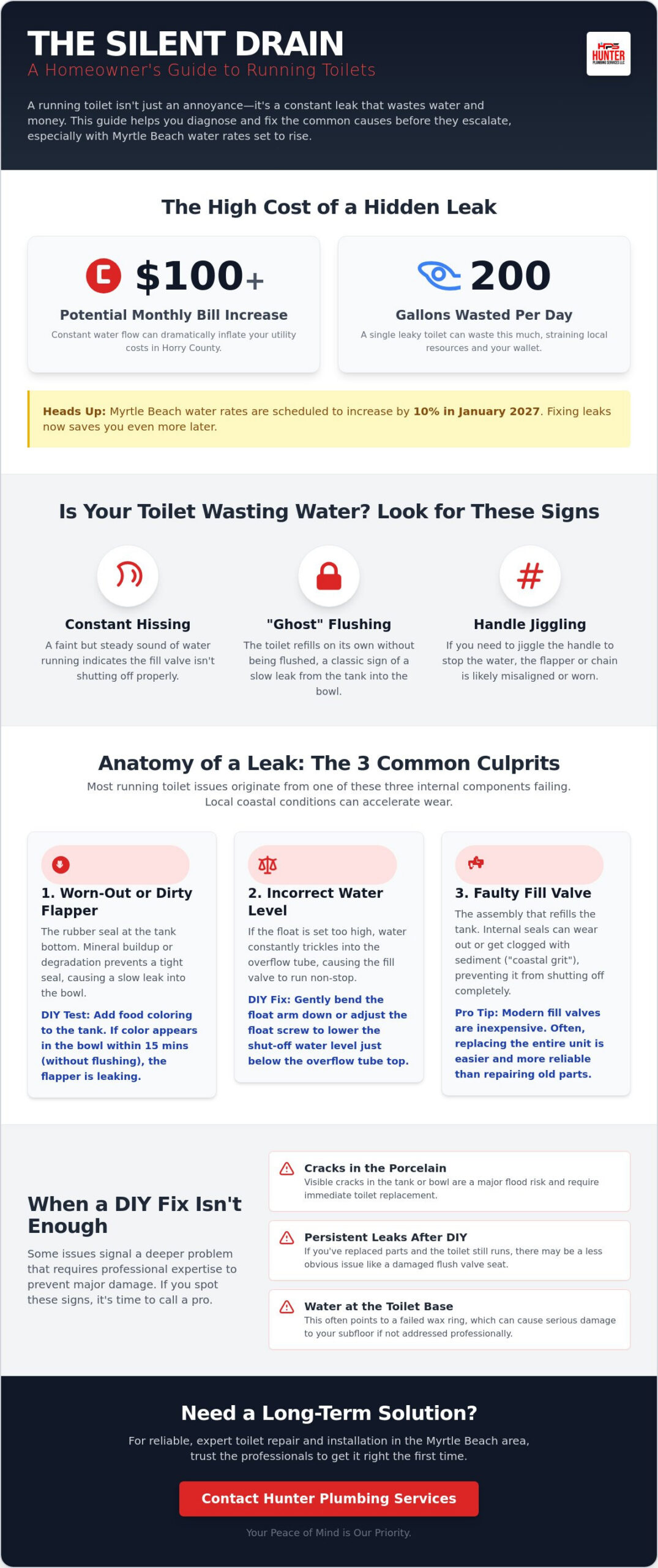
A running toilet is more than a background noise that disrupts your sleep. It’s a continuous leak that often goes ignored because the water stays inside the plumbing system rather than pooling on the floor. However, this malfunction can waste hundreds of gallons of water every single day. One common sign is the “ghost flush,” where you hear the toilet refill for a few seconds even though nobody has used it. This happens because water is slowly escaping the tank, forcing the fill valve to kick in and top it off. To effectively fix running toilet Myrtle Beach homeowners must understand that the unit relies on a simple balance between the flapper, the fill valve, and the overflow tube.
Your toilet’s tank is a carefully balanced ecosystem of parts. The flapper acts as a rubber seal, the fill valve controls the incoming water, and the overflow tube prevents the tank from spilling over. When any of these components fail, the refill cycle never ends. In our coastal climate, the local humidity and specific water mineral content can cause rubber flappers to warp or degrade faster than in other regions. This leads to that persistent run that drains your wallet and puts unnecessary strain on your home’s infrastructure.
The Financial Impact of a Running Toilet
A running toilet can waste up to 200 gallons of water a day. In Horry County, where water rates are structured to encourage conservation, this level of waste can lead to a monthly bill increase of $100 or more. For our neighbors with marshfront properties on septic systems, this constant flow is even more dangerous. It can saturate your drain field and lead to premature system failure. A silent leak is the most common cause of high utility bills in local households.
Signs Your Toilet Needs Immediate Attention
Don’t wait for a high bill to take action. Watch for these red flags that indicate you need to fix running toilet Myrtle Beach issues before they escalate:
- Constant Hissing: A steady sound of trickling or hissing water inside the tank.
- Handle Jiggling: The handle requires a manual “jiggle” to stop the water flow after a flush.
- Bowl Ripples: Visible ripples or movement in the toilet bowl water while the unit is idle.
If you notice these signs, your toilet is likely losing water every minute of the day. Catching these problems early saves money and prevents the stress of a sudden plumbing emergency.
3 Common Culprits Behind a Running Toilet
Most toilet runs stem from three specific mechanical failures. While these parts are designed to last for years, our local environment presents unique challenges. High humidity and salt air in Myrtle Beach can corrode metal tank levers and hardware faster than in inland areas. This corrosion often leads to stiffness in the handle, preventing the flapper from dropping back into place correctly. When the handle sticks, the water never stops flowing, and your utility bill begins to climb.
Worn-Out or Dirty Flappers
The flapper is the rubber seal at the bottom of the tank. Over time, mineral buildup from our coastal water creates a crusty layer on the valve seat. This prevents the rubber from forming a tight seal. To check yours, try the “food coloring test.” Drop a few dots of dye into the tank and wait 15 minutes. If color appears in the bowl without flushing, your flapper is the culprit. Flappers are the primary cause of ghost flushing in older toilets and are usually the first part to fail.
Incorrect Water Level in the Tank
If the water level is set even 1/4 inch too high, it will spill into the overflow tube. This safety feature is meant to prevent a bathroom flood, but a misadjusted float keeps the fill valve running indefinitely. The refill tube, which sits inside the overflow pipe, must also be positioned correctly to maintain the proper water level in the bowl. Adjusting the float height is often the simplest way to fix running toilet Myrtle Beach residents can do themselves to see immediate results.
Faulty Fill Valve Assemblies
The fill valve is the tall tower that controls water entry. If it won’t shut off, the diaphragm inside might be worn or clogged with “coastal grit,” which are small particles of sand or sediment common in local lines. Modern fill valves are typically made of plastic and are often easier to replace entirely than to repair. If you find yourself struggling with complex internal components, you might consider professional plumbing fixture installation to ensure a long-lasting, leak-free setup. A new assembly provides the reliability you need for a quiet bathroom.
Step-by-Step Guide to Fixing a Running Toilet Yourself
Before you reach for any tools, start by shutting off the water supply valve located behind the toilet base. Turn the knob clockwise until it stops. This simple step prevents accidental overflows and allows you to work inside the tank without constant refilling. Once the water is off, flush the toilet to drain the tank completely. Now you can clearly see the components without the water level obscuring your view. If you are trying to fix running toilet Myrtle Beach issues on your own, starting with a dry tank is the most efficient way to inspect for damage.
Next, examine the lift chain connecting the handle lever to the flapper. This small piece of hardware is a frequent source of trouble. If the chain is too short, it will pull the flapper up slightly, preventing a tight seal. If it’s too long, the excess links can get tangled or caught underneath the flapper as it closes. Aim for a tiny bit of slack, about half an inch, when the flapper is fully seated. While you’re in there, run your finger along the flush valve seat. Use a soft sponge to wipe away any mineral deposits or slime that might be preventing the rubber from sealing correctly.
Adjusting the Tank Water Level
Locate the adjustment screw or clip on the float arm or the fill valve tower. If the water level was previously too high, turn the screw to lower the float. You want the water to stop filling when it reaches exactly one inch below the top of the overflow tube. Turn the water supply back on, flush the unit, and monitor the refill cycle. If the valve shuts off at the new, lower point, you’ve successfully stopped the constant run into the overflow pipe.
Replacing a Faulty Flapper
If the rubber feels hard or brittle, it’s time for a replacement. Snap the old flapper off the pegs on the sides of the overflow tube and remove the chain from the handle lever. When you head to the hardware store, look for a “universal” flapper. These are designed to fit the standard 2-inch or 3-inch valves found in most Grand Strand homes. Install the new part by snapping it onto the pegs and reattaching the chain. If these manual adjustments don’t stop the water flow, you may need professional leak detection to ensure there isn’t a hidden crack or a more complex pressure issue within your pipes.
When to Call a Professional Myrtle Beach Plumber
Not every plumbing issue can be solved with a quick trip to the hardware store. If you’ve tried to fix running toilet Myrtle Beach problems by adjusting the flapper and float but the water still flows, you’ve reached the limit of DIY. Persistent runs often point to deeper mechanical failures or high water pressure that requires professional calibration. You don’t want to risk a high water bill or potential damage by letting a small problem linger. Our team is here to provide the technical authority needed to get your bathroom back in order.
Structural issues are another clear sign you need expert help. Cracks in the porcelain tank or bowl aren’t just cosmetic; they indicate a structural failure that could lead to a sudden flood. Additionally, if your toilet runs frequently and also experiences constant clogs, the root cause might be a backup in your main line. In these cases, you need a professional leak detection specialist to ensure no hidden water waste is occurring behind your walls or under your floors.
Coastal Plumbing Challenges in Horry County
Salt air corrosion is a reality for Grand Strand homeowners. It eats away at metal handle components and internal tank screws, making parts brittle and prone to snapping. Myrtle Beach also deals with high water tables, which can affect drainage pressure and cause toilets to act up unexpectedly. Professional-grade parts are built with materials that resist this coastal wear and tear, lasting much longer than standard retail kits. We use these high-quality components to ensure your repair stands up to our unique local environment.
Hunter Plumbing’s Toilet Repair and Installation Services
We believe in financial clarity and neighborly service. Our team offers fixed-rate fees for toilet installations and comprehensive diagnostics to find the exact source of your trouble. If a backup is causing your toilet to run or overflow, we are the plumber for drain cleaning you can trust to clear the way. For major leaks that simply won’t wait, we provide 24/7 emergency assistance to protect your home. You can rest easy knowing your property is in safe, capable hands.
Restore Your Home’s Efficiency and Peace of Mind
Fixing a running toilet is about more than just stopping a noise; it’s about protecting your home from unnecessary water waste and high utility bills. Remember to check your flapper for coastal corrosion and ensure your tank water level isn’t spilling into the overflow tube. These simple troubleshooting steps can solve many common issues before they become plumbing emergencies. Taking action now prevents the stress of a silent leak and keeps your bathroom functional for years to come.
If you’ve tried these steps and still can’t fix running toilet Myrtle Beach plumbing issues, don’t let the problem drain your budget. Hunter Plumbing Services LLC is your dedicated partner in Horry County. We understand the specific coastal plumbing challenges our neighbors face, from salt air wear to high water tables. Our team provides the reliable, no-nonsense service you deserve with 24/7 emergency assistance for major leaks. Contact Hunter Plumbing Services LLC for expert toilet repair in Myrtle Beach!
Your home should be a place of comfort and quiet. Let’s get your plumbing back to peak performance so you can enjoy the peace of mind you deserve.
Frequently Asked Questions
Is a running toilet a plumbing emergency?
A running toilet isn’t usually a structural emergency like a burst pipe, but it is a financial one. Constant leaks can waste hundreds of gallons of water daily, leading to a massive spike in your utility bill. If the toilet is overflowing or showing signs of a crack in the porcelain, you should treat it as an immediate priority to prevent water damage to your flooring.
How much does it typically cost for a plumber to fix a running toilet in Myrtle Beach?
The cost to fix running toilet Myrtle Beach residents face depends on whether you need a simple part replacement or a full valve assembly. Professional plumbers typically charge an hourly labor rate plus the cost of any required parts. Hiring an expert ensures the repair is done correctly the first time, saving you from repeated DIY attempts and higher bills later.
Why does my toilet only run at night?
Toilets often run at night because municipal water pressure tends to rise when fewer people are using the system. This increased pressure can push past a worn fill valve that seems to work fine during the day. If you hear ghost flushing only after the sun goes down, it’s a sign that your tank components are struggling to handle these pressure fluctuations.
Can a running toilet cause a high water bill?
A running toilet is one of the most common causes of an unexpectedly high water bill and can waste up to 200 gallons daily. With the City of Myrtle Beach planning a 10% water rate increase in January 2027, stopping these leaks is more important than ever. Addressing a silent leak now protects your finances from these rising utility costs.
How long do toilet flappers usually last in coastal South Carolina?
In our coastal environment, toilet flappers typically last between three and five years. The salt air and specific mineral content in our local water can cause rubber components to become brittle or warped faster than in other regions. Regular inspections help you catch these issues before they turn into a constant run that keeps you up at night.
Can I use bleach tablets in my toilet tank to stop the run?
You should avoid using bleach tablets or drop-in cleaners because they can damage the rubber and plastic parts inside your tank. These chemicals cause flappers to degrade and seals to fail prematurely, which often creates the very leaks you’re trying to prevent. To fix running toilet Myrtle Beach homes need, it’s better to stick to mechanical repairs and clean water.