
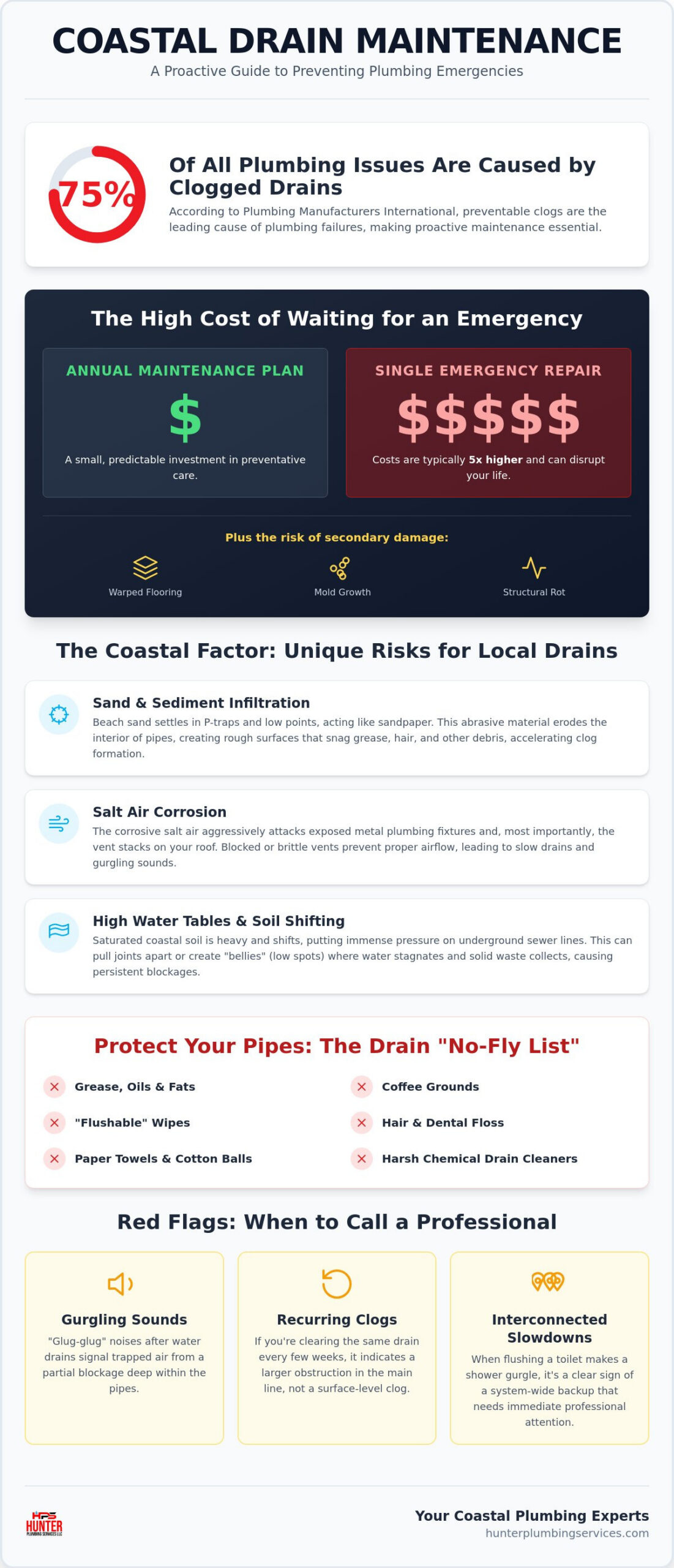
Did you know that according to Plumbing Manufacturers International, over 75% of all plumbing issues are caused by clogged drains? For those of us living along the coast, this isn’t just a statistic; it’s a daily reality. Between shifting sand and the corrosive effects of salt air, your pipes face a unique set of challenges that inland systems simply don’t encounter. Prioritizing drain maintenance to prevent emergencies is the most effective way to protect your home and your budget from the stress of a sudden sewage backup.
It’s frustrating to wonder if your DIY fixes are actually helping or just causing hidden damage to your pipes. You want a reliable home without the fear of high repair costs hanging over your head. This guide provides a practical, coastal-focused routine to keep your plumbing in top shape. We’ll walk through a clear maintenance schedule and professional tips that ensure your drains remain dependable. By the end, you’ll have a solid plan to maintain your property and the peace of mind that comes with a job well done.
Key Takeaways
- Understand how proactive drain maintenance to prevent emergencies identifies “slow build” issues before they lead to sudden pipe failure.
- Learn how to manage unique coastal challenges like sand infiltration and high water tables that specifically impact Myrtle Beach properties.
- Implement a practical maintenance schedule that balances simple daily habits with essential monthly deep-cleaning tasks.
- Protect your plumbing system by following a strict “no-fly list” of materials that cause the most frequent and costly blockages.
- Recognize the warning signs that indicate a deep-seated obstruction requires professional expertise rather than DIY methods.
Understanding Drain Maintenance to Prevent Emergencies
Preventative drain maintenance is a proactive system of inspection and cleaning designed to stop problems before they start. Many homeowners view plumbing as a reactive service, only calling for help when water stops flowing. However, waiting for a total blockage is a risky strategy. By prioritizing drain maintenance to prevent emergencies, you shift from a state of constant worry to a position of control. This regular care ensures your pipes remain clear and your home stays dry.
The difference between a “slow build” and a “sudden fail” is often just a matter of time. Over months, minor amounts of hair, soap scum, and kitchen grease create a sticky lining inside your pipes. This buildup narrows the internal diameter of the pipe, which changes the physics of your plumbing. As the path gets smaller, water must move under higher pressure to pass through. This increased internal pressure puts unnecessary stress on aging pipe joints and seals, eventually leading to structural risks like cracks or leaks. Keeping these pathways clear reduces that strain and extends the life of your entire system.
The Hidden Cost of Plumbing Emergencies
An emergency isn’t just a plumbing bill; it’s a disruption of your life. Emergency dispatch fees and after-hours service rates can quickly inflate the cost of a simple fix. Beyond the pipe itself, you must consider the risk of secondary damage. Water overflows often lead to warped hardwood flooring, mold growth in drywall, and even structural rot in your subfloors. Generally, one major plumbing emergency costs 5x more than a consistent annual maintenance plan.
Early Warning Signs You Shouldn’t Ignore
Your plumbing system usually provides hints before a total collapse occurs. Pay attention to these common signals:
- Gurgling Sounds: If you hear a glug-glug sound after the water stops, it’s usually air trapped by a partial blockage.
- Recurring Clogs: Clearing the same shower drain every two weeks indicates a deeper main line issue rather than a surface clog.
- Interconnected Slowdowns: If your kitchen sink drains slowly while the dishwasher is running, your system is signaling a backup further down the line.
Engaging in regular drain maintenance to prevent emergencies gives you the peace of mind that your property is in safe, capable hands. It’s about being a responsible homeowner and a good neighbor by ensuring your home’s infrastructure is reliable for years to come.
The Coastal Factor: Why Myrtle Beach Drains Require Special Care
Living along the Grand Strand brings beauty, but it also introduces specific environmental challenges to your plumbing. Unlike inland homes, coastal properties deal with sand, salt air, and shifting water tables daily. These factors accelerate wear and tear, making consistent drain maintenance to prevent emergencies a necessity rather than an option. If you don’t account for these local elements, even a new system can fail prematurely.
Salt air is particularly aggressive. It doesn’t just affect your outdoor furniture; it corrodes exposed plumbing fixtures and vent stacks on your roof. When these vents become brittle or blocked by corrosion, your drains lose the airflow needed to move water efficiently. Additionally, high-rise condo plumbing in our area often uses shared stacks. In these buildings, a single resident’s neglect can cause a backup that affects multiple units, emphasizing the need for a community-wide focus on preventative care.
Managing Sand and Sediment Infiltration
Sand is a silent killer for residential pipes. When you return from the beach, sand often hitches a ride on towels and skin, eventually finding its way into your indoor showers. Because sand is heavy, it quickly settles in P-traps and low-lying pipe sections instead of washing away. Over time, this sediment acts like sandpaper, eroding the interior lining of your pipes and creating rough surfaces where grease and hair can snag. To protect your system, install outdoor rinsing stations and use high-quality drain strainers as your first line of defense.
High Water Tables and Sewer Line Pressure
For marshfront or oceanfront properties, the high water table is a constant factor. Saturated soil is heavy and prone to shifting, especially during the heavy rainfall common in South Carolina. This ground movement can physically pull pipe joints apart or cause “bellies” where water pools and stagnates. When the soil is saturated, your drainage system must work harder to move waste away from the home. If you notice unexplained wet spots in your yard or a sudden drop in water pressure, utilizing professional leak detection is critical for identifying underground issues before they compromise your foundation.
Taking a proactive approach to these coastal realities ensures your home remains a sanctuary. If you’re concerned about how the local environment is affecting your pipes, a quick professional inspection can provide the clarity you need to keep your system running smoothly.
Your Step-by-Step Preventative Drain Maintenance Plan
Effective drain maintenance to prevent emergencies relies on a consistent hierarchy of care. Think of your plumbing like a vehicle; you wouldn’t skip oil changes and expect the engine to last forever. Small, disciplined actions today prevent the high-stress calls to a plumber in the middle of the night. By breaking your routine into daily, weekly, and monthly tasks, you create a shield around your home’s infrastructure.
The first rule of maintenance is following the “no-fly list” for your drains. Never pour cooking grease, coffee grounds, or “flushable” wipes down your pipes. Grease is particularly deceptive because it enters as a liquid but quickly cools and solidifies into a waxy sludge. Coffee grounds don’t dissolve and act like sediment, while wipes snag on the rough pipe interiors common in coastal environments. Stick to natural enzyme cleaners for regular upkeep. Unlike harsh chemical alternatives that can warp PVC or eat through old metal, enzymes use living bacteria to safely digest organic buildup.
Don’t forget the entry points. Every week, remove your sink stoppers and shower grates to wipe away the hair and soap scum that collects right at the surface. This simple step takes two minutes but prevents debris from migrating deeper into your secondary lines.
Kitchen and Bathroom Best Practices
To keep your kitchen sink clear, always run cold water when using your garbage disposal. Cold water keeps fats solid so the blades can chop them up, whereas hot water melts them, allowing them to coat your pipes further down the line. In the bathroom, install mesh hair catchers in every tub and shower. To finish your weekly routine, pour a kettle of boiling water down your kitchen and bathroom drains. This heat helps melt coagulated soap scum and minor grease deposits before they can harden.
Monthly Maintenance Tasks for Homeowners
Once a month, perform a visual inspection of all exposed pipes under your sinks. Look for “sweating” or small beads of moisture, which are early warning signs of joint failure. You can also use a mixture of baking soda and vinegar to refresh your drains. The bubbling chemical reaction helps dislodge light debris without damaging your plumbing. Finally, check your water heater for sediment buildup. In our coastal area, mineral deposits can settle at the bottom, eventually affecting the flow and pressure throughout your entire home.
Consistent care is the best way to ensure your plumbing stays reliable. If you notice your drains are still sluggish after following these steps, it may be time to consult with a local expert to ensure your system is fully protected.
Professional Drain Care: When Home Maintenance Isn’t Enough
While a solid DIY routine is your first line of defense, some plumbing challenges exist deep within your home’s infrastructure. These issues often require more than a plunger or a natural enzyme cleaner. Incorporating professional drain cleaning into your long-term strategy ensures that deep-seated obstructions are removed before they cause a total system failure. By integrating drain maintenance to prevent emergencies with professional help, you eliminate the risks that basic DIY methods might miss.
Think of your local plumber as a neighborly expert. We don’t just clear a pipe; we look for the root cause of the problem. This proactive approach identifies structural concerns like shifting soil or pipe degradation before they escalate into a midnight disaster. Our commitment to honesty means you’ll receive a clear explanation of what we find. We value financial clarity, providing open communication about the state of your plumbing so you can make informed decisions without the stress of hidden fees.
The Power of Camera Inspections
One of the most effective tools in modern plumbing is our camera service. We use high-definition cameras to travel through your pipes, revealing exactly what is happening underground. This technology identifies root intrusion from coastal trees or “pipe bellies” caused by shifting sandy soil. Seeing the inside of a pipe removes all guesswork from the repair process. This precision protects you from paying for unnecessary “blind” repairs, as we can pinpoint the exact location and nature of the trouble.
Scheduling Your Annual Plumbing Wellness Check
An annual professional visit is the ultimate insurance policy for your home. During a Hunter Plumbing maintenance call, we perform a thorough assessment of your entire system. We check connections, test drainage speed, and ensure your fixtures are operating at peak efficiency. This reliability allows you to enjoy the comfort of your coastal home without worrying about what’s happening beneath the floorboards. A well-maintained system is a safe system. Taking this final step in your drain maintenance to prevent emergencies plan ensures your plumbing remains a silent, dependable part of your daily life for years to come.
Secure Your Coastal Home’s Future
Living on the Grand Strand means balancing the beauty of the coast with the unique demands it places on your property. By combining disciplined daily habits with the specialized tools of a professional, you can keep your plumbing running smoothly for years. Your pipes face constant pressure from sand infiltration and salt air corrosion that inland homes simply don’t experience. Consistent drain maintenance to prevent emergencies is the most reliable way to protect your investment and avoid the high costs of a sudden sewage backup.
Since 2021, we’ve focused on being the honest, neighborly partner you can depend on for specialized coastal plumbing expertise. We understand the local landscape and offer 24/7 emergency assistance across the Grand Strand to give you total peace of mind. You deserve a home where the infrastructure is as reliable as the tide. Don’t wait for a slow drain to become a major structural disaster. Schedule your professional drain maintenance with Hunter Plumbing today! We’re here to ensure your home remains safe, dry, and worry-free.
Frequently Asked Questions
Is it safe to use chemical drain cleaners for regular maintenance?
No, chemical cleaners are generally unsafe for long-term pipe health. These caustic liquids generate intense heat to dissolve clogs, which can warp PVC pipes or accelerate the corrosion of older metal lines. For consistent drain maintenance to prevent emergencies, natural enzyme-based cleaners are a much safer alternative. They use bacteria to break down organic matter without the risk of creating pinhole leaks in your plumbing or harming the environment.
How often should I have my drains professionally cleaned in Myrtle Beach?
You should schedule a professional cleaning once every year to account for coastal factors like sand and sediment. Even if your system seems fine, an annual checkup identifies hidden buildup that daily habits might miss. Regular professional care ensures your lines stay clear during heavy rain seasons when the local water table rises and puts extra pressure on your drainage system, keeping your home dry and safe.
Can tree roots cause a drain emergency even if I don’t have large trees?
Yes, tree roots can infiltrate your pipes even if you don’t have large trees on your own property. Roots are highly efficient at seeking out moisture and can travel over a hundred feet from a neighbor’s yard. Small shrubs with aggressive root systems can also find tiny cracks in your sewer line. They quickly expand into a major obstruction that requires professional tools to clear safely without damaging the pipe further.
What should I do immediately if my sink starts backing up?
Stop running all water in the house immediately to prevent a full-scale overflow. If the backup is limited to one sink, you can try using a standard cup plunger to dislodge a shallow clog. Avoid pouring any store-bought chemicals down the drain, as these can trap caustic liquid in your pipes if the clog doesn’t clear. If the water doesn’t recede quickly, it’s time to contact a local professional for an inspection.
Why does my kitchen sink smell even when it isn’t clogged?
Foul odors usually stem from a buildup of bacteria on the underside of your garbage disposal splash guard or decaying organic matter in the P-trap. Even without a total blockage, a thin layer of biofilm can form on pipe walls. You can often resolve this by cleaning the rubber splash guard with a brush or flushing the drain with baking soda and vinegar. This simple step keeps your kitchen smelling fresh and clean.
What is the difference between a main line clog and a secondary clog?
A secondary clog is isolated to a single fixture, like a bathroom sink, while a main line clog affects your entire home. If you notice that flushing the toilet causes water to back up into the shower, you’re likely dealing with a main line issue. These situations are more urgent because they can lead to widespread sewage backups. This makes professional drain maintenance to prevent emergencies a critical priority for every coastal homeowner.