
Last August, a family in Surfside Beach found their outdoor shower leaking so badly it flooded their crawlspace during a sudden tropical storm. Salt air had corroded the brass valve over just three years, proving that coastal living requires a specialized level of care. You already know that the humid South Carolina air and fine Atlantic sand can wreak havoc on your drains and fixtures. That’s why having a specific annual plumbing maintenance checklist SC is essential for every homeowner from Little River to Pawleys Island. It’s the difference between a minor checkup and a midnight emergency call.
Move to the laundry room and kitchen to inspect appliance hoses. Rubber hoses on washing machines account for a high percentage of indoor floods. Replace them with braided stainless steel every five years to ensure your home stays dry. Don’t forget to test the flushability of every toilet. A weak flush often signals a partial blockage that could lead to a sewer backup during the humid summer months. As recommended by coastal specialists like San Diego Drain Guys, Hydro Jetting is the gold standard for clearing coastal sand buildup because it uses high-pressure water to scrub the interior of the pipes clean.
We’ve designed this 2026 guide to help you lower your monthly utility bills and extend the life of your appliances by at least five years. You’ll find clear, actionable steps to neutralize salt damage, clear abrasive sand from your lines, and prevent high humidity from causing mold growth near your pipes. This comprehensive walkthrough ensures your home stays dry and your plumbing stays reliable through the peak of hurricane season. It gives you the peace of mind you deserve as a neighbor in our coastal community.
Key Takeaways
- Learn how to protect your fixtures from aggressive salt air corrosion and prevent expensive mineral buildup in your coastal home.
- Follow our comprehensive annual plumbing maintenance checklist SC to stay ahead of local challenges like high water tables and sediment buildup.
- Master essential seasonal tasks to ensure your plumbing handles everything from peak summer tourism usage to potential hurricane season demands.
- Identify early warning signs of “green” corrosion on supply lines and learn when your home needs a professional diagnostic to find hidden leaks.
Why an Annual Plumbing Maintenance Checklist is Vital in Coastal SC
Living along the Grand Strand offers beautiful views, but the coastal environment is notoriously tough on your home. Salt air, high humidity, and shifting sands create a “perfect storm” for your pipes and fixtures. Following a consistent annual plumbing maintenance checklist SC ensures your home stays functional while avoiding the panic of a midnight pipe burst. Understanding how Plumbing systems function is the first step in recognizing why our specific coastal environment is so demanding on residential infrastructure.
At Hunter Plumbing Services, we see the direct results of the Myrtle Beach climate every day. Proactive care is always more affordable than reactive repairs. Consider these local factors that impact your plumbing:
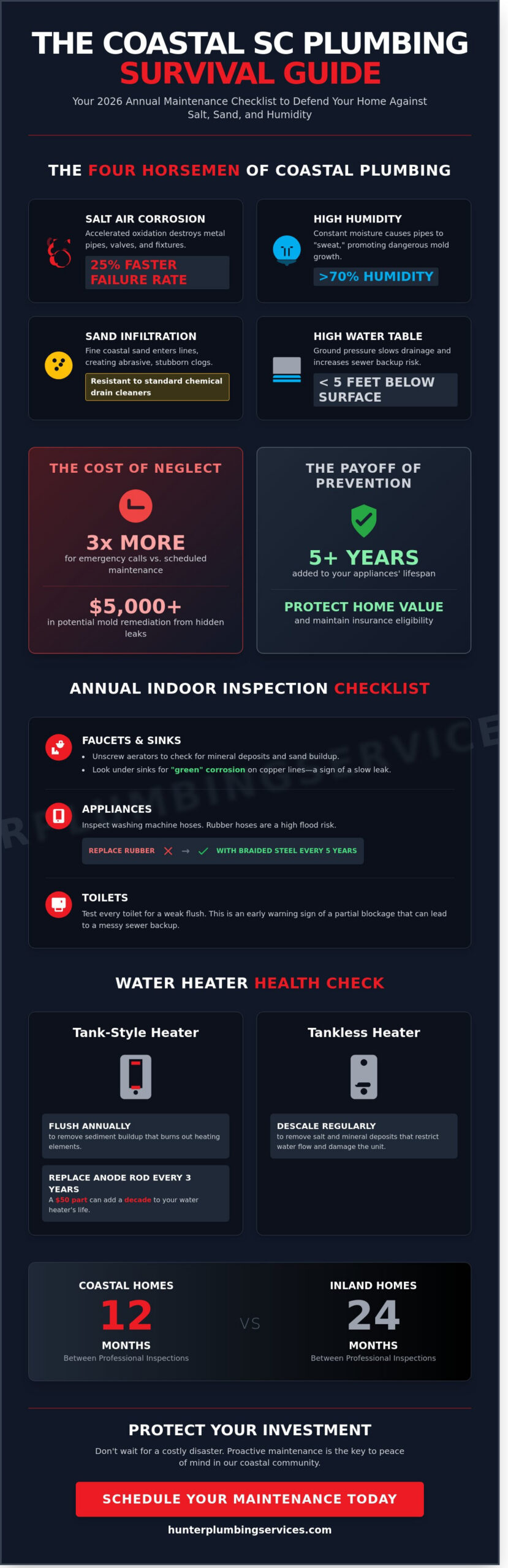
- Salt Air Corrosion: Salt particles in the air accelerate the oxidation of copper pipes and chrome fixtures. This leads to pinhole leaks and hardware failure 25 percent faster than in inland regions.
- High Water Table: Much of Horry County sits on a high water table, often less than 5 feet below the surface. This pressure can slow down residential drainage and increase the risk of sewer backups during heavy rain.
- Seasonal Population Surges: Myrtle Beach welcomes over 20 million visitors annually. This massive influx puts a seasonal strain on municipal sewer lines and private septic systems, often causing backups in residential neighborhoods during peak summer months.
- Financial Protection: A standard emergency plumbing visit can cost three times more than a scheduled maintenance call. Proactive audits catch small drips before they turn into $5,000 mold remediation projects.
The Impact of the Grand Strand Climate
Humidity in Myrtle Beach frequently stays above 70 percent. This moisture causes pipes to “sweat,” which drips onto floorboards and encourages rapid mold growth in crawlspaces. Additionally, sand infiltration is a major local issue. Fine coastal sand enters your system through outdoor hoses or floor drains, creating stubborn clogs that standard chemicals won’t fix. Because of these factors, Myrtle Beach homes require inspections every 12 months, whereas inland properties might wait two years.
Protecting Your Home Value in Horry County
Your home is a major investment. Documenting your annual plumbing maintenance checklist SC provides a paper trail that increases resale value. Buyers in the 2026 market want proof that a home can withstand coastal wear and tear. Maintenance also helps you avoid the number one cause of insurance claims: undetected water damage. Most policies require homeowners to perform basic upkeep to remain eligible for full coverage. Keeping your system up to current Horry County building codes ensures your property remains safe, legal, and ready for the market.
Indoor Inspection: Sinks, Drains, and the Water Heater Challenge
Your home’s interior plumbing faces constant pressure from the unique coastal environment. Start your annual plumbing maintenance checklist SC by examining every faucet in the house. Unscrew the aerators to check for mineral deposits or fine sand. These small screens trap debris that reduces water pressure and affects your fixtures. Next, look under your sinks. If you see “green” corrosion on copper supply lines, it indicates a slow leak or high humidity levels that require immediate attention.
Move to the laundry room and kitchen to inspect appliance hoses. Rubber hoses on washing machines account for a high percentage of indoor floods. Replace them with braided stainless steel every five years to ensure your home stays dry. Don’t forget to test the flushability of every toilet. A weak flush often signals a partial blockage that could lead to a sewer backup during the humid summer months. Hydro-jetting is the gold standard for clearing coastal sand buildup because it uses high-pressure water to scrub the interior of the pipes clean.
Maximizing Water Heater Efficiency
Sediment buildup is a silent killer for tank-style heaters in Myrtle Beach. You need to flush your tank annually to remove the calcium and grit that settle at the bottom. This prevents the heating element from burning out prematurely. If you have upgraded to a tankless water heater installation, your maintenance needs are different. Coastal units require regular descaling to remove salt and mineral deposits that restrict flow. Always check the sacrificial anode rod in your tank. Replacing a $50 rod every three years can add a decade to your water heater’s lifespan by preventing internal tank corrosion.
The Drain and Sewer Line Audit
A slow drain is more than a nuisance; it’s a warning. Identifying these issues before you need an emergency clogged drain service near me saves you time and stress. Pay close attention to floor drains in your garage or laundry area. If the P-trap dries out, sewer gases can enter your living space. For homes near marshes or tidal creeks, a camera inspection is the only way to verify sewer line health. Shifting soil and aggressive root systems in these areas can crush or infiltrate pipes without any surface-level signs. If you notice recurring gurgling sounds, contact a local expert to perform a thorough diagnostic check before the next storm season arrives.
The Coastal Checklist: Battling Salt Air and High Water Tables
Living in Myrtle Beach means enjoying the ocean breeze, but your home’s plumbing pays a price for that salt air. Coastal environments accelerate corrosion on metal components much faster than inland areas. Your annual plumbing maintenance checklist SC must prioritize outdoor fixtures and low-lying infrastructure to prevent sudden, expensive failures.
Start your inspection with the outdoor hose bibs. Salt crystals accumulate inside the valve seats, which leads to brittle seals and persistent leaks. Test these valves at least twice a year to ensure they close tightly without dripping. Next, locate your main water shut-off valve. In our sandy and humid climate, these valves often seize up because of lack of use. Turn the handle or lever to ensure it moves freely. If it requires excessive force, you need a professional replacement before a pipe bursts and you find yourself unable to stop the flow.
For homes with crawlspaces, moisture management is vital for pipe longevity. South Carolina humidity levels frequently stay above 65 percent during the summer, which promotes rapid rust on exposed cast iron or copper piping. Inspect these lines for green oxidation or flaky orange scales. If your property sits near the Intracoastal Waterway, your sump pump is your primary defense against rising water tables. Pour five gallons of water into the pit to trigger the float switch. If the pump doesn’t engage within 3 seconds, the motor may be failing due to mineral buildup or age.
Outdoor Fixture Preservation
Salt deposits act like sandpaper on your plumbing finishes. Use a soft cloth and warm, soapy water to clean outdoor showerheads and spigots every 6 months. Applying a thin layer of a specialized silicone coating can prevent metal pitting caused by the high salt content typical in our coastal air. You should also ensure your landscaping maintains a 2 percent slope away from the foundation. This prevents saltwater from pooling around your main line, which can degrade pipe joints over time.
Marshfront and High Water Table Issues
Saturated soil in marshfront neighborhoods creates significant hydrostatic pressure against your home’s main sewer exit point. This pressure often causes soil shifting that leads to bellies or cracks in the line. Watch for patches of unusually green grass or spongy soil near the exit point, as these indicate a subsurface leak. In low-lying areas like Socastee or Cherry Grove, backflow issues are common during King Tides. Check your yard drains for debris regularly. Keeping these clear ensures that saltwater intrusion doesn’t overwhelm your drainage system during heavy 2026 rain events. Including these steps in your annual plumbing maintenance checklist SC keeps your home’s waste system flowing properly despite the rising tides.
Seasonal Milestones: From Spring Thaws to Hurricane Prep
Living on the Grand Strand means your home faces unique environmental pressures throughout the year. Your annual plumbing maintenance checklist SC shouldn’t just be a generic list; it needs to reflect our local weather patterns. From the humid summer heat to the occasional winter freeze, your pipes require specific attention at different times to avoid costly emergency repairs. Following a consistent annual plumbing maintenance checklist SC ensures your home stays protected against unpredictable coastal weather.
Spring is the ideal time to de-winterize your outdoor lines. After the last frost, which typically occurs in late March for our area, check your spigots for hairline cracks caused by expansion. Test your irrigation systems early to ensure no underground leaks formed during the dormant months. As summer arrives, Myrtle Beach experiences a significant spike in water demand. Local data shows household water usage can jump by 25% or more during peak tourism months. This increased pressure puts a heavy strain on your main supply line and sewer pipes.
When the temperature drops in autumn, shift your focus to the water heater. Flushing your tank once a year removes sediment that can decrease heating efficiency by 15%. This ensures you have reliable hot water for those chilly December mornings. During the rare SC winter freezes, make sure you’ve insulated any exposed pipes in crawl spaces or garages. Even a brief dip below the 32-degree mark can cause uninsulated pipes to burst, leading to thousands of dollars in water damage.
Hurricane Season Plumbing Readiness
Hurricane season runs from June 1st through November 30th. You must prepare your home to handle heavy rainfall and potential flooding. Clear all gutters and downspouts to ensure water flows away from your foundation. This prevents perimeter flooding that can saturate the soil around your sewer lines. You also need to locate and label your water emergency shut off. If a storm damages your plumbing, you won’t have time to search for the valve in the dark. Finally, check that your backflow preventers are clear of debris to stop contaminated floodwater from entering your clean water supply.
Holiday Prep for Guest-Heavy Homes
The holidays bring family and friends, but they also bring extra stress to your drains. Before the Thanksgiving rush, test your garbage disposal to ensure the blades move freely. Avoid putting fibrous vegetables or grease down the drain; these are the leading causes of holiday clogs. Ensure every toilet in the house is flushing properly and can handle increased usage. If you notice a slow flush now, it’ll likely become a total backup once guests arrive. You should also check your water pressure using a simple gauge. Keeping your pressure between 40 and 60 PSI ensures multiple showers can run simultaneously without a frustrating drop in flow.
Don’t wait for a leak to ruin your holiday or storm season. If you’re unsure about the state of your pipes, contact Hunter Plumbing Services for a professional inspection today.
Professional Support: When to Call a Myrtle Beach Plumber
Your DIY annual plumbing maintenance checklist SC is an excellent first line of defense. It helps you catch small drips and clear minor clogs before they escalate. However, some plumbing tasks require specialized tools and training that go beyond the average residential toolbox. If you notice a sudden drop in water pressure or an unexplained spike in your monthly utility bill, it is time for a professional diagnostic. These signs often point to deep-seated issues that can cause significant damage if left unaddressed for even a few weeks.
Coastal homes in Myrtle Beach face unique challenges like shifting sandy soil and salt air corrosion. These environmental factors often lead to hidden slab leaks that are impossible to see with the naked eye. A professional leak detection service is the only reliable way to find these underground breaks without unnecessarily tearing up your flooring. Similarly, gas line maintenance is a non-negotiable professional task. Licensed pros have the sensitive equipment needed to ensure your home stays safe from leaks. Establishing a relationship with a local expert now ensures you have a trusted name to call for 24/7 emergencies later.
The Benefits of a Professional System Audit
A licensed technician brings a level of scrutiny a homeowner simply cannot match. While you look for visible leaks, we look for structural integrity. We use professional-grade tools like thermal imaging cameras to find moisture trapped behind drywall and high-definition sewer cameras to inspect your main lines. These inspections catch root intrusions or pipe bellies before they cause a backup. After the audit, we help you create a long-term maintenance plan tailored to your home’s specific age, ensuring your annual plumbing maintenance checklist SC stays effective as your property matures.
Choosing a Reliable Local Partner
Local and family-owned businesses prioritize reputation over high-volume sales. At Hunter Plumbing Services LLC, we support the Grand Strand community by offering honest, transparent service records and upfront pricing. You’ll know exactly what a job costs before we ever start the work. We understand the specific plumbing codes and environmental challenges unique to Horry County. Choosing a neighborly partner means you get quality workmanship and the peace of mind that your home is in capable, local hands.
Protect Your Myrtle Beach Home for the Year Ahead
Maintaining a coastal property requires more than just a quick look under the sink. Salt air can corrode metal fixtures up to 10 times faster than in inland environments, making regular inspections a necessity for every homeowner. By following this 2026 annual plumbing maintenance checklist SC, you’ll stay ahead of high water tables and prepare your pipes for the Atlantic hurricane season, which spans from June 1 to November 30. You now have the knowledge to flush your water heater and clear drains before small clogs become major emergencies.
Hunter Plumbing Services LLC stands ready as your local expert. We are specialists in coastal plumbing challenges and provide 24/7 emergency assistance to keep your family comfortable. Our team prides itself on upfront pricing and honest service, so you won’t face hidden surprises on your bill. We believe in building long-term relationships through quality workmanship and a neighborly approach. Your home is a major investment, and we’re here to help you protect it with professional care.
Schedule your annual plumbing maintenance audit with Hunter Plumbing Services LLC today!
We look forward to helping you keep your home safe and dry throughout every season.
Frequently Asked Questions
How often should I have my plumbing inspected in Myrtle Beach?
You should schedule a professional plumbing inspection once every 12 months to prevent major water damage. Following an annual plumbing maintenance checklist SC allows you to catch small leaks before they turn into expensive 2:00 AM emergencies. Myrtle Beach homes face high humidity levels that can corrode pipes faster than inland properties. Regular checks ensure your home stays dry and your water bills remain predictable.
Does salt air really affect my indoor plumbing fixtures?
Salt air accelerates the oxidation of metal fixtures like faucets and showerheads, especially if you live within 5 miles of the Atlantic Ocean. Coastal homes in this zone often see 30% faster corrosion on chrome and brass finishes compared to inland houses. Wipe down your fixtures with a damp cloth weekly to remove salt buildup. This simple habit extends the life of your bathroom hardware by several years.
What are the signs of a slab leak in a coastal home?
You likely have a slab leak if you notice a 15% increase in your monthly water bill or feel warm spots on your flooring. Coastal homes built on concrete slabs are prone to shifting soil, which can crack copper pipes underneath. Listen for the sound of rushing water when all your faucets are off. Call us immediately if you see moisture wicking up your baseboards or new cracks in your foundation.
Is it necessary to flush my water heater every year in SC?
You must flush your water heater annually to remove sediment that builds up from the local water supply. A 1/4 inch layer of lime and calcium at the bottom of your tank can reduce heating efficiency by 15% and cause the tank to overheat. This task is a critical part of your annual plumbing maintenance checklist SC. Regular flushing prevents the popping sound caused by trapped steam bubbles under the sediment.
What should I do if my drains smell like rotten eggs?
Pour a gallon of water down any floor drains or guest bathroom sinks that you haven’t used in 30 days. This refills the P-trap and blocks sewer gases from entering your home. If the smell persists, your water heater’s anode rod may have reacted with sulfate-reducing bacteria. Replacing a magnesium rod with an aluminum-zinc version often solves the odor issue within 24 hours of the service call.
Can sand from the beach actually clog my home plumbing?
Sand is a major cause of clogs in Myrtle Beach homes because it’s 2.5 times denser than water and settles in the belly of your pipes. It doesn’t dissolve like organic waste, so it creates a heavy sludge that traps hair and grease. Install an outdoor shower or a foot wash station to keep beach debris out of your drains. Once sand enters your main sewer line, you’ll often need professional hydro-jetting to clear it.
How do I prepare my plumbing for a hurricane in Myrtle Beach?
Turn off your main water valve and your water heater’s power supply 4 hours before a hurricane makes landfall. This prevents contaminated water from entering your system if the city’s water lines break during the storm. Secure your outdoor spigots and ensure your sump pump has a battery backup that lasts at least 12 hours. These steps protect your pipes from pressure surges and prevent internal flooding during a power outage.
Is a professional plumbing inspection worth the cost?
A professional inspection is a smart investment because it identifies hidden issues like pinhole leaks or sewer root intrusion before they cause a flood. Most homeowners find that a scheduled visit costs 3 times less than the emergency fee for a burst pipe. Our team provides an honest, transparent assessment of your system. We focus on long-term reliability so you can enjoy your home without worrying about unexpected plumbing disasters.