
Imagine it’s a humid Saturday evening in Myrtle Beach and you’ve just discovered raw sewage bubbling up through your shower drain. It’s a homeowner’s worst nightmare that triggers immediate panic about property damage and expensive repairs. You likely want an answer fast, but the best way to clear a main drain clog depends on whether you’re facing a simple blockage or a serious pipe failure. Most homeowners feel overwhelmed by the choice between a $10 plunger and a professional hydro-jetting service that can cost between $350 and $600.
We understand how stressful these plumbing emergencies feel, especially when you’re worried about hidden costs or making the problem worse. This guide will help you navigate your options with confidence. You’ll learn the most effective methods to restore your sewer line, how to identify the root cause of the backup, and when to call a local expert to handle the unique challenges of our coastal sandy soil. We’ll break down the national average clearing cost of $379 so you can make an informed, honest decision for your home’s health.
Key Takeaways
- Learn how to use the Multi-Fixture Rule to determine if your blockage is a simple sink issue or a serious main line backup.
- Discover why the best way to clear a main drain clog depends on the obstruction type, from manual plunging to professional hydro-jetting.
- Understand the critical differences between mechanical snaking for solid roots and high-pressure jetting for cleaning grease and scale.
- Find out how the unique coastal environment of Myrtle Beach, including high water tables and shifting sands, impacts your sewer system.
- Get details on how upfront pricing and a No-Mess guarantee provide peace of mind during a stressful plumbing emergency.
Identifying the Backup: Is Your Main Drain Actually Clogged?
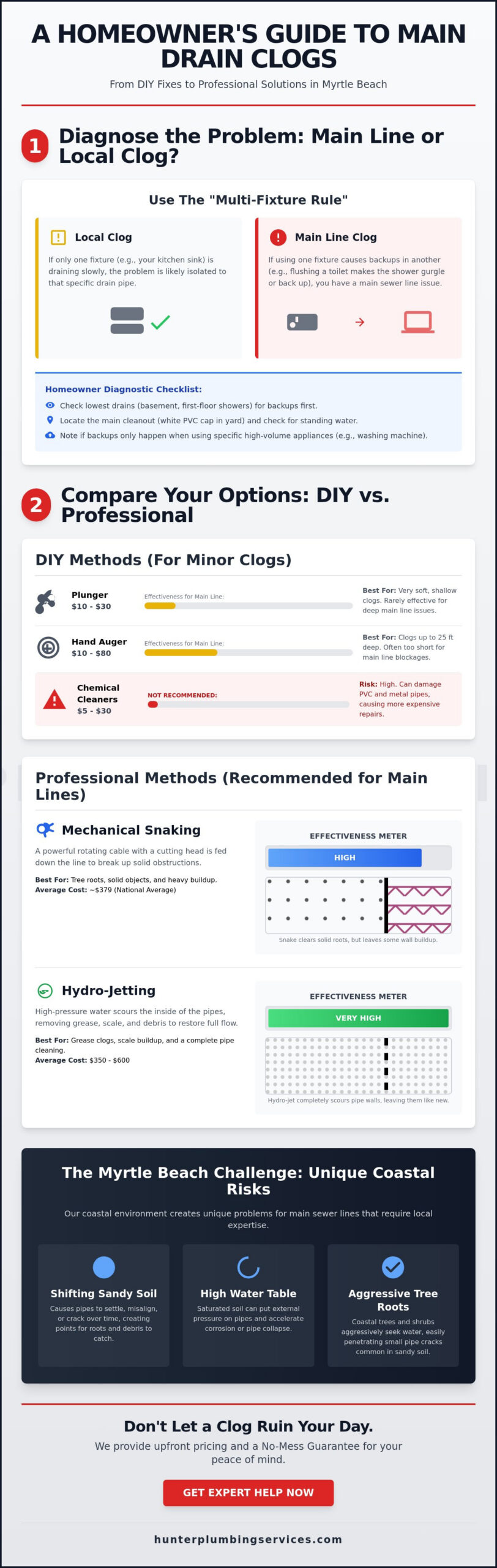
Identifying a main line backup starts with one simple question: is the problem happening in one room or the whole house? We use the “Multi-Fixture Rule” to find the answer. If your kitchen sink is the only thing draining slowly, you probably have a local obstruction. However, if water bubbles up in your shower when you flush the toilet, you have a systemic issue. Determining the scope of the problem is the first step in finding the best way to clear a main drain clog without wasting time on the wrong tools. You don’t want to spend money on a small sink snake if the issue is 50 feet down your main line.
Common symptoms often appear in the lowest points of your home first. You might hear gurgling sounds coming from your toilets while the washing machine drains, or you might see soapy water rising in your bathtub. These are classic signs that waste has nowhere to go but back up. In Myrtle Beach, the shifting sandy soil can often cause pipes to settle or crack, making these symptoms appear suddenly. Your home’s main sewer cleanout, typically a white PVC cap found in your yard near the foundation, is your diagnostic window. If you unscrew that cap and see standing water, the blockage is definitely in the main line. Never ignore the smell of rotten eggs or sewer gas in your yard; this indicates that your system has reached its limit and gas is being forced back into your living space.
The Diagnostic Checklist for Homeowners
- Check the lowest drains: Inspect your first-floor showers or basement floor drains. These are the “canaries in the coal mine” for main line issues.
- Observe the cleanout: If you can safely reach the white PVC cap in your yard, check for standing water. A full pipe means the clog is between your house and the street.
- Monitor water usage: Identify if the backup is constant or if it only happens when you run a specific appliance like the dishwasher. This helps us pinpoint the blockage location.
When to Stop Immediately and Call a Pro
Some situations are too dangerous for a DIY approach. If you see raw sewage actively flowing out of your drains, stop all water usage immediately. This includes turning off your washing machine and avoiding all toilet flushes to prevent further pressure buildup. If the backup occurs near your electrical panel or HVAC system, don’t touch any standing water. Call an emergency plumber Myrtle Beach right away. We use professional tools like a heavy duty plumber’s snake to safely clear the line without causing a flood in your living room. Acting fast can be the difference between a simple cleaning and a massive restoration bill.
Safe DIY Methods to Clear a Main Sewer Line Clog
If you’re staring at a backup, your first instinct is likely to save on service fees by trying a DIY fix. While some minor blockages respond to home tools, finding the best way to clear a main drain clog depends on the severity of the obstruction. For very “soft” clogs located near the surface, a heavy duty flange plunger costing between $10 and $30 might provide enough pressure to shift the debris. However, main lines are typically 3 to 4 inches wide. A standard plunger rarely creates enough displacement to clear a deep blockage. Manual hand augers, which usually cost between $10 and $80, can reach about 25 feet. These are effective for clogs just past the trap but often fall short of reaching the 50 to 100 foot mark where many main line issues live.
Avoid the temptation to pour chemical “main line cleaners” down your pipes. These products, which cost between $5 and $30, rely on caustic reactions that generate heat. While they might melt a small grease spot, they can also soften older PVC pipes or accelerate corrosion in metal lines. Natural alternatives like baking soda and vinegar are great for weekly maintenance and keeping your drains smelling fresh, but they lack the mechanical force needed to break through a compacted main line backup. If a plunger doesn’t work within five minutes, it’s time to consider mechanical options.
Step-by-Step: Using a Rental Power Auger
Renting a power snake is a common choice for homeowners who want to handle the job themselves. You must wear heavy duty leather gloves, eye protection, and non-slip boots. Start by feeding the cable slowly into the cleanout pipe. When you feel resistance, don’t force it. Instead, let the rotating head “chew” at the blockage. During the retrieval phase, pay close attention to what comes back on the cable. If you see tree roots or thick grease, you’ve identified the culprit. If the cable comes back clean but the water is still standing, the clog might be further down the line than the rental cable can reach.
The Risks of DIY Main Line Clearing
Using high-torque machinery carries significant risks that many rental shops don’t explain. When deciding between Hydro-jetting vs. snaking, many homeowners choose the snake because it’s available at the local hardware store. However, a powerful cable can easily become entangled in tree roots or snap if it hits a collapsed section of pipe. If the cable “flips” inside the pipe, it can shatter old clay lines or even cause personal injury to your hands and arms. DIY attempts can also inadvertently push the obstruction deeper into the system, potentially causing a backup in the city’s main line. If you’re unsure about the condition of your pipes, it’s often safer to consult a local plumbing expert before operating heavy machinery on your own.
Professional Methods: Snaking vs. Hydro-Jetting
When a plunger fails, you need a solution that goes deeper into your home’s infrastructure. Professional drain clearing is the most reliable way to handle a main line backup, but the right tool depends entirely on the blockage type. The best way to clear a main drain clog often comes down to choosing between mechanical force and high-pressure water. While the national average cost to clear a main sewer line is $379 as of May 2026, the method we choose determines how long your pipes stay clear. We don’t just want to punch a hole; we want to restore your plumbing to its original capacity.
Mechanical snaking is the traditional approach for most residential backups. It involves a rotating steel cable with heavy duty cutting blades that physically break up solid obstructions. It is particularly effective for tree root intrusion, which is a common issue in older Myrtle Beach neighborhoods with established landscaping. Snaking typically costs between $100 and $250. While it is great for clearing a path through a solid mass, it often leaves soft residue like grease behind. This is where hydro-jetting offers a superior advantage for long-term results and peace of mind.
Comparison: Which Method Wins for Your Clog?
- Best for tree roots: Mechanical snaking with cutting blades is the go-to for thick, solid obstructions that need to be shredded and pulled out.
- Best for kitchen grease and sludge: Professional hydro-jetting removes the “sticky” buildup that mechanical snakes simply slide through without clearing.
Hydro-jetting is the use of 3,500+ PSI water to restore pipe diameter by scrubbing away years of accumulated scale, soap scum, and debris. While the initial cost is higher, ranging from $350 to $600 for most standard residential jobs, it provides a much more thorough cleaning than a cable ever could. This thoroughness often prevents the need for a second service call just a few months later.
The Importance of Camera Inspections
We never guess what is happening inside your underground pipes. A professional camera service is the first step in our diagnostic process. This high-definition inspection usually costs between $100 and $300 and saves you money by preventing unnecessary digging or pipe replacement. We can identify if your pipe has actually collapsed due to shifting sandy soil or if it is just a simple clog. Seeing the problem allows us to provide an honest, upfront price before the work begins. We also record the “after” footage to guarantee the line is 100% clear. This transparency ensures you aren’t paying for a temporary fix, but a long-lasting solution for your home.
Why Coastal Myrtle Beach Homes Face Unique Main Drain Issues
Living on the Grand Strand means dealing with conditions that inland plumbers rarely see. Our high water table creates constant hydrostatic pressure on your underground sewer joints. When the soil becomes saturated after heavy rainfall, like the storms we saw during Hurricanes Ian in 2022 and Debby in 2024, that external pressure forces groundwater and silt into small structural gaps. For homes near the Intracoastal Waterway or marshfront properties, this pressure fluctuates with the tides, putting repetitive stress on older pipe connections. This is a significant reason why the City of Myrtle Beach has invested over $75 million in stormwater management projects since the late 1990s to help mitigate these drainage pressures.
Salt air corrosion is another silent threat to coastal plumbing. While most people think of salt damage on their cars, it also eats away at metal vent stacks and cast iron connections. Over time, this corrosion creates rough patches inside the pipe that snag debris. Understanding these local factors is essential because the best way to clear a main drain clog in a coastal environment often requires specialized equipment that can handle more than just a simple paper blockage. Standard methods might work temporarily, but they don’t address the unique environmental stress our local systems face every day.
Sand and Silt: The Myrtle Beach Plumbing Struggle
Sand is a major issue for coastal drain lines. It enters through tiny cracks or loose joints and settles at the bottom of the pipe. Because sand is heavy and granular, a standard mechanical snake will often just pass right through it without removing the material. In these cases, hydro-jetting is the only effective solution to flush the silt out of the system and restore full flow. You can help prevent this buildup by ensuring your white PVC cleanout caps are tight and undamaged after every yard maintenance session. If sand has already compromised your line, professional flushing is the only way to avoid a total collapse.
Tree Roots and Coastal Vegetation
Local species like Live Oaks are notorious for seeking out the moisture inside your sewer lines. Their roots are incredibly strong and can penetrate even small fissures in search of water, especially during our hot South Carolina summers. Salt-tolerant plants also have aggressive root systems that can wrap around your plumbing and put pressure on the joints. We recommend an annual camera inspection to catch these roots before they cause a total pipe failure. If you’re dealing with a stubborn coastal backup, schedule a drain cleaning with Hunter Plumbing Services for an honest assessment of your main line’s condition.
Expert Drain Clearing Services from Hunter Plumbing
When raw sewage backs up into your home, you need more than just a technician with a tool; you need a partner you can trust to protect your property. Hunter Plumbing Services LLC is a family-owned and operated business that treats your Myrtle Beach home with the same care we give our own. We understand that the best way to clear a main drain clog involves a combination of technical skill and a commitment to cleanliness. Our “No-Mess” Guarantee means we take every precaution, from floor coverings to specialized containment, to ensure your living space stays sanitary during the repair process. You don’t have to worry about the cleanup after the clog is gone.
Transparency is the foundation of our relationship with the Grand Strand community. We provide upfront, honest pricing before any work begins. You won’t find hidden “emergency” fees for our standard diagnostic services. We know that the national average cost to clear a main sewer line is $379, and we work hard to provide high-value solutions that fit your budget. Whether your system requires a simple mechanical cleaning or a complete sewer line replacement, we provide a clear explanation of the costs and the work required. Our goal is to provide a long-lasting fix, not a temporary patch.
The Hunter Plumbing Services LLC Process
Our process starts with immediate action to prevent property damage. Upon arrival, our first priority is pressure relief to stop the active backup and minimize sewage overflow. Once the immediate threat is contained, we perform a diagnostic camera run. This allows us to see the exact nature of the blockage, whether it’s the sand infiltration or root intrusion common in Horry County. We then provide a tailored solution. If the pipe is older and fragile, we might use a mechanical snake. If it’s a newer line choked with grease, we’ll recommend hydro-jetting to scrub the walls clean. We choose the method that best protects your home’s infrastructure.
Schedule Your Drain Service Today
Plumbing emergencies don’t wait for business hours, and neither do we. We offer 24/7 assistance across the Myrtle Beach area to ensure you’re never left stranded with a failing sewer line. If you’re a first-time customer, mention this article to receive a discount on your initial diagnostic service. We take pride in being the dependable local experts who combine modern technology with old-fashioned work ethics. Contact Hunter Plumbing Services LLC to clear your main drain fast and restore your peace of mind.
Restore Your Home’s Flow with Confidence
A main line backup is a major disruption, but you don’t have to face it alone. By using the Multi-Fixture Rule to identify the problem and understanding that the best way to clear a main drain clog involves matching the right tool to the specific obstruction, you’ve already taken the first step toward a permanent solution. Whether you’re dealing with aggressive Live Oak roots or the sand infiltration common in Myrtle Beach, knowing when to put down the plunger and call in a professional saves you from expensive property damage. You now have the knowledge to choose between mechanical snaking and high-pressure hydro-jetting based on your home’s unique needs.
Hunter Plumbing Services is here to help you navigate these stressful moments with ease. As a family-owned and locally operated business, we provide 24/7 emergency service to ensure your home stays safe and sanitary. We use advanced sewer camera technology to give you an honest, upfront look at your pipes before any work begins. You deserve a clear drain and the peace of mind that comes with a job done right by experts who value integrity. We look forward to helping you get your home back to normal.
Schedule Expert Drain Cleaning in Myrtle Beach Today and let our family take care of yours.
Frequently Asked Questions
Can I use Drano to clear a main sewer line clog?
No, you should not use liquid chemical cleaners for a main line backup. These products are designed for small sink traps and don’t have the volume or strength to reach a blockage 50 feet away. The chemicals often sit in the pipe and generate heat, which can damage PVC or accelerate corrosion in older metal lines. This creates a safety hazard for the plumber who eventually has to clear the line manually.
How much does it typically cost to clear a main drain in Myrtle Beach?
The national average cost to clear a main sewer line is $379 as of May 2026. For a simple snaking job, you can expect to pay between $100 and $250. More intensive professional hydro-jetting services generally range from $350 to $600. These prices depend on the location of the clog and the specific equipment required to restore your home’s flow.
What happens if my main sewer line is clogged and I keep running water?
If you continue running water with a main line blockage, it will eventually flood your home through the lowest drains. Every gallon that goes down a sink or toilet has nowhere to go but back up. This usually results in raw sewage bubbling into your bathtubs or floor drains. Stop all water usage immediately to prevent expensive property damage and health risks from contaminated water.
Is a main drain clog the responsibility of the homeowner or the city?
Homeowners are responsible for the sewer line from the house to the city’s main connection at the property line. If the blockage is in the pipe under your yard, you must handle the repair. If the issue is in the city’s main street line, the municipality is responsible. A camera inspection is the best way to clear a main drain clog dispute by proving exactly where the obstruction sits.
How do I know if tree roots are clogging my sewer line?
Tree roots often cause slow drains and recurring gurgling sounds in your toilets. You might notice a suspiciously green patch of grass over the sewer line or see sewage surfacing near a large tree. Because roots seek moisture, they enter through tiny joints and grow into thick masses. A professional camera inspection is the only way to confirm root intrusion and determine if the pipe needs cleaning or replacement.
Can a main drain clog fix itself over time?
A main sewer line clog will not fix itself. While water might slowly seep past a partial blockage, the debris trapped in the pipe will continue to catch hair, grease, and paper. This creates a solid mass that eventually causes a total backup. Ignoring the early warning signs like slow drains only leads to a more expensive emergency service call once the pipe is completely blocked.
What is the fastest way to clear a main line backup in an emergency?
The fastest way to resolve a backup is calling a professional for mechanical snaking or hydro-jetting. A high-torque power auger can punch through solid obstructions in minutes to provide immediate relief. For a more permanent fix, hydro-jetting flushes the entire line clean. These professional methods are far quicker and more reliable than attempting to use hand tools or chemical cleaners on a deep main line issue.
Can hydro-jetting damage my older plumbing pipes?
Hydro-jetting can potentially damage older, fragile pipes made of clay or thin metal. The 3,500+ PSI pressure is powerful enough to shatter pipes that are already cracked or structurally compromised. This is why we always perform a camera inspection first. We verify the structural integrity of your plumbing before using high-pressure water to ensure we clear the clog without causing further damage to your home.