
On a Tuesday morning in April, you start your routine only to find two inches of gray, soapy water sitting in your basin. This is a frequent issue for local residents; local service data indicates that roughly 15% of residential service requests in the Grand Strand involve a bathroom sink drain clogged in Myrtle Beach. You shouldn’t have to tolerate standing water or those sour odors that won’t go away. We know you want to protect your pipes without relying on corrosive chemical cleaners that can cause long-term damage.
For homeowners looking to maintain their entire property’s health, you can learn more about comprehensive plumbing and climate control services that prevent common household emergencies.
This guide teaches you how to clear stubborn clogs and when to contact a local expert to keep your home’s plumbing safe. We will walk through simple home remedies and professional solutions to ensure your drains stay clear for years to come. By the end of this article, you’ll have the knowledge to fix the current mess and the tools to prevent future backups before they start. Our goal is to provide the peace of mind that comes with a free-flowing home.
Key Takeaways
- Identify the specific local culprits behind a bathroom sink drain clogged in Myrtle Beach, including the “Grand Strand Trio” and mineral scale from hard water.
- Learn safe, chemical-free DIY techniques to clear surface hair clogs without risking damage to your home’s plumbing.
- Recognize the critical warning signs that indicate a deep blockage or sewer line issue requiring a professional plumber’s expertise.
- Master simple maintenance habits, like the weekly hot water flush, to keep your drains flowing freely and prevent future buildup.
- Discover how advanced hydro-jetting technology can restore your pipes to a “like-new” condition for long-term reliability.
Common Causes of a Bathroom Sink Drain Clogged in Myrtle Beach Homes
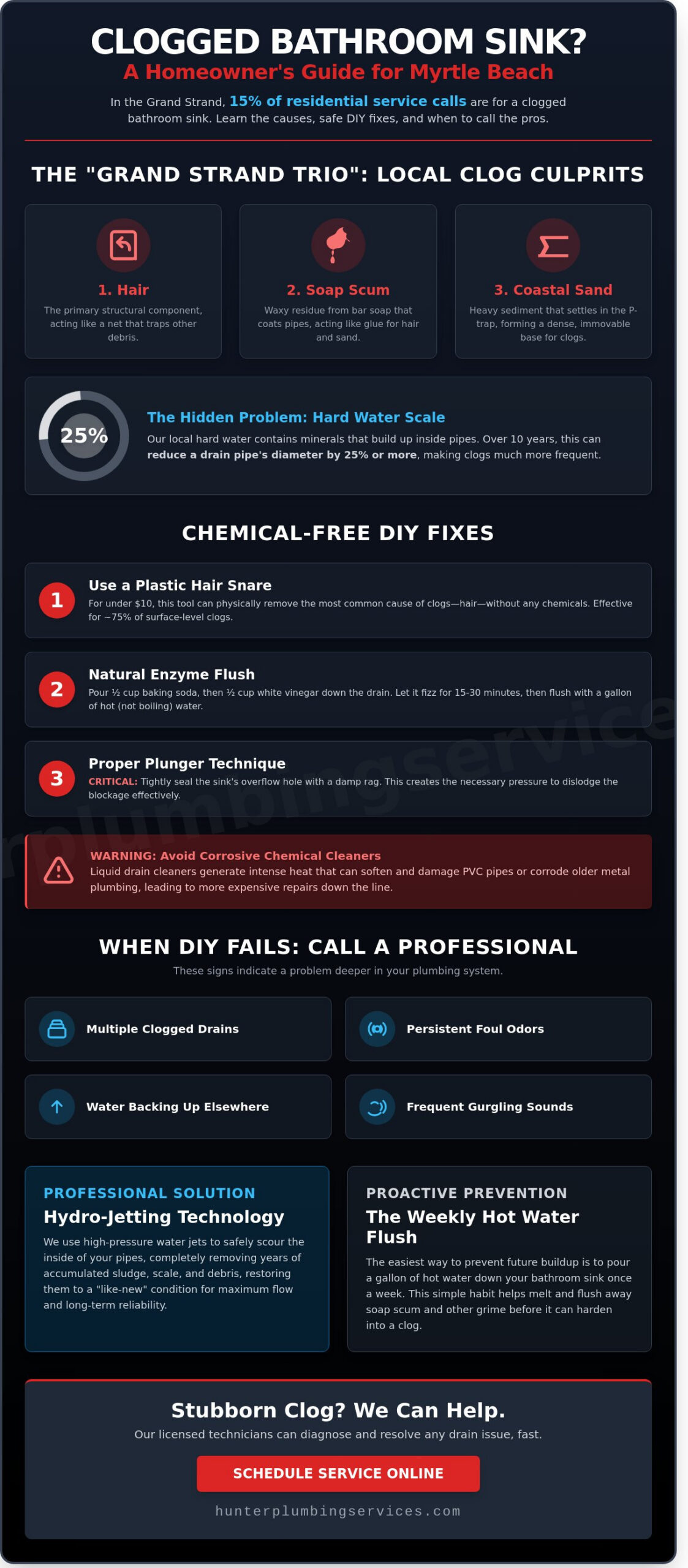
Dealing with a bathroom sink drain clogged in Myrtle Beach is a common headache for local homeowners. Our coastal environment introduces specific challenges that inland plumbing rarely faces. Most blockages result from what our team calls the “Grand Strand Trio”: hair, soap scum, and fine coastal sand. These materials work together to create a plug that’s difficult to clear without professional tools. While many people try to resolve these issues using chemical drain cleaners, these products often fail to dissolve the complex mineral and organic mixtures found in our local pipes.
Environmental factors also play a massive role in your home’s plumbing health. Myrtle Beach often experiences humidity levels above 75% during the peak of summer. This moisture promotes the rapid growth of biofilm, which is a sticky layer of bacteria and mold that coats the inside of your pipes. This sludge acts like glue, catching every stray hair or piece of debris that enters the basin. For those living in older Horry County homes, salt air corrosion is another concern. The salt in our air can weaken metal drain components over decades, causing the interior of the pipes to become rough and prone to catching waste.
The Impact of Coastal Sand and Sediment
Sand is one of the most destructive elements for your plumbing system. When you return from a trip to the beach, it’s tempting to rinse off sandy hands or gear in the bathroom sink. However, sand is much heavier than water and doesn’t flush through the system easily. It settles in the lowest point of your plumbing, usually the P-trap, where it accumulates into a dense “brick” of sediment. Sand acts as an anchor that binds hair and soap scum into a solid, unmoving mass. This creates a blockage that can eventually stop all water flow, requiring a manual cleaning of the trap or professional hydro-jetting to restore service.
Hard Water and Mineral Buildup
Our local water supply contains minerals like calcium and magnesium that contribute to “hard water” conditions. When these minerals mix with traditional bar soaps, a chemical reaction occurs that produces a waxy soap curd. This sticky residue clings to the pipe walls and hardens over time. In many Myrtle Beach homes, these calcium deposits can reduce the internal diameter of a drain pipe by 25% or more over a ten-year period. You’ll know mineral scale is the primary culprit if you see white, crusty deposits around your faucet or if your drain slows down gradually over several months. This narrowing makes it much easier for even small amounts of hair to cause a total backup.
Step-by-Step Guide: How to Unclog Your Bathroom Sink Drain
Dealing with a bathroom sink drain clogged Myrtle Beach homeowners often encounter usually starts with a build-up of hair and soap scum. Roughly 75% of bathroom clogs in our coastal area result from these two materials binding together inside the pipe. Before you reach for a bottle of liquid drain cleaner, stop. These harsh chemicals can generate heat that softens PVC pipes or corrodes the older metal plumbing found in many of our local historic homes. Instead, start with a plastic hair-snaring tool, often called a “Zip-it.” This $6 tool features small barbs that grab hair clogs near the surface. Simply insert it into the drain, wiggle it, and pull the debris out.
For minor organic buildup, try a natural flush. Pour half a cup of baking soda followed by half a cup of white vinegar down the drain. Let the mixture fizz for 15 minutes to break down grime. Finish by flushing the line with a gallon of hot water. This method is safe for your pipes and the environment.
Mastering the Plunger Technique
Plunging a sink requires a specific approach to be effective. You must use a cup-style plunger, which has a flat rim designed to seal against the sink bottom. The most critical step is sealing the overflow hole. This is the small opening near the top of the sink basin. Use a damp rag to plug this hole tightly. If you leave it open, air will escape and you won’t create the vacuum pressure needed to dislodge the blockage. Fill the sink with about two inches of water to cover the plunger head. Use firm, vertical strokes for 30 seconds. This provides an excellent visual demonstration of how this pressure works. If the water drains with a swirl, you’ve moved the clog. If it sits still, the blockage is likely further down the line.
Cleaning the P-Trap Like a Pro
When the plunger doesn’t work, the debris is likely caught in the P-trap. This is the U-shaped pipe under your vanity. You will need a small bucket, 10-inch channel locks, and a towel. Place the bucket directly under the trap to catch the two or three cups of standing water inside. Follow these steps to clear it safely:
- Loosen the slip nuts on both ends of the U-shaped pipe using your channel locks.
- Carefully pull the trap away from the sink tailpiece and the wall pipe.
- Empty the trap into your bucket and inspect it for hair, jewelry, or hardened soap.
- Clean the interior of the pipe with a stiff brush or a rag.
- Check the rubber washers for cracks or signs of wear before reassembling.
When you put the trap back, tighten the nuts by hand first. Use the channel locks for a final quarter-turn to ensure a leak-free connection without cracking the plastic. If you find that the blockage is deeper in the wall or if you’re uncomfortable taking apart your plumbing, our team at Hunter Plumbing Services is just a phone call away to provide a reliable, professional solution.
When DIY Fails: Signs Your Myrtle Beach Clog Needs a Professional Plumber
Sometimes, a plunger and a little elbow grease aren’t enough to solve the problem. If you have tried the basics and your bathroom sink drain clogged Myrtle Beach is still acting up, it is time to look for deeper warning signs. Plumbing systems in coastal South Carolina face unique challenges, from sandy soil shifts to high humidity that accelerates pipe corrosion. Recognizing when a clog is beyond a simple fix can save you from a major flood or expensive structural repairs.
Watch for multiple fixtures draining slowly at once. If your sink, toilet, and shower all struggle to clear, the blockage is likely in your main sewer line rather than a single pipe. You might also notice foul, sulfuric odors that don’t go away after cleaning the drain. These smells often point to a blocked vent stack or a breach in the sewer line. Another red flag occurs when you run the sink faucet and see water bubbling up into the bathtub. This cross-contamination indicates a significant blockage downstream that requires professional equipment to clear safely.
The Dangers of Repeated DIY Attempts
It is tempting to keep plunging, but excessive force can damage your home. High-pressure plunging often creates enough stress to crack aging PVC joints or loosen galvanized pipe threads. Similarly, retail-grade drain snakes can be dangerous in untrained hands. These metal cables frequently scratch expensive porcelain finishes or puncture thin, corroded pipe walls. If you notice damp spots on your drywall or a drop in water pressure, stop immediately. You might have a leak detection issue behind the wall that DIY tools will only make worse.
The Deep Line Problem
Most household plumbing tools reach only 10 to 15 feet. Many blockages occur much further down the line. In Myrtle Beach, especially in marshfront properties, high water tables can affect how quickly your system drains. Saturated soil can even cause older pipes to shift or settle, leading to “bellies” where debris collects. If your bathroom sink drain clogged Myrtle Beach returns every few months, it isn’t a coincidence. Recurring clogs often signal root intrusion from local oaks or significant pipe degradation. We use professional camera inspections to see exactly what is happening 50 feet underground, ensuring we fix the root cause rather than just the symptom.
- Persistent slow drains in more than one room.
- Gurgling noises coming from the toilet when the sink runs.
- Sewage smells that persist despite using enzyme cleaners.
- Water backing up into different fixtures simultaneously.
Preventing Future Clogs: Maintenance Tips for Grand Strand Homeowners
Staying ahead of plumbing issues saves you time and money. Living near the coast means your pipes face unique challenges like sand and high mineral content. If you’ve dealt with a bathroom sink drain clogged in Myrtle Beach, you know how disruptive it is. Simple habits keep your water flowing freely and protect your home’s value.
Start by installing high-quality mesh strainers. These simple tools catch hair and debris before they enter your plumbing. Mesh strainers are the #1 defense for coastal sinks because they stop fine sand and hair from forming a solid plug in your P-trap. Clean these strainers daily to ensure proper drainage.
Establish a weekly hot water flush routine. Pour a gallon of boiling water down the drain to melt away soap residue and grease. Switch to liquid soaps rather than bar soaps. Bar soaps contain fats that create “soap curd,” which acts like glue for sand and hair. This sticky substance is a primary cause for a bathroom sink drain clogged in Myrtle Beach homes.
Schedule an annual drain cleaning in Myrtle Beach to clear out stubborn scale. Professional hydro-jetting removes 100% of the buildup that standard snakes leave behind. This proactive step prevents emergencies during the busy summer season.
Beach-Friendly Bathroom Habits
Sand is the enemy of your drainage system. Implement an “Outdoor Shower First” rule to rinse off the beach before you step into the bathroom. Even small amounts of sand settle in the bottom of your pipes. This creates a heavy foundation for future clogs that are difficult to clear with a plunger.
Never flush “flushable” wipes. Despite the marketing on the packaging, these wipes do not disintegrate like toilet paper. They snag on pipe imperfections and lead to major backups. Dispose of them in the trash can every time to keep your sewer lines clear.
Eco-Friendly Pipe Maintenance
Avoid harsh chemical cleaners that eat away at your pipes and harm the local environment. Use enzyme-based cleaners instead. These products use natural bacteria to eat through organic buildup safely without damaging your plumbing materials.
Inspect your pop-up stoppers twice a year. If you notice green corrosion or pitted metal, replace them immediately. Corroded stoppers snag hair and lint, accelerating the rate of clogs. Most stoppers last about 5 to 7 years in our coastal environment before they require replacement.
Consider a whole-house water softener. Myrtle Beach water often contains minerals that lead to calcium scale. A softener reduces this buildup by up to 90 percent. This protects your pipes and extends the life of your fixtures. If your preventative efforts aren’t enough, contact us for reliable plumbing repairs today.
Professional Drain Cleaning Services in Myrtle Beach by Hunter Plumbing
Sometimes a plunger or a zip-strip isn’t enough to solve the problem. If you have a bathroom sink drain clogged Myrtle Beach residents often find that professional intervention is the only way to prevent recurring issues. Our team at Hunter Plumbing takes a neighborly approach to every service call. We understand that a plumbing malfunction is a major disruption to your daily routine. That’s why we offer 24/7 emergency support. A slow drain can escalate into a full-scale flood in less than 20 minutes if a pipe backs up completely while the faucet is running.
We don’t just clear the blockage; we restore the pipe. Our technicians use advanced hydro-jetting technology to provide a “like-new” clean. While a standard drain snake might only punch a small hole through a clog, hydro-jetting uses water pressurized to 4,000 PSI to scrub the interior walls of your plumbing. This removes 100% of the organic buildup, hair, and soap scum that traditional methods leave behind. It’s a proactive way to ensure your sink stays clear for years to come.
Transparency is the foundation of our business. You’ll receive upfront pricing before any work begins. We don’t believe in hidden “coastal” surcharges or emergency fees that change based on your zip code. You get honest work at a fair price, every single time.
The Hunter Plumbing Difference
Hunter Plumbing is family-owned and operated with deep roots in Horry County. We treat your home with the respect it deserves. Our plumbers follow a strict “cleaner than we found it” policy, which includes wearing protective shoe covers and using drop cloths in your bathroom. This attention to detail is why 85% of local vacation rental managers in Myrtle Beach trust us for rapid response times. We know that a functional bathroom is essential for your comfort and your property’s reputation.
Ready to Clear the Way?
Scheduling a service call in Myrtle Beach or Conway is simple and fast. When you book your appointment, you can expect a technician to arrive in a fully stocked van ready to work. During the visit, we’ll perform a visual inspection to identify the exact location of the blockage. We explain the process clearly so you aren’t left in the dark about your home’s health. Don’t let a bathroom sink drain clogged Myrtle Beach ruin your week. Call Hunter Plumbing today for immediate, professional assistance and get your water flowing freely again.
Restore Flow to Your Myrtle Beach Bathroom Today
Dealing with a bathroom sink drain clogged in Myrtle Beach doesn’t have to ruin your schedule. Most minor blockages respond well to a simple plunger or a zip-strip tool. However, if you’ve attempted 3 different DIY fixes and the water still pools, it’s time to stop the guesswork. Recurring slow drains often signal a deeper issue within your pipes that requires professional equipment to resolve completely. Ignoring these signs can lead to more expensive repairs later on.
Hunter Plumbing is your dependable local partner for every plumbing hurdle. We’re a family-owned and locally operated company that understands the specific needs of Grand Strand homeowners. Because emergencies don’t wait for business hours, we provide 24/7 emergency service to ensure your home stays functional. You’ll always receive honest, upfront pricing before we start any work, so you can make informed decisions without any stress. We focus on long-lasting solutions that protect your plumbing system for years to come.
Schedule your professional drain cleaning with Hunter Plumbing today!
We’re ready to help you get your bathroom back in perfect working order with the care and expertise your home deserves.
Frequently Asked Questions
Is it safe to use Drano for a bathroom sink drain clogged in Myrtle Beach?
You shouldn’t use caustic chemical cleaners like Drano in your drains. These products generate intense heat to dissolve blockages, which can reach temperatures high enough to warp PVC pipes or damage the glue holding your joints together. According to the Plastic Pipe and Fittings Association, heat exceeding 140 degrees Fahrenheit often compromises the integrity of residential plastic piping. It’s much safer to use a plunger or a mechanical snake to protect your plumbing system.
How much does a plumber Myrtle Beach SC charge for drain cleaning?
According to 2023 data from HomeAdvisor, homeowners typically pay between $150 and $350 for professional drain cleaning. The final price depends on the location of the blockage and the specific equipment required to clear it. We always provide upfront pricing so you know exactly what to expect before we begin. This transparency helps you make the best decision for your home without worrying about hidden fees or surprise costs.
Why does my bathroom sink smell like rotten eggs?
That sulfur smell usually comes from bacteria growing in your drain’s biofilm or an empty P-trap. When hair and soap scum collect, they create a breeding ground for bacteria that release hydrogen sulfide gas. If you haven’t used the sink in 30 days, the water barrier in the trap may have evaporated. Try pouring one gallon of water down the drain to see if the smell disappears once the trap is resealed.
Can sand really clog my bathroom sink drain permanently?
Sand won’t cause permanent damage, but it’s incredibly difficult to flush out because it’s 2.5 times denser than water. Instead of flowing through the pipes, sand settles in the bottom of the P-trap and creates a heavy, solid mass. If you’ve been to the beach and rinsed off sandy gear in the sink, you’ll likely need to disassemble the trap manually. Regular water pressure isn’t strong enough to move heavy sediment through your home’s drainage lines.
How do I know if the clog is in my sink or the main sewer line?
Check your other fixtures to see if they’re draining properly. If only the bathroom sink is backed up, the clog is localized to that specific pipe. However, if your shower fills with water when you flush the toilet, you likely have a main sewer line issue. The EPA reports that 75 percent of sewer backups result from grease or root intrusion. If multiple drains fail at once, it’s time to call a professional for a sewer camera inspection.
What is the best DIY tool for hair clogs in a sink?
A 20 inch plastic zip tool is the most effective and affordable DIY solution for hair clogs. These flexible strips feature small barbs that grab onto hair clumps so you can pull them out of the drain easily. You can find these tools for less than 10 dollars at local hardware stores. They’re much safer for your pipes than chemicals and work quickly to clear a bathroom sink drain clogged in Myrtle Beach without needing to take the plumbing apart.
How often should I have my drains professionally cleaned in a coastal home?
We recommend a professional cleaning every 18 to 24 months for homes in coastal environments. The combination of fine sand and high humidity can accelerate the buildup of debris inside your pipes. Following a regular maintenance schedule helps you avoid the stress of a sudden emergency. Professional hydro-jetting every two years ensures your lines stay clear and extends the overall lifespan of your home’s plumbing infrastructure.