
Imagine waking up on a humid Tuesday in Myrtle Beach only to find your shower drain gurgling with every flush. Is it just a bit of hair in the trap, or has the sandy soil shifted enough to cause a major backup in your main line? It’s a stressful moment that every coastal homeowner dreads, especially when you aren’t sure if you’re looking at a simple fix or a total system failure. Mastering a few preventative sewer line maintenance tips is the best way to protect your property and avoid the anxiety of unexpected repairs.
We know that plumbing terminology can feel like a foreign language, and the fear of sewage backup is enough to keep anyone awake at night. You deserve to feel confident that your home is safe and sanitary. This article will help you identify sewer issues before they become emergencies and provide a clear diagnostic framework for your pipes. We’ll explore the differences between secondary and main line clogs while offering actionable advice to keep your plumbing healthy. You’ll gain the peace of mind that comes from knowing exactly how to maintain your home’s hygiene.
Key Takeaways
- Visualize your plumbing as a tree to quickly distinguish between a single fixture issue and a whole-house problem.
- Recognize “fixture cross-talk” so you can identify a main line blockage before it leads to a costly backup.
- Implement local preventative sewer line maintenance tips to protect your pipes from invasive tree roots and shifting coastal soil.
- Protect your home’s hygiene by learning why grease and “flushable” wipes are the biggest threats to your sewer system.
- Master the immediate steps to take during a plumbing emergency to minimize water damage and repair costs.
Understanding Drain Architecture: The Trunk and the Branches
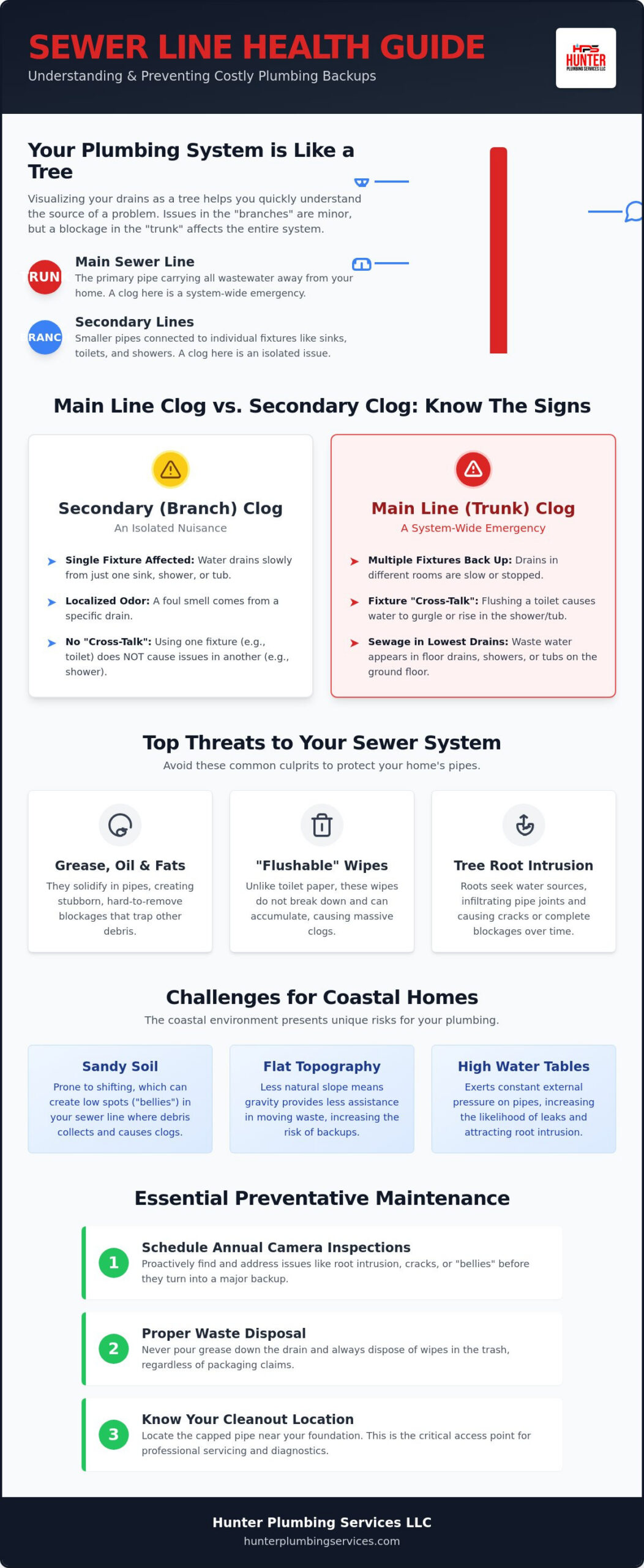
Think of your home’s plumbing system as a tree. The main sewer line is the sturdy trunk. It’s the primary channel that carries every gallon of waste and wastewater away from your property and into the city’s infrastructure. Secondary lines are the branches. These smaller pipes service individual fixtures like your kitchen sink, the master bathtub, or the laundry room. While a branch issue is an isolated nuisance, a main line clog is a systemic blockage that affects your entire property. It stops the flow of waste completely, meaning nothing can leave your house until the obstruction is cleared.
To manage this system effectively, you need to know where your sewer cleanout is located. This is usually a white or black capped pipe sticking out of the ground near your foundation. It serves as the critical access point for diagnostic tools. When things go wrong, this is where we begin our work to restore your home’s hygiene.
How Coastal Plumbing Differs in Myrtle Beach
Living on the coast changes the rules for your pipes. Our flat topography means your plumbing doesn’t always have a steep “downhill” run to help gravity move waste along. In marshfront properties, high water tables exert constant external pressure on your sewer joints, which can lead to leaks or root intrusion. Our local sandy soil is also prone to shifting. Over time, these shifts can create “bellies” or low spots in your main line where debris collects instead of flowing out. Following preventative sewer line maintenance tips tailored for our unique environment helps you catch these soil-related shifts before they lead to a total system collapse.
Why Clog Location Dictates Your Response
A clogged bathroom sink is a low-risk issue you can often wait to address. A main line backup is a high-risk emergency. When the “trunk” of your plumbing tree is blocked, raw sewage has nowhere to go but back into your home through the lowest drains, such as your shower or floor drains. This isn’t just a mess; it’s a serious health hazard. If you notice multiple fixtures gurgling or backing up at once, you need a professional plumber for drain cleaning right away. Acting quickly protects your home from water damage and keeps your family safe. Regular preventative sewer line maintenance tips, like annual camera checks, ensure these systemic failures don’t catch you off guard.
Main Line Clog vs. Secondary Clog: Symptom Comparison
Understanding the source of a backup is the first step in protecting your property. When a blockage occurs, the symptoms usually tell a clear story. We look for “fixture cross-talk,” which happens when using one plumbing fixture causes a reaction in another. If you flush the toilet and your shower starts gurgling, you aren’t just dealing with a bit of hair in the drain. This is a systemic warning sign that your main line is struggling. Identifying these patterns early is one of the most effective preventative sewer line maintenance tips we can offer.
Signs of a Localized (Secondary) Clog
A secondary clog is isolated to a single “branch” of your plumbing system. You might notice a bathroom sink draining slowly or a faint, foul odor coming from the kitchen basin. These are typically caused by everyday buildup like hair, grease, or soap scum trapped in the P-trap directly beneath the fixture. Because the blockage is close to the drain, it won’t affect the rest of the house. If only one tub is acting up, a professional drain cleaning is usually enough to restore flow without a major repair.
You can perform a quick “Flush Test” to verify the location yourself. Flush a toilet and watch the nearest tub or shower. If the water level in the shower doesn’t move and there’s no noise, the issue is likely localized. However, if the shower drain bubbles or fills with water, the blockage is further down the line.
Signs of a Main Sewer Line Emergency
A main line emergency involves multiple fixtures across different rooms. You might see water backing up into the kitchen sink while the washing machine drains, or find sewage appearing in the lowest floor drains of your home. During a main backup, water takes the path of least resistance, which is why it often pushes back through showers and ground-floor toilets first. This is a high-risk situation that requires immediate attention to prevent property damage.
Listen closely for the difference in sounds. A secondary clog usually produces a localized gurgle right at the sink. A main line failure sounds like systemic bubbling or deep thumping throughout the walls. Following preventative sewer line maintenance tips like these helps you catch the difference between a minor annoyance and a total system failure before the mess begins.
Essential Preventative Sewer Line Maintenance Tips for Coastal Homes
Proactive care is the only way to avoid the messy reality of a system failure. Our local environment presents specific challenges that standard plumbing advice often overlooks. These preventative sewer line maintenance tips are designed to address the unique conditions of Myrtle Beach properties while keeping your drains flowing freely.
- Avoid the “Big Three” Killers: Never pour cooking grease down the sink; it solidifies into “fatbergs” in our pipes. Similarly, “flushable” wipes and feminine products do not break down and are leading causes of main line obstructions.
- Manage Live Oak Roots: Those beautiful Live Oaks are a staple of our landscape, but their roots are relentless. They seek out the moisture in sewer joints, eventually cracking pipes as they grow.
- Inspect Your Cleanout: Check the plastic or metal cap on your sewer cleanout regularly. If it’s cracked or missing, debris and rodents can enter the system and cause a major blockage.
- Maintain Vent Stacks: Your plumbing needs air to move water. Ensure the vent stacks on your roof are clear of bird nests or leaves to prevent air pressure issues that mimic a clog.
The Impact of Salt Air and Sandy Soil
Our coastal environment is tough on infrastructure. Salt air accelerates the corrosion of cast iron vent stacks, which can lead to poor drainage and sewer gas odors inside the home. Additionally, our sandy soil is prone to shifting, especially after heavy rains. These shifts can create “bellies” or low spots in your main line where waste collects. If you live in an older coastal property, we recommend regular leak detection to identify these structural shifts before they become emergencies.
Safe Cleaning Practices vs. Chemical Harms
Many homeowners reach for caustic chemical cleaners at the first sign of a slow drain. These products are often too harsh for older pipes and can damage our delicate coastal ecosystems. Instead, use enzyme-based cleaners for routine maintenance. These natural solutions eat away at organic buildup without corroding your plumbing. For owners of vacation rentals, we suggest a professional flush between peak seasons. This clears out the heavy buildup from high occupancy periods and ensures your guests don’t face a backup. If you are concerned about the health of your pipes, contact us for a professional camera service to see exactly what’s happening underground.
Professional Solutions: When Maintenance Isn’t Enough
Sometimes, even the most diligent preventative sewer line maintenance tips can’t stop a major failure caused by shifting coastal soil or aggressive root intrusion. If you find yourself facing a sewage backup, stay calm. Your first move should be to shut off the main water valve to your home. This prevents additional water from entering the system and flooding your drains further. Once the water is off, avoid the temptation to use a DIY rental snake on your main line. These tools often lack the power to clear systemic blockages and can easily crack older pipes or get stuck in a root mass, turning a repair into a catastrophe.
The Value of a Sewer Camera Inspection
We utilize high-definition Camera Service to navigate your pipes and find the exact source of the problem. This process identifies issues like pipe collapses, offset joints, or grease logs without any invasive digging. You’ll see the live footage on our monitor, providing total transparency so you know exactly what the repair entails. Seeing the blockage on-screen ensures we aren’t just guessing with your money or your property’s safety. It’s the most effective way to determine if you need a simple cleaning or a more extensive Sewer Line Replacement. Professional diagnostics save time and prevent the “trial and error” approach that often leads to higher costs in sandy soil conditions.
Choosing a Reliable Myrtle Beach Plumber
Choosing a reliable Myrtle Beach plumber means finding a team that understands our local landscape and its unique challenges. Hunter Plumbing Services LLC is a neighborly expert with deep roots in Horry County. We offer 24/7 availability for urgent main line failures because we know these emergencies don’t wait for business hours. Our commitment to no-nonsense pricing and honest diagnostics is our verbal handshake with the community. We value long-term relationships over quick sales, ensuring your home remains a safe and sanitary haven for your family. If your drains aren’t behaving, contact Hunter Plumbing Services LLC for expert sewer diagnostics and repair to get your home back to normal.
Secure Your Home’s Plumbing Health Today
Distinguishing between an isolated branch clog and a systemic trunk failure is the first step toward maintaining a safe home. As discussed, recognizing “fixture cross-talk” early can prevent the health hazards of a full main line backup. Applying local preventative sewer line maintenance tips, like managing Live Oak roots and avoiding “flushable” wipes, protects your pipes from the unique pressures of Myrtle Beach’s sandy soil and high water tables.
When standard maintenance isn’t enough to handle a stubborn blockage, you need a local partner who understands the coastal landscape. Hunter Plumbing Services LLC provides the technical authority and neighborly care required to resolve complex sewer issues efficiently. We offer 24/7 emergency support throughout Horry County, ensuring that your property is always in safe, capable hands. Contact Hunter Plumbing Services LLC for 24/7 Emergency Sewer Repair and restore your peace of mind today. We are proud to be your hardworking, no-nonsense plumbing experts who value long-term relationships and traditional work ethics.
Frequently Asked Questions
How can I tell if my main sewer line is clogged or just one pipe?
You can tell by checking if multiple fixtures are backing up at the same time. If flushing your toilet causes water to rise in the shower or makes the kitchen sink gurgle, the issue is likely in the main line. A secondary clog only affects a single fixture, such as one slow-draining sink, while the rest of the house functions normally.
Will a main sewer line clog clear itself if I wait?
No, a main sewer line clog will not clear itself and typically gets worse the longer you wait. Debris, grease, and roots continue to accumulate, creating a denser blockage that eventually stops all water flow. Ignoring the signs often leads to a messy backup of raw sewage into your home, which is much more expensive to clean and repair than a standard service call.
Is it safe to use my water if I suspect a main line blockage?
It is not safe to use any water in your home if you suspect a main line blockage. Every time you run a faucet or flush a toilet, that water adds to the volume trapped in your pipes with nowhere to go. Stop using all appliances, including the dishwasher and washing machine, and shut off your main water valve to prevent accidental flooding until a professional arrives.
Can tree roots cause a main line clog in Myrtle Beach?
Yes, tree roots are a leading cause of main line failures in Myrtle Beach, particularly with our beautiful Live Oaks. These roots naturally seek out the moisture and nutrients found inside sewer pipe joints. Once they find a tiny crack or a loose seal, they enter the pipe and grow rapidly, eventually acting as a net that catches grease and paper until the line is completely blocked.
What is the most common cause of a secondary drain clog?
The most common cause of a secondary drain clog is a buildup of hair, soap scum, and cooking oils. These materials often get stuck in the P-trap or the smaller branch lines that connect your sinks and tubs to the main system. Incorporating simple preventative sewer line maintenance tips, such as using mesh drain strainers and never pouring grease down the sink, can prevent these localized issues from occurring.
How often should I schedule preventative sewer line maintenance?
We recommend scheduling a professional camera inspection every one to three years to ensure your system is healthy. Homes in Myrtle Beach with older clay pipes or large trees near the sewer line may benefit from annual checks. Consistent preventative sewer line maintenance tips help identify shifting sandy soil or early root intrusion before they turn into a full-scale plumbing emergency.