
What if the most expensive mistake in your Myrtle Beach dream home is the one thing you’ll never see once the drywall goes up? Planning a new build or a major renovation in 2026 brings plenty of excitement, but it also comes with the stress of hidden expenses. You’ve likely felt that knot in your stomach when thinking about the rough in plumbing cost, especially with fluctuating material prices. We agree that surprises belong at birthday parties, not on your construction invoice.
At Hunter Plumbing Services, we believe in being a helpful local partner. That’s why we’ve created this guide to give you a clear, honest breakdown of what to expect. You’ll learn how Horry County permit requirements and your choice between PEX or copper will affect your total investment. We’ll walk you through the standard project timeline and provide the budget framework you need to move forward with confidence. This guide ensures you have the technical knowledge to choose a local expert who values integrity as much as you do.
Key Takeaways
- Understand what happens during the rough-in phase and why it is the most critical step for your home’s long-term plumbing integrity.
- Get an accurate estimate of the rough in plumbing cost in Horry County using our 2026 breakdown of per-fixture and per-square-foot pricing models.
- Learn how local Myrtle Beach factors, such as salt-heavy air and your choice between PEX and copper, directly impact your project budget.
- Discover the two essential phases of the plumbing timeline to ensure your new build or renovation stays on schedule and passes every inspection.
- Identify the red flags of “cheap” plumbing quotes and why choosing a transparent, local partner saves you from expensive future leaks.
What is Rough-In Plumbing and Why Does It Matter for Your Myrtle Beach Build?
Rough-in plumbing is the skeletal structure of your home’s water and waste management. It happens after the framing is complete but before the drywall or flooring covers the work. This stage is your only chance to ensure every pipe is pitched correctly and every joint is sealed tight. In Myrtle Beach, we don’t just build for today. We build for the humidity and the shifting coastal soil. A “set it and forget it” mentality often leads to slab leaks. These leaks occur under your foundation and are notoriously difficult to fix. By investing in a quality installation now, you protect your property from the structural damage and mold growth that follow hidden water leaks. Professional installation ensures that your rough in plumbing cost pays for itself by avoiding these catastrophic failures.
Your home relies on complex plumbing systems to stay functional and sanitary. If the rough-in isn’t handled with precision, the integrity of your entire build is at risk. Our team focuses on long-term reliability because we know that a pipe buried behind a wall is a pipe you never want to see again. We use high-quality materials and rigorous pressure testing to confirm that every connection is secure before the first sheet of drywall is hung.
The Anatomy of a Plumbing Rough-In
- Drain-Waste-Vent (DWV) system: This is the backbone of your home. It uses gravity and air pressure to move waste away from your living space. Without proper venting, your drains will gurgle or trap sewer gases inside your home.
- Water supply lines: We install the main lines that bring fresh water to every fixture. Most modern Myrtle Beach homes use PEX or copper to deliver water efficiently and resist the corrosive effects of salt air.
- Stub-outs: These are the points where pipes exit the wall or floor. They wait there for your future sinks, toilets, and showers. If a stub-out is even two inches off, your vanity or toilet won’t fit, leading to expensive adjustments later.
New Construction vs. Major Renovation Rough-Ins
New construction projects usually offer the most straightforward path for our crew. Since the studs are exposed and the floor plan is fresh, our team moves quickly. This efficiency often helps manage the rough in plumbing cost by reducing the labor hours required to navigate tight spaces. We can optimize the layout for maximum water pressure and drainage efficiency without fighting existing structures.
Renovations in older areas like Conway or the Golden Mile are different. These homes often have narrow crawlspaces or plaster walls that require careful navigation. If you are building a stilt home near the marsh, the rough-in must account for vertical runs and specialized hangers. These coastal elevations require pipes to be secured against high winds and potential vibration. Our family-owned team understands these local building codes. We provide the transparent, honest guidance you need to keep your build on schedule and your home safe for years to come.
Breaking Down the Rough-In Plumbing Cost in Horry County
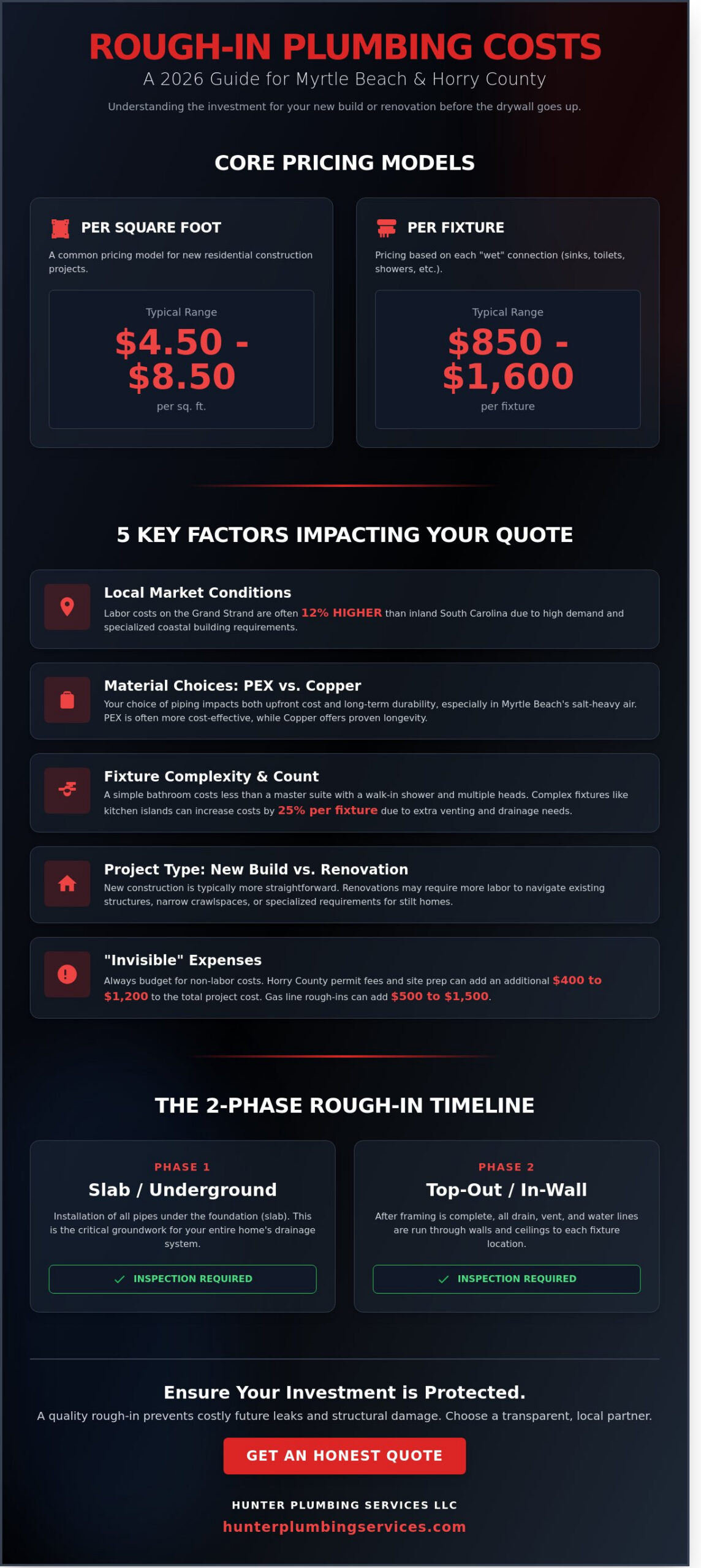
In the Myrtle Beach market for 2026, your rough in plumbing cost typically follows two main paths. You’ll likely see quotes ranging from $4.50 to $8.50 per square foot for new residential builds. Alternatively, many local teams charge by the fixture, often landing between $850 and $1,600 per “wet” connection. These rates reflect the unique economic landscape of the Grand Strand. Labor costs here often sit 12% higher than inland South Carolina because of high demand and the technical requirements of coastal construction. Every project must strictly adhere to the South Carolina Plumbing Code to ensure safety and successful inspections. Don’t forget to budget for “invisible” expenses. Permit fees in Horry County and administrative site prep can add $400 to $1,200 to your total bottom line before a single pipe is glued.
Per-Fixture Cost Estimates
Standard fixtures like toilets, standard tub inserts, and vanity sinks usually fall on the lower end of the pricing spectrum. You’ll find that complex additions like custom walk-in showers with multiple heads or kitchen islands require extra venting and drainage work; these often increase costs by 25% per fixture. If you’re planning an outdoor kitchen or a tankless water heater, gas line rough-ins typically add another $500 to $1,500 depending on the distance from the meter. During the rough-in phase, it’s also the ideal time to plan for pressure management components; properly installed expansion tanks repair and installation alongside your water heater can prevent costly pressure-related failures down the road. This rough in plumbing cost variation depends heavily on the layout of your home and the distance between the main stack and your furthest appliance. When planning your kitchen rough-in, it’s also worth considering future appliance needs; for example, properly positioning your kitchen drain stub-out now makes a future garbage disposal replacement far simpler and less costly. Similarly, getting your toilet stub-outs positioned correctly during the rough-in stage ensures that a future professional toilet installation in Myrtle Beach goes smoothly and meets coastal building requirements.
Slab-on-Grade vs. Crawl Space Costs
Slab-on-Grade is a foundation type where pipes are buried before concrete is poured. This is the most common method in Myrtle Beach due to the high water table and sandy soil conditions. It requires 100% accuracy during the “ground-out” phase. Fixing a mistake once the concrete sets is incredibly expensive. Crawl spaces offer more flexibility for future repairs or renovations. While they might cost 15% more in initial labor for the plumber to work in tight, enclosed spaces, they make future maintenance much easier. If you’re unsure which foundation fits your lot or your budget, consulting with a local expert can save you from costly mid-project changes and ensure your home’s infrastructure is built to last.
5 Key Factors That Impact Your Plumbing Rough-In Quote
Every home in Myrtle Beach has a unique footprint. Calculating your rough in plumbing cost involves more than just counting bathrooms. Our team looks at your specific lot and architectural plans to provide a transparent estimate. We focus on long-term durability so you don’t face expensive repairs after the drywall is up. Several local variables determine the final price of your project.
Material Choices: PEX vs. Copper
Material selection is a major variable in any quote. PEX (cross-linked polyethylene) is the standard for 90% of new residential builds in Horry County. It resists scale buildup and handles our local hard water better than traditional metal. Copper is still used for certain high-end applications, but it’s vulnerable to the salt-heavy air. This salt air causes oxidation on exposed copper lines within months of installation. Since the price of construction materials fluctuates based on global supply chains, we lock in your material costs at the time of your deposit. Choosing PEX often provides a better long-term ROI because it requires fewer fittings and reduces the risk of pinhole leaks. For new builds, many homeowners also pair their PEX supply lines with a whole house filtration system to protect their pipes from the hard, mineral-heavy water common throughout Horry County.
Environmental and Site Challenges
Location matters. If you’re building on a marshfront property or near the Intracoastal Waterway, your rough in plumbing cost might increase due to site conditions. We have to account for the unique topography of the Grand Strand. These factors include:
- High Water Tables: In North Myrtle Beach, high water tables often require dewatering pumps during the ground-rough phase to keep trenches dry.
- Soil Composition: Sandy soil in the Dunes Club is easier to trench than the heavy clay found further inland toward Conway, which impacts labor hours.
- The Coastal Tax: We use corrosion-resistant hangers and stainless steel fasteners for any stub-outs or vent stacks exposed to the ocean breeze to prevent premature failure.
Home Size and Utility Distance
A 2,500-square-foot multi-story home is more complex than a 1,500-square-foot bungalow. Stacking bathrooms vertically saves money, but sprawling layouts require longer pipe runs. If your home sits 100 feet back from the main utility connection, expect higher labor costs for trenching and pipe installation. We keep our process honest and direct, ensuring you understand every line item on your quote. Our goal is to provide a reliable system that works perfectly from the day you move in.
The Myrtle Beach Plumbing Rough-In Timeline: From Slab to Inspection
Understanding the sequence of a plumbing project helps you manage your budget and your expectations. While the rough in plumbing cost covers materials and labor, the timing of these phases dictates when other contractors can move forward. In Myrtle Beach, new construction typically follows a four-part progression that ensures your home meets both state codes and local coastal requirements.
- Phase 1: Underground Rough-In. This happens before the concrete slab is poured. We install the main building drain, sewer lines, and water service entries. In our sandy coastal soil, proper bedding and slope are critical to prevent shifting later.
- Phase 2: Above-Ground Rough-In. Once the framing is complete and the roof is dried in, we run the supply lines, drain stacks, and vent pipes through the wall studs. This is the skeleton of your system.
- Phase 3: Pressure Testing. Before the walls are closed, we cap the system and apply pressure to ensure there are zero leaks. This is when the Horry County Building Department performs its primary inspection.
- Phase 4: Final Trim-Out. This occurs after the drywall is finished and cabinets are installed. We connect the actual fixtures, such as sinks, toilets, and water heaters, to the rough-in points. This is also the stage where kitchen appliances like a new garbage disposal replacement unit are connected to the drain stub-outs established during the rough-in phase.
Navigating Local Inspections and Permits
Horry County inspectors are thorough. During a rough-in inspection, they primarily look for proper venting and correct pipe slope. For the DWV (Drain, Waste, Vent) system, code often requires a 10-foot head of water test or a 5-pound air test to prove the system is airtight. Many DIY projects or cut-rate installs fail because of improper “fall” on horizontal pipes or using the wrong fittings in load-bearing walls. Hunter Plumbing handles every step of the permit process. We coordinate directly with local officials so you don’t have to worry about red tape or failed inspections delaying your move-in date.
Coordinating with Other Trades
Your plumber, HVAC technician, and electrician must work as a team. HVAC ducts are bulky and often compete for the same wall cavities as your 3-inch vent pipes. We prioritize open communication with your general contractor to ensure pipes don’t compromise the structural integrity of load-bearing headers. Planning these routes carefully during the early stages helps keep your rough in plumbing cost from inflating due to mid-project rerouting. It’s also the best time to think about the future. High-quality leak detection starts at the rough-in phase by ensuring every joint is solvent-welded or crimped to professional standards.
Planning a new build or a major addition in Myrtle Beach? Contact Hunter Plumbing Services today for a transparent, professional estimate on your rough-in project.
Choosing the Right Partner for Your Myrtle Beach Plumbing Rough-In
Cutting corners during the initial stages of construction is a gamble that rarely pays off. A low initial rough in plumbing cost often masks poor workmanship or sub-par materials that eventually fail behind your finished walls. In Myrtle Beach, salt air and high humidity are constant factors. These environmental stressors cause cheap, non-corrosive-resistant components to fail prematurely. Fixing a leak after the drywall is installed and the tile is laid can cost 10 times more than the original installation. It’s a financial risk your home investment simply doesn’t need.
Hunter Plumbing Services brings a different level of security to your project. We are a fully licensed, bonded, and insured Horry County plumber. This status protects you from liability and ensures every pipe and fitting meets strict local building codes. Our team understands how coastal corrosion affects different metals and plastics. We use materials specifically chosen to withstand the South Carolina climate, ensuring your plumbing lasts for decades rather than years.
Our Commitment to the Grand Strand
We operate with family-owned values while utilizing professional, high-tech plumbing solutions. We prioritize neighborly service and honest communication because we value our reputation in the local community. Our deep roots in the area influence how we build every system. For instance, our expertise in drain cleaning ensures your new system is designed for maximum flow and proper venting. We don’t just glue pipes together; we engineer a system that prevents the common clogs and backups that plague poorly planned new builds.
- Local expertise in Horry County building codes.
- Advanced leak detection technology used during testing.
- Materials rated for high-salinity coastal environments.
- Transparent, upfront communication from start to finish.
Get Your Custom Rough-In Estimate
Every home in Myrtle Beach has unique requirements based on its footprint and fixture count. We provide a detailed, itemized quote that breaks down every aspect of your project. This transparency ensures your rough in plumbing cost remains clear, predictable, and manageable. Our process involves a thorough site review before we provide a final number. We analyze your blueprints and the physical site to identify potential hurdles early. This proactive approach eliminates the “surprise” fees that often derail construction budgets.
Build Your Myrtle Beach Future on a Solid Foundation
Planning your new construction in Horry County requires more than just picking out fixtures. You need a system that withstands coastal humidity and shifting sands. We have explored how your rough in plumbing cost depends on your home’s square footage and the complexity of your drainage layout. Remember that your project must pass the mandatory rough-in inspection before any drywall can go up. This step ensures your home meets the International Residential Code standards that govern South Carolina builds. It’s the best way to avoid expensive repairs down the road.
Hunter Plumbing Services is here to handle the heavy lifting. We’re licensed and insured in Horry County; we specialize in coastal plumbing resilience. You’ll get upfront, transparent pricing with no hidden fees from our family-owned team. We believe in doing the job right the first time so you can focus on the rest of your build. Request a Transparent Rough-In Quote for Your Myrtle Beach Project today. Your dream home deserves a plumbing system that lasts for decades. We’re ready to help you get it right from the start.
Frequently Asked Questions
How much does rough-in plumbing cost for a 2,000 sq ft house in Myrtle Beach?
A 2,000 square foot home in Myrtle Beach typically sees a rough in plumbing cost between $9,000 and $23,000 based on current 2024 national averages. This range accounts for a standard layout with three bathrooms and a kitchen. Your final price depends on the complexity of the pipe runs and the specific materials chosen. We provide transparent, upfront quotes so you can manage your construction budget with confidence and peace of mind.
Is PEX or copper better for homes near the ocean in South Carolina?
PEX is the preferred choice for coastal South Carolina homes because it resists the corrosive effects of salty sea air. Copper piping often suffers from pitting and oxidation when exposed to high chloride levels found in our local environment. PEX also handles the occasional 25 degree winter nights better than rigid metal. Our family-owned team recommends PEX for its long-lasting durability and reliability in our unique Grand Strand climate.
How long does the plumbing rough-in process take for a new home?
A professional plumbing rough-in for a standard new home usually takes 3 to 5 business days to complete. This timeframe includes installing the main drain lines, water supply pipes, and all necessary vent stacks. Larger custom homes with more than 4 bathrooms might extend the schedule to 7 or 8 days. We work with a steady, logical rhythm to ensure your project stays on schedule without sacrificing our high standards for quality.
Do I need a permit for plumbing rough-ins in Horry County?
Yes, you must secure a plumbing permit from the Horry County Code Enforcement department before any installation begins. Local regulations require a licensed contractor to pull these permits to ensure the work meets the 2021 International Residential Code. This step is vital for your safety and protects your home’s future resale value. We handle the entire permitting process for you, acting as your dependable local partner from start to finish.
What happens if my plumbing rough-in fails inspection?
If a rough-in fails inspection, the county inspector provides a list of specific code violations that you must correct before work continues. You can’t hang drywall or close up floors until the system passes a follow-up pressure test. Most failures happen due to incorrect pipe sloping or small leaks in the joints. Our expert team guarantees our workmanship, so we’ll fix any issues immediately to get your project back on track fast.
Can I do the plumbing rough-in myself to save money?
You shouldn’t attempt a DIY rough-in because South Carolina building codes usually require a licensed master plumber for new residential construction. Mistakes in the drain-waste-vent system can lead to sewer gas leaks or structural water damage that costs $10,000 or more to remediate. Hiring a professional ensures the job is done right the first time. We focus on delivering honest, high-quality solutions that keep your family safe and your home’s plumbing functional.
Does the rough-in cost include the price of the toilets and sinks?
No, the rough in plumbing cost only covers the installation of pipes, valves, and drains located inside the walls or under the slab. Toilets, faucets, and sinks are considered “finish” or “trim” fixtures and are purchased separately during the final stage of construction. You’ll typically pay for these items later when the home is ready for move-in. We provide clear breakdowns of every phase so you aren’t surprised by hidden fees during your build.
How much does it cost to rough-in a bathroom in an existing home?
Roughing in a new bathroom in an existing home generally costs between $2,000 and $5,000 depending on the proximity to your current sewer line. If we have to cut through a concrete slab, the price will sit at the higher end of that range. Projects in homes with crawlspaces are often 15% to 20% less expensive because the pipes are easier to access. We offer straightforward pricing to help you plan your home renovation with total clarity.