

Imagine walking into your backyard on a sunny afternoon only to find a soggy, foul-smelling patch of grass where your family usually relaxes. You’ve already paid for multiple drain cleanings this year, yet the slow drains and gurgling toilets keep returning. These are classic signs of a broken sewer line, and ignoring them often leads to costly emergency repairs. In our coastal environment, shifting sandy soils and recent extreme drought conditions put unique pressure on underground pipes, making it difficult to know if you’re facing a simple clog or a major structural failure.
It’s frustrating to feel like you’re paying for temporary fixes while the real problem remains hidden. We understand that the fear of a torn-up yard or a massive excavation bill can make you hesitate to book a service. This guide will help you identify the warning signs of a damaged pipe and explain exactly how a professional camera inspection works. You’ll learn how this diagnostic tool acts as an honesty tool to provide a definitive answer without unnecessary digging, giving you the clarity and peace of mind you need to protect your home.
Key Takeaways
- Identify the specific signs of a broken sewer line that distinguish a simple clog from a major structural failure.
- Understand how Myrtle Beach’s sandy soil and high water tables contribute to pipe shifting and salt air corrosion.
- Learn how high-resolution camera equipment provides a definitive diagnosis without damaging your landscape.
- Discover the difference between targeted spot repairs and full line replacements to choose the best long-term fix for your property.
- Gain the confidence to request a professional inspection that prevents unnecessary digging and recurring plumbing bills.
Telltale Signs Your Sewer Line Is Failing (Not Just Clogged)
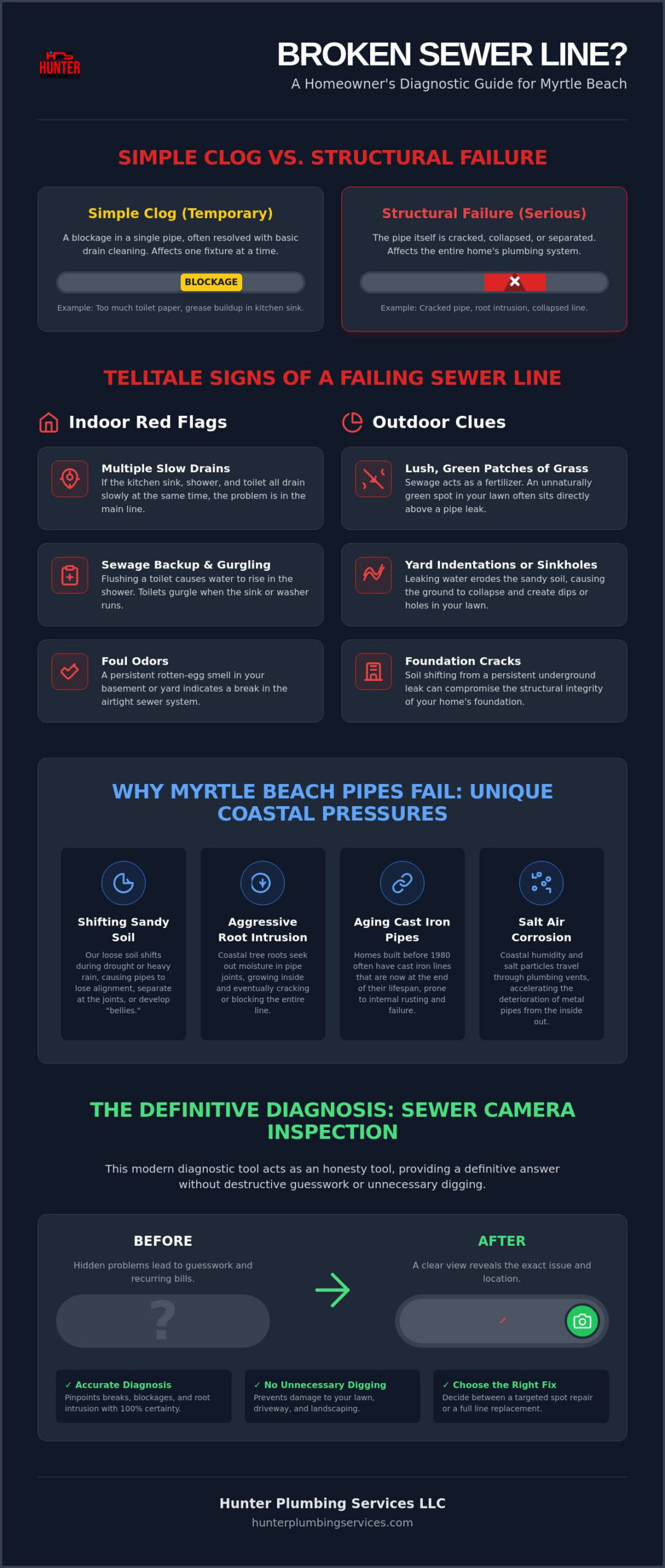
Every homeowner deals with a slow drain now and then. Usually, a plunger or a basic drain cleaning solves the issue. However, when the problem keeps returning or affects every fixture in the house, you’re likely seeing the signs of a broken sewer line. Unlike a simple blockage caused by too much toilet paper, a structural failure means the pipe itself is cracked, collapsed, or invaded by roots. Identifying these signs early can save you from a major backup and the high costs of emergency repairs.
Pay close attention to the “Gurgle” Test. If your toilet bubbles or makes a glub-glub sound when you run the bathroom sink or the washing machine, it’s a major red flag. This happens because air is trapped in the line and has nowhere to go but back through your plumbing traps. It’s a clear signal that the main exit for your home’s wastewater is compromised. You should also trust your nose. Sewer systems are designed to be airtight, with gases venting safely through the roof. If you notice a persistent rotten-egg odor in your basement or near your foundation, the seal on your main line is likely broken.
Indoor Red Flags: Drains and Toilets
Look for “system-wide” issues rather than isolated problems. If the kitchen sink, guest bath, and master shower all drain slowly at the same time, the blockage isn’t in a single pipe; it’s in the main line. You might also see sewage backup in the lowest points of your home. For example, flushing a toilet might cause water to rise in your shower stall. Watch for these persistent issues:
- Multiple slow drains occurring simultaneously across the house.
- Sewage backup in tubs or showers when you flush the toilet.
- Persistent mold growth on walls near plumbing stacks caused by hidden moisture.
Outdoor Clues: Yard and Foundation
Your yard often tells the story before your drains do. Because our Myrtle Beach soil is so sandy, leaking water can quickly wash away the ground beneath your lawn or driveway. This leads to unexplained sinkholes or indentations where the earth has collapsed into a void created by the leak. You might even notice new cracks in your foundation or patio pavers where the soil has shifted. Because raw sewage contains high levels of nitrogen and phosphorus, it acts as a potent fertilizer that creates unnaturally lush, “super-green” patches of grass directly over the damaged pipe. If one part of your lawn looks healthier than the rest, it’s often a sign that the pipe beneath it is leaking.
Why Sewer Lines Break in Myrtle Beach: Coastal & Environmental Factors
Living on the Grand Strand brings unique challenges that inland homeowners don’t face. While the signs of a broken sewer line might look similar anywhere, the causes in our area are often tied to the coastal environment. Our sandy soil is a major factor. Unlike heavy clay, sand shifts significantly during heavy rain or the extreme drought conditions we’ve seen recently in Horry County. This movement can cause underground pipes to lose their alignment, leading to “bellies” where waste collects or total separations at the joints.
High water tables also play a role, especially for marshfront properties. Constant pressure from groundwater can saturate the earth around your pipes, making them more susceptible to collapse. If your home was built before 1980, you likely have cast iron pipes. These lines were the industry standard for decades, but they are now reaching the end of their lifespan. Over time, they develop “scale” or internal rusting that snags debris and eventually leads to structural failure.
Root Intrusion in Coastal Landscapes
Our beautiful Live Oaks and coastal vegetation are part of what makes Myrtle Beach special, but their root systems are incredibly aggressive. These roots seek out the moisture and nutrients inside your sewer joints. Once a tiny hair-root finds a way in, it grows rapidly, eventually filling the pipe. While many people try “snaking” the line to clear a clog, this is only a temporary fix. It doesn’t repair the hole where the root entered, meaning the roots will return and the structural damage will continue to worsen.
The Impact of Salt Air and Humidity
Salt air corrosion isn’t limited to your outdoor AC unit. Coastal humidity and salt particles can travel through your plumbing vent stacks, accelerating the deterioration of older metal pipes from the inside out. This often leads to pinhole leaks that are hard to spot without professional leak detection services. Transitioning from these aging materials to modern PVC is often the best way to ensure your system can handle the local climate. If you suspect your older pipes are struggling, a quick camera service can give you a clear look at what’s happening underground.
Sewer Scope Inspection: What to Expect Step-by-Step
Once you recognize the signs of a broken sewer line, the next step shouldn’t be a shovel. It should be a high-resolution camera. A professional sewer scope is a non-invasive way to see exactly what’s happening inside your pipes without disturbing your landscape. We begin the process by locating your main sewer cleanout. This is usually a white PVC pipe with a threaded cap found in your yard or crawlspace. If your home doesn’t have an accessible cleanout, we can sometimes access the line by temporarily removing a toilet, though a yard cleanout is always the preferred entry point.
The equipment we use is built for the tough conditions of a sewer environment. We use waterproof, high-definition cameras attached to flexible, long-reach push-rods. As we feed the camera through the line, the footage transmits in real-time to a monitor. We encourage you to watch the screen with our technician. This transparency ensures you see exactly what we see, from the condition of the pipe walls to the buildup of debris at the city main connection. It turns a “guessing game” into a clear, visual diagnosis.
During the Inspection
Our technicians look for specific structural issues like cracks, root intrusions, or separated joints where the pipe sections have pulled apart. To make the repair process efficient, we use radio-frequency transmitters. If we find a break, the camera head sends out a signal that we track above ground with a handheld receiver. This allows us to mark the exact spot and depth of the problem on your lawn. Because a camera can’t see through standing water or thick sludge, we often recommend hiring a plumber for drain cleaning before the scope to ensure a crystal-clear view of the pipe’s surface.
What Happens After the Camera Pulls Out
After the inspection is complete, you won’t just have a verbal summary. You’ll receive a digital recording and high-quality snapshots of any problem areas we identified. A “belly” in a sewer line is a sag that collects debris and eventually leads to recurring backups. These reports are invaluable if you’re filing an insurance claim or negotiating repairs during a home purchase. Having documented proof of the pipe’s condition protects your interests and helps you plan the most cost-effective solution. If you’re ready for a definitive answer about your plumbing, book a camera service with our local team today.
Professional Solutions: Repairing or Replacing Your Sewer Line
After the camera identifies the signs of a broken sewer line, the next step is choosing a solution that protects your property and your budget. We don’t believe in suggesting a full excavation if a simple fix will do. If your pipe is structurally sound but has a single point of failure, a spot repair is often the most efficient choice. This targeted approach addresses the specific break or root intrusion without disturbing the rest of your yard.
Sometimes, the damage is too extensive for a patch. If your home has aging cast iron pipes with widespread corrosion or multiple sags, a full Sewer Line Replacement is the most reliable long-term investment. We focus on providing honest assessments that prioritize your home’s safety. As your local plumbing partner, we want to solve the problem once and for all; we don’t want to provide a temporary bandage that results in recurring bills. Our team uses the latest diagnostic data to help you make an informed decision that fits your specific needs.
Choosing the Right Path
The best choice depends on the age of your system and the severity of the findings. While a spot repair costs less upfront, it doesn’t stop new roots from entering other aging joints later. Modern PVC pipes are the gold standard for replacement because they are incredibly durable and resist the shifting sandy soil of the Grand Strand. It’s vital to hire a licensed local plumber for this work. We ensure every job meets current building codes and handles the complexities of both gas and sewer lines safely.
Next Steps for Myrtle Beach Homeowners
If you’re currently facing a total backup, don’t wait. We provide 24/7 emergency assistance to handle sewer crises when they happen. For those noticing slower drains or soggy lawn patches, a non-invasive camera diagnostic is the best way to move forward with confidence. We’ll walk you through the footage and explain your options clearly before any work begins. Preventative maintenance is the best way to avoid these high-stress situations. A quick camera check every few years can catch tiny cracks or early root growth before they turn into a full-scale emergency. Schedule your professional sewer scope inspection with Hunter Plumbing today.
Take Control of Your Home’s Plumbing Health
You now have the tools to recognize the signs of a broken sewer line, from gurgling toilets to those suspiciously lush green patches in your yard. Understanding how Myrtle Beach’s sandy soil and high water tables impact your pipes is the first step toward a permanent solution. A professional camera inspection removes the guesswork and ensures you aren’t paying for repairs you don’t actually need. It’s about moving from frustration to a clear, actionable plan for your property.
As a locally owned and operated business in Horry County, we take pride in being your dependable neighbor. We use advanced camera diagnostic technology to provide total transparency, and we’re always ready with 24/7 emergency sewer backup assistance if things take a turn for the worse. You deserve a plumbing system that works reliably every single day. Get an Honest Sewer Line Assessment from Hunter Plumbing Services today. We’re here to help you protect your home with integrity and expert care.
Frequently Asked Questions
How much does a sewer scope inspection cost in Myrtle Beach?
The cost of a diagnostic camera service depends on how easily we can access your main line. If your home has a standard outdoor cleanout, the process is straightforward; however, the price may increase if a technician needs to remove a toilet to enter the system. The total length of the pipe being inspected also plays a role in the final estimate.
Can I use my toilet if my sewer line is broken?
You should stop using your plumbing immediately if you see clear signs of a broken sewer line. When a pipe is collapsed or severely blocked, wastewater has nowhere to go and will eventually back up into your tubs, showers, or floor drains. Continuing to flush can lead to significant water damage and unsanitary conditions inside your home.
Will a sewer scope inspection damage my pipes?
A camera inspection is completely safe and non-destructive for all types of plumbing materials. The equipment consists of a high-resolution camera mounted on a flexible, smooth-coated push-rod that glides through the system. Unlike mechanical snaking or aggressive cleaning methods, the camera does not apply any force to the interior walls of your pipes.
How long does a professional sewer camera inspection take?
A typical inspection usually takes between 30 and 60 minutes to complete. This timeframe includes locating the entry point, navigating the camera to the city main, and reviewing the findings with you in real-time. If the line is heavily clogged with debris or standing water, it might take a bit longer to get a clear visual diagnosis.
Does homeowners insurance cover a broken sewer line?
Insurance coverage depends on your specific policy and what caused the failure. Many standard policies cover sudden and accidental damage but exclude issues caused by age, neglect, or root intrusion. We recommend checking your policy for a service line coverage endorsement, which is specifically designed to handle underground utility repairs between your home and the street.
What happens if the camera finds roots in my sewer pipe?
Finding roots is a definitive sign that your pipe has a crack or a failing joint. While we can clear the immediate blockage with a professional drain cleaning, the roots will eventually grow back through the same opening. We will use the camera footage to determine if a targeted spot repair or a full replacement is the best way to prevent future backups and protect your property.