
Imagine stepping into your morning shower only to find yourself ankle-deep in lukewarm, soapy water within minutes. It’s a common frustration for many of our neighbors along the Grand Strand. When you’re dealing with a slow drain in shower Myrtle Beach homes, the culprit is often a stubborn mix of hair, soap scum, and fine coastal sand that creates a “coastal cement” inside your pipes. You might even notice a lingering foul odor that makes your bathroom feel less than clean.
We understand the worry that a simple clog might lead to a massive repair bill or damaged pipes. You deserve a home that works perfectly without the stress of standing water. In this guide, we’ll teach you how to clear these blockages using safe, effective methods that won’t eat away at your plumbing like harsh chemicals do. You’ll learn the difference between a DIY fix and a deeper issue. This will give you the confidence to handle minor clogs yourself and the clarity to know when it’s time to bring in a professional for a camera inspection.
Key Takeaways
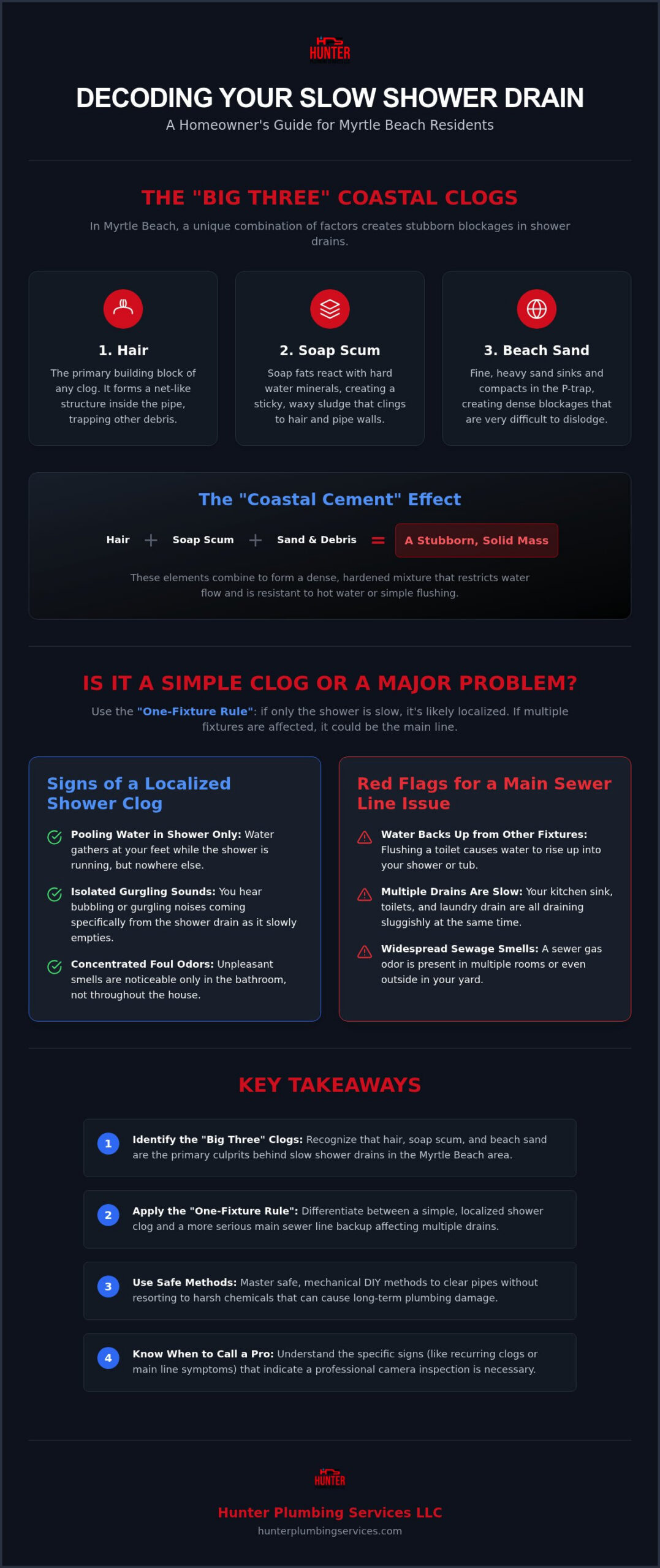
- Identify the “Big Three” coastal clogs, including hair, soap scum, and beach sand, that typically cause a slow drain in shower Myrtle Beach homes.
- Apply the “One-Fixture Rule” to determine if your blockage is a simple localized issue or a more serious main sewer line backup.
- Master safe, mechanical DIY methods to clear your pipes effectively without using harsh chemicals that can damage your plumbing.
- Understand the specific signs that indicate your clog requires a professional camera service to identify deep-seated or recurring issues.
Why is My Shower Draining Slowly? Common Myrtle Beach Culprits
A slow drain in shower Myrtle Beach homes is more than just a minor annoyance. It’s a signal that your plumbing is under stress. Unlike a total blockage where water sits completely still, a slow drain allows water to exit, but at a frustratingly sluggish pace. This usually happens when a partial obstruction narrows the diameter of your pipe. In our coastal community, we see the same “Big Three” culprits over and over again: hair, soap scum, and beach sand.
These materials don’t work alone. The hard water minerals common across Horry County contribute to pipe scaling. This creates a rough surface inside your drain lines that makes it easier for debris to snag. When you add body oils and thick conditioners to the mix, they act as a binding agent. This turns loose debris into a stubborn, solid mass that restricts your water flow.
The Hair and Soap Scum “Coastal Cement”
Hair is almost always the primary building block of a shower clog. It acts like a structural net inside the pipe. As you shower, this net catches soap fats and oils. A chemical reaction occurs when soap meets the minerals in our local water supply. This creates a sticky, waxy sludge that clings to the hair.
We often see this problem accelerated in modern walk-in showers. These fixtures typically feature larger drain covers with wider gaps. While they look great, they allow much more hair to enter the system than a traditional bathtub strainer would. Over time, this mixture hardens into what we call “coastal cement,” which is incredibly difficult to rinse away with just hot water.
The Myrtle Beach Factor: Sand and Sediment
Living on the Grand Strand means sand is a part of life, but it’s an enemy to your plumbing. Fine sand is heavy and inorganic. When it enters your drain, it doesn’t stay suspended in the water. It sinks. It often settles at the bottom of the P-trap, which is the U-shaped pipe beneath your shower floor.
Sand is much harder to clear than organic clogs. Standard DIY methods like vinegar or baking soda won’t break it down. Because sand is so dense, it requires significant force or professional tools to move. Understanding plumbing solutions for sandy soil and sediment management can help you avoid these heavy blockages. If you don’t address sand early, it can compact and eventually lead to a complete pipe failure.
Is it a Localized Clog or a Main Line Problem?
Before you reach for a plunger, you must determine the scope of the blockage. Is this a minor annoyance limited to one room, or is it a systemic failure? We use the “One-Fixture Rule” to help homeowners quickly diagnose the situation. If your kitchen sink and toilets are functioning perfectly but you have a slow drain in shower Myrtle Beach bathrooms, the problem is likely a localized secondary clog. This means the obstruction is sitting within the shower’s specific drain pipe or P-trap.
Our coastal environment adds a unique layer of complexity to this diagnosis. Myrtle Beach sits on a high water table. During heavy South Carolina rainstorms, the soil becomes completely saturated. If your main sewer line has even small cracks, this groundwater can infiltrate your system. This extra volume puts immense pressure on your pipes and can cause every fixture in the house to drain slowly. If you notice multiple drains struggling simultaneously, it often signals a need for professional leak detection to ensure your underground lines haven’t been compromised by shifting sandy soil or external water pressure.
Signs of a Localized Shower Clog
A localized clog is usually the result of the hair and soap buildup discussed earlier. You can be fairly certain the issue is isolated if you notice these specific symptoms:
- Water pools only in the shower stall while the water is running.
- Gurgling sounds come specifically from the shower drain as the water finally retreats.
- Foul odors are concentrated in the bathroom rather than throughout the entire house.
Red Flags for a Main Sewer Line Issue
Main line problems are more serious and require immediate attention to prevent property damage. These issues affect the entire plumbing ecosystem of your home. Watch for these warning signs:
- Water backs up into the shower stall specifically when you flush a nearby toilet.
- Every drain in the house, including the kitchen sink and laundry line, runs slowly at the same time.
- You notice sewage smells in various rooms or even outside in your yard near the sewer cleanout.
If your diagnostic checks point toward a larger systemic issue rather than a simple hair clog, scheduling a professional drain inspection can help you identify the exact location of the blockage before it leads to a total backup.
How to Fix a Slow Shower Drain: 3 Safe DIY Methods
Before you worry about a slow drain in shower Myrtle Beach homes, try these mechanical and natural fixes. Most minor clogs sit within reach of basic tools. Always put on rubber gloves and eye protection before you start. While it’s tempting to use a metal coat hanger, don’t. These rigid wires can easily scratch or even puncture modern PVC pipes. Instead, rely on tools designed for the job to keep your plumbing intact.
Method 1: Manual Debris Removal
Start by removing the drain cover. Most shower drains use either small screws or a snap-in design. If you don’t see screws, use a flathead screwdriver to gently pop the cover up. Once the pipe is exposed, use a plastic “zip” tool. This is a thin, barbed strip of plastic that you can slide deep into the drain to hook and pull out hair clogs. Be sure to scrub the underside of the drain strainer too. Thick layers of soap scum often hide there and restrict water flow before it even enters the pipe.
Method 2: The Natural Flush
A simple flush can often break up the “coastal cement” mentioned earlier. Pour a gallon of boiling water down the drain to help melt accumulated soap fats. If you have older plastic piping, let the water cool slightly first. Follow this with a cup of baking soda and a cup of white vinegar. The resulting foaming reaction acts as a mild degreaser to loosen grime. For a neighborly, eco-friendly approach, use enzyme-based cleaners for regular maintenance. These are far safer for the delicate septic and sewer systems used across the Grand Strand.
Method 3: Using a Hand Snake
A drain snake is a flexible, coiled tool designed to navigate pipe curves and hook deep hair clogs for easy removal. Feed the snake into the drain until you feel resistance, then rotate the handle to grab the blockage. This mechanical force is far more effective than liquids for reaching clogs that have moved past the P-trap. It’s a reliable way to clear the path without risking your pipes.
Why Chemical Drain Cleaners are a Coastal Home’s Enemy
Caustic liquid cleaners are often the first thing people buy, but they do more harm than good. These chemicals generate intense heat through a chemical reaction that can actually soften and warp plastic pipes. Beyond pipe damage, these toxins eventually leach into our local coastal waterways and harm the environment. Most importantly, chemicals simply cannot dissolve the heavy sand clogs common in our area. They might burn a small hole through hair, but the sand remains firmly in place.
If these DIY steps don’t restore your water flow, it’s time to bring in the experts for professional drain cleaning to protect your home’s infrastructure and ensure a long-lasting solution.
When to Call Hunter Plumbing for Expert Drain Cleaning
DIY methods are excellent for surface-level clogs, but they have their limits. If you find yourself clearing the same blockage every few days, you aren’t actually solving the problem. A recurring slow drain in shower Myrtle Beach homes usually means the obstruction is too deep or too dense for a hand tool to reach. You might be poking a small hole through a mass of hair and sand, only for it to close back up within a week. When your shower continues to pool water despite your best efforts, it’s time to bring in a professional partner.
Continuing to struggle with a stubborn clog can lead to unnecessary stress and potential pipe damage. We believe in providing a permanent fix rather than a temporary patch. Our team is ready to step in when the job requires specialized equipment and local expertise. We focus on getting your bathroom back to a clean, functional state so you can stop worrying about standing in dirty water.
Professional Solutions for Stubborn Clogs
We use professional-grade motorized augers that reach much further into your plumbing stack than any retail snake. These tools have the power to break through the “coastal cement” of sand and soap fats that accumulate over years. For persistent issues, we provide a specialized Camera Service. This high-definition inspection allows us to see the actual cause of the slow drain. We can identify pipe corrosion, shifting lines, or heavy sand buildup that a plunger cannot touch. If you experience a total backup that threatens your flooring, we offer 24/7 emergency assistance to protect your home.
The Hunter Plumbing Advantage
As a local, family-owned business since 2021, we understand the specific coastal challenges of the Grand Strand. We know how the high water table and sandy soil in Horry County impact your drainage. Our approach is built on financial clarity and a no-nonsense work ethic. We provide upfront information so you can make the best decision for your property. You get the peace of mind that comes from working with a neighbor who values long-term relationships over quick sales. We are proud to be your local partner in maintaining a safe, reliable plumbing system.
Contact Hunter Plumbing for professional drain cleaning in Myrtle Beach to restore your pipes and clear your clogs for good.
Take Control of Your Coastal Plumbing Today
A slow drain shouldn’t be a daily frustration in your coastal home. By identifying clogs early and choosing mechanical removal over harsh chemicals, you protect your pipes and our local environment. Remember that while most hair clogs are an easy fix, recurring issues often signal a deeper problem that requires professional tools. Trust your instincts when the “One-Fixture Rule” points toward a larger main line concern.
Don’t let a slow drain in shower Myrtle Beach homes disrupt your peace of mind. Hunter Plumbing Services LLC is your dependable local partner for every plumbing challenge. As licensed and insured professionals, we combine technical expertise with a neighborly approach. Whether you need a routine camera inspection or 24/7 emergency service, our local Myrtle Beach experts are ready to provide a long-lasting solution.
Get Your Shower Flowing Again with Hunter Plumbing Services
You deserve a home that works perfectly. Reach out today and let us restore your comfort with honest, reliable service.
Frequently Asked Questions
Is it safe to use boiling water in my shower drain?
Boiling water is generally safe for metal pipes, but you should use caution if your home uses PVC or other plastic plumbing. Extreme heat can potentially soften the plastic or weaken the seals at the pipe joints over time. It is better to let the water cool slightly after boiling before you pour it down to help melt soap fats without risking damage to your drain system. This simple step is a great way to manage a slow drain in shower Myrtle Beach homes before a clog hardens.
Why does my shower drain smell like rotten eggs?
That unpleasant sulfur smell is usually caused by bacteria feeding on hair, skin cells, and soap scum trapped in your pipes. As these organic materials decompose, they release hydrogen sulfide gas that rises through the drain. If the shower isn’t used often, the water in the P-trap might have evaporated, allowing sewer gases to enter your bathroom. A deep cleaning of the drain assembly or simply running the water to refill the trap typically fixes the problem.
How often should I clean my shower drain to prevent clogs?
You should clear the hair from your drain strainer at least once a week to prevent surface-level blockages. For a deeper maintenance routine, perform a natural flush with baking soda and vinegar once a month to dissolve soap film and oils. This regular schedule prevents fine coastal debris from settling deep in your pipes. Staying consistent with these small tasks helps you avoid the frustration of standing in dirty water during your morning shower.
Can sand from the beach really ruin my plumbing?
Beach sand is a major threat to your plumbing because it is heavy, abrasive, and completely inorganic. Unlike hair or soap fats, sand will never dissolve or break down over time. It tends to settle in the low points of your pipes, like the P-trap, where it creates a dense dam that catches other debris. If you don’t rinse off sand before showering, it can eventually compact into a solid mass that requires professional equipment to remove.
What is the best natural alternative to Drano?
The most effective natural alternative is a combination of mechanical removal and a vinegar flush. Use a plastic zip tool to physically pull out hair clogs, as this removes the actual source of the blockage. Follow this by pouring a cup of baking soda and a cup of white vinegar down the drain to degrease the pipe walls. This method is much safer for your plumbing and the local coastal environment than using caustic liquid cleaners.
How much does professional drain cleaning cost in Myrtle Beach?
Professional drain cleaning costs in the Grand Strand area depend on the complexity of the clog and the equipment needed to clear it. A simple blockage near the drain opening is handled differently than a deep obstruction requiring motorized tools or a camera inspection. Most reputable local companies provide a detailed estimate after a diagnostic visit, ensuring you have financial clarity before any work starts. This approach ensures you pay for the specific solution your home needs.