

What if your water heater is working twice as hard just to fight off the salt air before it even heats a single gallon? In Myrtle Beach, the same ocean breeze we love can destroy a standard outdoor unit in less than five years. You deserve a system that stands up to 85% average humidity and the heavy mineral scale common in our local water supply. We know you’re looking for a reliable solution that delivers endless hot water for your guests while lasting 15 years or more despite these harsh coastal conditions.
We agree that your home should be a place of comfort, not a source of constant maintenance stress. That’s why we’ve researched the best tankless water heater for coastal homes to help you avoid premature corrosion and high energy bills. This guide reveals the most durable, salt-resistant models for 2026 that feature specialized heat exchangers and protective coatings. We’ll show you exactly which units thrive in the Grand Strand environment and how to protect your investment for the long haul.
Key Takeaways
- Understand how Myrtle Beach’s salt air and humidity impact standard systems and why a specialized unit is essential for your home’s longevity.
- Discover the three critical features, such as stainless steel heat exchangers and epoxy coatings, that define the best tankless water heater for coastal homes.
- Compare the top-rated models from Navien and Rinnai to see which brand offers the most robust protection against local environmental challenges.
- Learn how to navigate 2026 Horry County building codes and determine whether an indoor or outdoor installation is the safest choice for your property.
- See how our professional “Coastal-Ready” installation protocol provides the long-term reliability and expert warranty support your family deserves.
Why Coastal Homes in Myrtle Beach Require a Different Class of Tankless Water Heater
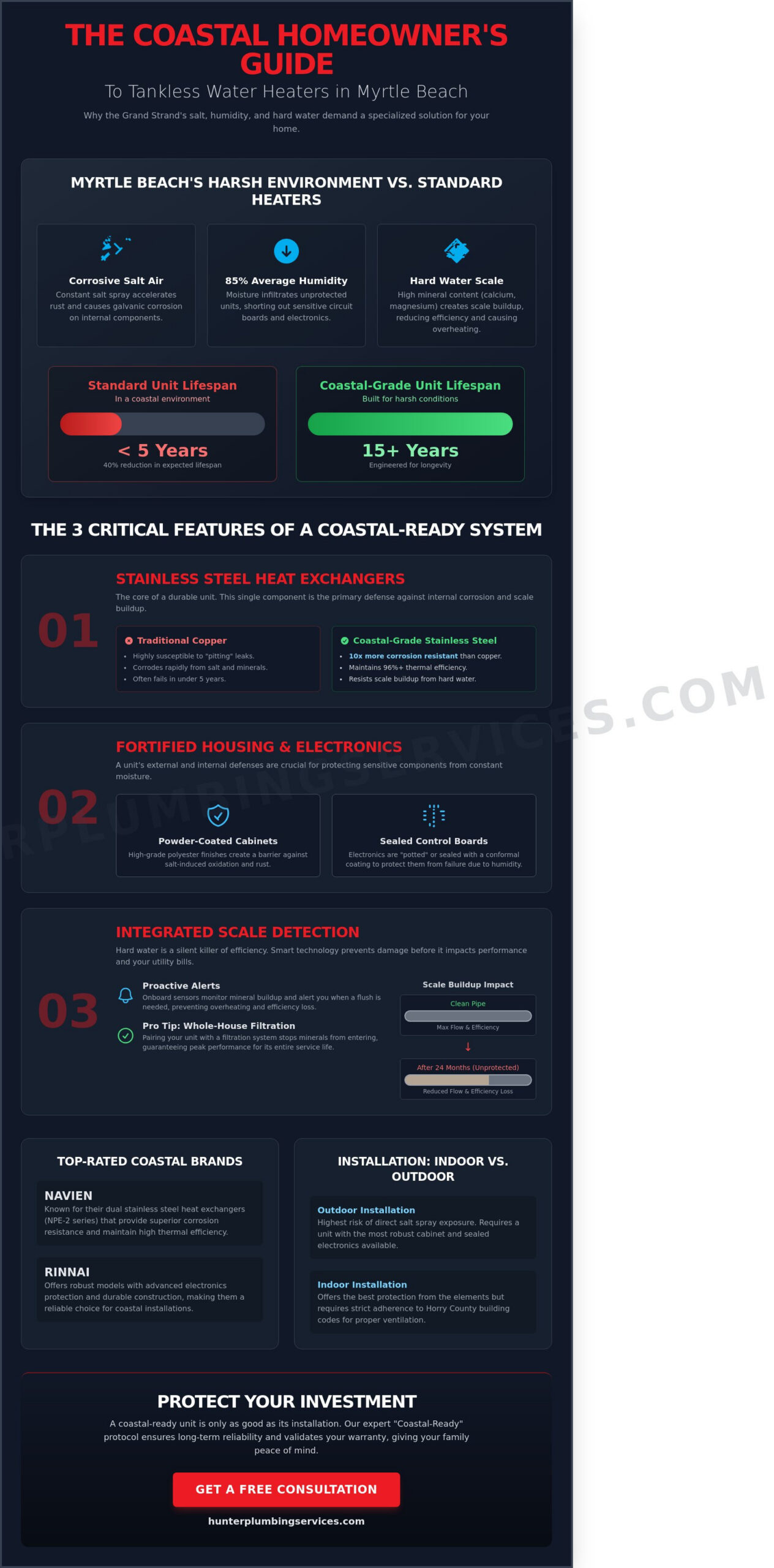
Living on the Grand Strand brings beautiful views, but it also presents a harsh environment for home appliances. If you’re looking for the best tankless water heater for coastal homes, you can’t simply pick a standard model off a big-box store shelf. The local climate in Myrtle Beach, characterized by humidity levels that often exceed 80% and constant salt spray, acts as a corrosive catalyst for most plumbing equipment. Standard units designed for inland climates often see a 40% reduction in their expected lifespan when installed within five miles of the Atlantic Ocean.
A true coastal-grade unit is built differently. It’s not just about efficiency; it’s about the durability of the internal components. To understand the necessity of these upgrades, it helps to know how tankless water heaters work by using high-intensity burners to heat water instantly. In our coastal environment, the intake air used for combustion carries microscopic salt particles directly into the heart of the machine. This puts the heat exchanger and the sensitive control boards at constant risk of failure.
The Salt Air Factor: Why Standard Units Fail
Salt air triggers a rapid chemical reaction when it contacts traditional copper heat exchangers. This process, known as galvanic corrosion, creates a green oxidation that thins the metal walls of the pipes until they pinhole and leak. This risk is highest for outdoor installations near the marsh or oceanfront where the brine is most concentrated. Unlike inland areas, our air is a conductive medium that can also short out internal circuit boards if they aren’t protected by a conformal coating. Salt-air corrosion is the primary cause of premature tankless failure in SC.
Hard Water and Scale in the Grand Strand
Homeowners in Horry County deal with unique mineral profiles that can be tough on high-heat equipment. When local water minerals like calcium and magnesium are flash-heated, they solidify and create a rock-hard scale inside the unit. This buildup acts as an insulator, forcing the unit to run longer and hotter to achieve the same water temperature. Within 24 months, a unit without protection can lose significant efficiency and eventually overheat.
The best tankless water heater for coastal homes will include integrated scale detection technology. These sensors alert you when it’s time for a flush before damage occurs. To provide the best protection for your investment, we often recommend pairing your installation with whole house filtration. This combination stops minerals from entering the system, ensuring your water heater operates at peak performance for its entire service life. Our team focuses on these local challenges to ensure your home stays comfortable and your utility bills stay low.
The 3 Critical Features to Look for in a Coastal-Grade Tankless System
Living in Myrtle Beach means dealing with salt air every single day. This environment is incredibly harsh on standard appliances, often cutting their lifespan in half. Choosing the best tankless water heater for coastal homes requires looking beyond standard energy ratings. You need a system specifically engineered to withstand high humidity and corrosive salt spray.
Stainless Steel Heat Exchangers: The Gold Standard
Copper is a traditional choice for plumbing because it conducts heat well. However, copper is highly susceptible to “pitting” when exposed to salt air and high-mineral water. This leads to pinhole leaks that can ruin a unit in less than 5 years. Stainless steel offers 10 times the corrosion resistance of copper in high-chloride environments. Dual stainless steel heat exchangers, like those found in the Navien NPE-2 series, maintain a 96% thermal efficiency rating even after years of coastal exposure. These components don’t just last longer; they resist the scale buildup common in Grand Strand water supplies.
Protective Housing and Electronics
The exterior of your unit is your first line of defense. Standard metal cabinets often develop rust streaks within 24 months of installation near the oceanfront. Look for these specific protective features:
- Powder-Coated Cabinets: High-grade polyester finishes protect the metal from salt-induced oxidation.
- Sealed Control Boards: Humidity can short out sensitive electronics. Top-tier coastal units “pot” or seal their circuit boards in a protective resin.
- Recessed Boxes: For outdoor installations, a recessed wall box keeps the unit out of the direct path of wind-driven rain and salt spray.
If you’re planning an upgrade, our team at Hunter Plumbing Services can help you select a unit with a cabinet rating designed for our local environment.
Storm and Freeze Resilience
Myrtle Beach homes face unique weather challenges. Your mounting hardware must be rated for high-wind zones, typically requiring 304-grade stainless steel bolts that won’t snap during a hurricane. Many coastal-grade units are now tested to withstand wind loads of up to 150 mph. Additionally, don’t overlook freeze protection. During the rare but dangerous cold snaps, like the 20-degree nights we saw in January 2024, integrated ceramic heaters prevent the internal pipes from bursting. These sensors activate automatically to protect your investment. Selecting the best tankless water heater for coastal homes means ensuring these safeguards are built-in, not added as an afterthought.
Top 3 Tankless Water Heater Brands for Myrtle Beach Properties
Selecting the best tankless water heater for coastal homes requires looking past basic specs. Salt air and high humidity in the Grand Strand area can shorten the lifespan of standard units quickly. Our team at Hunter Plumbing Services LLC has identified three brands that consistently withstand the local environment while providing the endless hot water your family or rental guests expect. These manufacturers offer the specific protections needed for our unique South Carolina climate.
Navien: The Durability King
The Navien NPE-A2 Series is a top choice for homes near the salt marshes of Murrells Inlet or the oceanfront. This model features dual stainless steel heat exchangers. Unlike copper components found in many units, stainless steel resists the corrosive effects of salt air and mineral-heavy water. The integrated ComfortFlow technology includes a built-in buffer tank and recirculation pump. This setup eliminates the “cold water sandwich” effect. It’s a favorite for tankless water heater installation in large, multi-story rental properties where hot water must travel long distances to reach top-floor showers.
Rinnai: Smart Tech for Beach Rentals
For property managers overseeing vacation rentals, the Rinnai SENSEI™ RX Series offers unmatched control. These units come with Wi-Fi monitoring capabilities through the Rinnai Central app. You can track system health and adjust temperatures remotely. This prevents many 2:00 AM service calls. Rinnai also offers specialized coastal protection kits. These accessories provide extra shielding for the internal components against the 70% average humidity we experience in South Carolina. Their condensing technology achieves up to 97% thermal efficiency, which helps lower utility bills during the peak summer rental season.
Rheem Prestige®: Local Reliability
We often recommend the Rheem Prestige® series because of its incredible parts availability across South Carolina. If a component fails during the busy July 4th week, we can usually source a replacement locally within 24 hours. This model is designed for high-demand households, providing up to 11 gallons per minute of hot water. It includes a built-in EcoNet Wi-Fi system and a leak detection sensor. This sensor can shut off water flow if a problem is detected, protecting your coastal investment from potential water damage while you’re away.
Coastal Warranty Comparison
- Navien: Offers a 15-year heat exchanger warranty. They’re known for honoring claims in coastal zones when proper maintenance is documented.
- Rinnai: Provides a 15-year warranty on the heat exchanger and 5 years on parts. Their coastal kits are often required to maintain full protection near the ocean.
- Rheem: Features a 15-year limited warranty on the heat exchanger. Their local support network in the Southeast makes the claim process faster for Myrtle Beach residents.
Choosing the best tankless water heater for coastal homes often comes down to how well the unit is protected from the elements. While all three brands perform well, the right choice depends on your specific distance from the ocean and your peak hot water usage. We’ll help you weigh these factors to ensure your new system lasts for its full expected lifespan of 20 years.
Planning Your Installation: Myrtle Beach Building Codes and Coastal Considerations
Installing the best tankless water heater for coastal homes involves more than just picking a top-rated brand. You’ve got to follow Horry County’s 2026 building codes to ensure your investment is legal and safe. These regulations focus heavily on wind resistance and flood protection. If your property sits in a Special Flood Hazard Area, local codes require your water heater to be elevated at least 12 inches above the Base Flood Elevation. Our team handles the permit process for you, making sure every connection meets the latest safety standards for our unique environment.
Indoor vs. Outdoor: The Coastal Debate
Myrtle Beach’s salt air is a silent killer for metal appliances. Outdoor units are popular because they save interior square footage and don’t require complex indoor venting. However, the salt spray can corrode internal components in as little as 3 to 5 years. Indoor installations offer the best protection for your home’s longevity. If you choose an indoor model for a home with a tight crawlspace, you must use specific Category III or IV stainless steel venting. This prevents acidic condensate from damaging your floor joists or foundation.
- Outdoor Units: Best for saving space but require regular clear-coat treatments to fight rust.
- Indoor Units: Offer maximum protection from humidity and salt but require dedicated venting paths.
- Elevation: All units must be secured to withstand 150 mph wind gusts per regional hurricane standards.
Gas and Electric Infrastructure
Your current gas line installation might not be ready for a tankless upgrade. Traditional tank heaters usually pull about 40,000 BTUs. A high-efficiency tankless unit can demand up to 199,000 BTUs to provide endless hot water. This often means we need to upsize your gas lines from 1/2-inch to 3/4-inch piping to prevent the unit from starving for fuel during a shower.
Electric tankless units often struggle with our local conditions. While our weather is warm, Myrtle Beach ground water temperatures can drop to 55 degrees in the winter. An electric unit requires a massive amount of power to jump that temperature gap for a 2.5 GPM high-flow showerhead. Most coastal homes need a 200-amp or 300-amp electrical panel to support the best tankless water heater for coastal homes without flickering the lights. To understand the requirements for these high-capacity residential systems, you can learn more about Sanford Electric, LLC and their professional contracting services. Gas remains the most reliable and cost-effective choice for our local climate.
Professional Coastal Installation with Hunter Plumbing Services
Installing a high-efficiency system in a Grand Strand home requires more than just following a standard manual. At Hunter Plumbing Services, our “Coastal-Ready” installation protocol addresses the specific environmental stressors found in Myrtle Beach. We’ve seen standard mounting brackets fail in as little as 36 months due to salt-air exposure. To prevent this, we use upgraded, corrosion-resistant hardware and specialized fittings for every project. This ensures your unit stays secure and functional despite the humid, briny atmosphere that defines our region.
Local expertise is vital for maintaining your manufacturer’s warranty. Many brands require documented professional installation and specific maintenance standards to honor parts replacements. Because we understand the water chemistry and climate of Horry County, we ensure your setup meets these strict criteria from day one. We treat your home like it belongs to a neighbor because, to us, it does. Our team provides transparent, upfront pricing so you never face unexpected costs after the work begins.
The Hunter Plumbing Difference
Our team has spent years diagnosing salt-air specific plumbing failures that out-of-town contractors often overlook. We prioritize using high-grade stainless steel fasteners and specialized protective coatings to prevent the premature rust that plagues coastal appliances. Similar to how industrial maritime experts explore Mechanical Ship Repairs to combat the harsh effects of seawater on heavy machinery, we apply these rigorous standards to residential systems. If a problem arises at 2:00 AM, our 24/7 emergency support team is ready to help. You won’t have to wait days for a technician who doesn’t understand the unique needs of a beachfront property. We combine technical authority with a no-nonsense approach to keep your water running hot.
Maintenance Plans for Coastal Longevity
Annual flushing is a requirement, not a suggestion, for the best tankless water heater for coastal homes. In Horry County, mineral content and sediment can accumulate quickly. This buildup can reduce your unit’s energy efficiency by as much as 22 percent in a single year. Our preventative maintenance checks go beyond the heat exchanger. We carefully inspect electronic control boards for signs of “salt creep” and ensure intake vents remain clear of coastal debris. This proactive approach extends the life of your equipment and protects your investment.
Selecting the best tankless water heater for coastal homes is only the first step toward long-term comfort. A professional site evaluation is the best way to determine the correct flow rate and venting requirements for your specific property. Contact us for a professional tankless consultation in Myrtle Beach today! We’ll help you choose a system that stands up to the salt air and provides endless hot water for your family.
Upgrade Your Myrtle Beach Home with Coastal-Grade Performance
Living on the Grand Strand means your appliances face constant salt air exposure that can degrade standard units in less than 5 years. Selecting the best tankless water heater for coastal homes involves prioritizing marine-grade components and systems that meet the latest 2026 efficiency standards. You also need an installation that fully complies with specific Horry County building codes to ensure safety and longevity. Hunter Plumbing Services brings technical authority to every project as a family-owned and operated business rooted in Horry County. We’re specialists in salt-air corrosion prevention and remain fully licensed and insured for complex coastal gas line installations. Our team focuses on providing transparent solutions that protect your property and your comfort. It’s time to stop worrying about your hot water and start enjoying the reliability of a system built specifically for the coast. We’re ready to help you make the right choice for your family’s home.
Get Your Coastal-Ready Tankless Quote from Hunter Plumbing Services
Frequently Asked Questions
Do I need a special tankless water heater for a beach house in Myrtle Beach?
Yes, you need a unit with a corrosion-resistant cabinet to withstand our local environment. Salt air in coastal zones accelerates metal oxidation 10 times faster than inland areas according to NACE International studies. You should look for coastal-rated models that feature specialized powder coatings. These protect internal components from the humid, saline air that’s common across the Grand Strand throughout the year.
How long do tankless water heaters last in coastal South Carolina?
A well-maintained unit typically lasts 15 to 20 years in our region. This lifespan is roughly double that of a traditional 40-gallon tank heater, which often fails after 8 to 10 years due to sediment and salt exposure. Choosing the best tankless water heater for coastal homes ensures your investment survives the high humidity levels we see in Horry County every summer.
Is it better to install my tankless water heater inside or outside in Myrtle Beach?
Indoor installation is usually the superior choice for homes within 5 miles of the Atlantic Ocean. While outdoor units save interior space, they face direct exposure to salt spray and tropical storm winds that reach 74 mph or higher during hurricane season. Mounting the unit in a garage or utility closet provides a physical barrier that extends the life of your heat exchanger significantly.
Does salt air void the warranty on my tankless water heater?
It can if you don’t follow the manufacturer’s specific coastal installation guidelines. Many brands, such as Rinnai or Navien, require units installed within 1,500 feet of the high tide line to be protected from direct salt spray. Always check your specific warranty document for proximity to salt water clauses to ensure your 10 to 15 year parts warranty remains valid for your home.
How much does it cost to install a tankless water heater in Horry County?
Installation costs vary based on your home’s existing gas lines, venting requirements, and electrical capacity. Factors like the distance from the gas meter and whether you’re switching from a tank system influence the final labor hours. We provide transparent, upfront pricing after a physical site inspection. This ensures you know the exact total before we start any work on your local property.
Can a tankless water heater handle the hard water in Myrtle Beach?
Yes, but you must install a scale inhibitor or water softener to protect the copper heat exchanger. Myrtle Beach water often contains calcium carbonate levels that lead to scale buildup, which can reduce efficiency by 15% within the first year. Annual flushing with a descaling solution is a mandatory maintenance step for any tankless system in South Carolina to keep your water flowing properly.
What size tankless water heater do I need for a 4-bedroom beach rental?
You need a unit with a flow rate of at least 9.0 to 11.0 gallons per minute (GPM). This capacity allows your guests to run two showers, a dishwasher, and a washing machine simultaneously without losing heat. Selecting the best tankless water heater for coastal homes involves calculating the peak demand for 8 to 10 occupants to ensure every vacationer enjoys a hot shower.
Do I need to upgrade my gas line for a tankless water heater?
Most likely, as tankless units require between 150,000 and 199,000 BTUs to flash-heat water instantly. Standard 1/2-inch gas lines found in older Myrtle Beach homes often only support 60,000 BTUs, which is insufficient for these high-performance systems. Our team evaluates your existing infrastructure to determine if a 3/4-inch line upgrade is necessary to meet the National Fuel Gas Code safety standards for your family.