

Imagine a house full of summer guests in Myrtle Beach, but the third person in the shower is met with a sudden, icy chill because the tank ran dry. It’s a frustrating reality for many coastal homeowners who struggle with high utility bills and cramped utility closets. You shouldn’t have to pay to heat 50 gallons of water 24 hours a day just to run out when you need it most. When you weigh the cost vs benefit of tankless water heater systems, the choice involves more than just the sticker price; it’s about long-term reliability in our unique salt-air environment.
We understand that making a major home upgrade requires clear, honest information. This guide will help you discover if the promise of endless hot water and a 20-year lifespan justifies the initial investment for your property. We’ll break down the 2026 federal tax credits, local Dominion Energy rebates, and the specific maintenance needs for our region’s hard water. By the end, you’ll know exactly how to secure lower monthly bills and a system that finally fits your coastal lifestyle.
Key Takeaways
- Eliminate standby energy loss by switching to an on-demand system that only heats water when you need it.
- Evaluate the true cost vs benefit of tankless water heater technology by factoring in 20-year durability and lower monthly utility bills.
- Navigate specific installation requirements for Myrtle Beach homes, including gas line upgrades and protection against salt-air corrosion.
- Claim up to $650 in combined federal tax credits and local utility rebates to offset your initial installation investment in 2026.
- Determine if your household size and hot water demands make your property the ideal candidate for a space-saving, endless hot water solution.
The Tankless Revolution: How On-Demand Heating Works
Traditional water heaters act like a large, simmering pot on a stove, keeping 50 gallons of water hot all day and night just in case you need it. This leads to standby heat loss, where energy escapes through the tank walls even when no one is home. Tankless systems change this dynamic by operating as on-demand heaters. When you turn on a faucet, a flow sensor triggers a powerful heat exchanger. This component transfers intense heat to the water instantly as it travels through the unit, eliminating the need for a storage tank and the wasted energy that comes with it.
For homeowners in Horry County, our local environment offers a distinct advantage. South Carolina’s groundwater temperatures are generally warmer than those in northern states, which means your system doesn’t have to work as hard to reach your desired shower temperature. This geographic perk improves the overall cost vs benefit of tankless water heater systems by allowing the unit to operate at peak efficiency. It’s also important to distinguish between “endless” and “instant” hot water. A tankless unit provides an endless supply because it never runs out of a stored volume, but the time it takes to reach your tap still depends on the distance the water must travel through your pipes.
Condensing vs. Non-Condensing Units
In 2026, efficiency standards have pushed condensing technology to the forefront of residential plumbing. A non-condensing unit vents hot exhaust gases outside, wasting potential energy. In contrast, a condensing unit uses a second heat exchanger to capture that exhaust heat and use it to pre-heat incoming water. Because the exhaust is cooler, these units can often use simpler PVC venting instead of expensive stainless steel. This makes condensing models the preferred choice for modern South Carolina builds looking to maximize energy savings and meet strict DOE standards.
Flow Rates and GPM for Horry County Homes
When choosing a system, you must consider how many fixtures you plan to run simultaneously. Gallons Per Minute (GPM) is the critical metric for sizing a tankless system, representing the total amount of hot water a unit can produce at once. In a typical Myrtle Beach home with multiple bathrooms, you need a unit that can handle a shower, a dishwasher, and a laundry load all at once. Since our coastal groundwater stays relatively mild, your unit can achieve a higher GPM than it would in a colder climate, ensuring your family enjoys consistent pressure and temperature regardless of the humidity outside.
Analyzing the Upfront Cost: Installation and Retrofitting
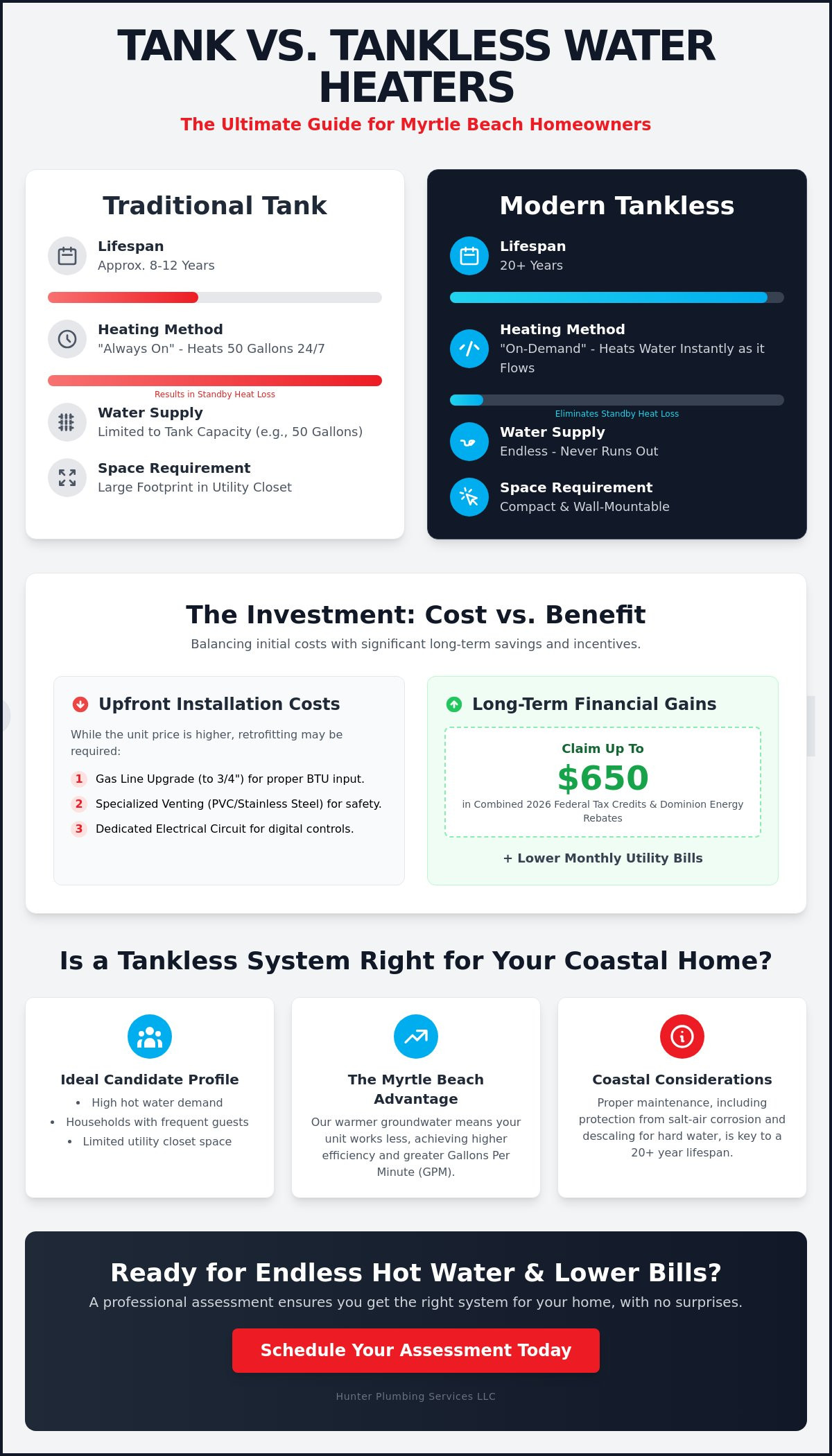
When you look at the base unit price, a tankless water heater generally costs more than a standard 50-gallon tank. However, the unit itself is only one part of the equation. To truly understand the cost vs benefit of tankless water heater systems, you have to look at the retrofitting process. Many Myrtle Beach homes built in the 1990s or early 2000s were designed for atmospheric tanks. Swapping to on-demand heating often requires infrastructure changes to handle the increased performance demands.
The “hidden” costs of a retrofit usually involve venting and piping. Traditional tanks often vent through a shared chimney or a simple B-vent. Tankless units require power venting, which uses specialized stainless steel or high-heat PVC to move exhaust safely through a side wall. These changes ensure your home remains safe while the unit operates at peak efficiency. While these upgrades add to the initial investment, they’re essential for a system that lasts twice as long as a standard tank.
The Gas Line Factor
Most standard water heaters run on a 1/2-inch gas line because they heat water slowly over time. A tankless unit needs a sudden, massive burst of energy to heat water instantly. This often requires a 3/4-inch or larger line to provide the necessary BTU input. If you’re in a more rural part of Horry County using propane, we’ll also need to ensure your regulator can handle the higher demand. It’s vital to work with a licensed plumber for gas line work to avoid pressure drops that can cause the unit to shut down during a shower.
Electrical Requirements for Tankless Systems
Even gas-powered tankless units require a dedicated electrical circuit. This powers the digital control board, the electric ignition, and the internal freeze protection. If you’re living in a coastal condo where gas isn’t an option, electric tankless units are available. However, these often require significant upgrades to your breaker panel. Electric models are generally less efficient for high-demand homes with three or more bathrooms, as they draw a massive amount of current to keep up with simultaneous showers.
Before you commit to a specific model, getting a professional installation assessment can help you avoid unexpected surprises during the retrofitting process. Evaluating the total cost vs benefit of tankless water heater upgrades helps you plan for a solution that fits your budget and your home’s unique layout.
Long-Term Benefits: Energy Savings and Coastal Durability
The average lifespan of a traditional tank is roughly 10 to 12 years. In contrast, a tankless water heater can last 20 years or more with proper care. This longevity is a primary factor when calculating the cost vs benefit of tankless water heater investments. Because these units use modular parts, we can often repair a single component rather than replacing the entire system. This durability keeps heavy metal tanks out of South Carolina landfills and provides you with a more sustainable home solution.
Energy savings offer another immediate advantage. According to Department of Energy data, tankless units are 24% to 34% more energy-efficient for homes using 41 gallons or less of hot water daily. Even in high-demand households using over 80 gallons, you can expect an 8% to 14% improvement in efficiency. For a typical family in the Grand Strand area, these monthly utility savings add up significantly over the two-decade life of the unit. Plus, removing a bulky 50-gallon tank frees up valuable square footage in smaller beach cottages and condos.
Coastal Durability and Salt Air Resistance
Living near the Atlantic means dealing with salt air that aggressively corrodes metal. Traditional water heaters often suffer from “bottom-rust” because moisture and salt collect around the base of the tank. Tankless units are typically mounted off the floor, which protects them from high water tables and localized flooding. When we perform a tankless water heater installation, we ensure the unit has a durable cabinet or proper indoor placement to shield sensitive components from the coastal environment. This protection is vital for maintaining peak performance in our humid climate.
Property Value and Homeowner Incentives
Upgrading your water heating system is a smart move for your home’s resale value. In 2026, a water heater replacement typically returns 60% to 80% of the project cost if you sell within five years. You can also take advantage of a $300 federal tax credit for units meeting 2026 efficiency standards. Local residents may even qualify for Dominion Energy rebates ranging from $250 to $350 for ENERGY STAR® certified models. For vacation rental owners, the reliable supply of hot water means fewer emergency calls from unhappy tourists during the peak July season. This peace of mind is an intangible but valuable benefit of going tankless.
Is It Worth It? Making the Decision for Your Property
Deciding between a traditional tank and an on-demand system comes down to your household’s specific needs and the unique layout of your property. For large families or homes with frequent out-of-town guests, a tankless unit is almost always the clear winner. You won’t have to coordinate shower schedules or worry about the laundry cutting off the hot water supply. However, if you live alone in a small home and plan to move within two years, a traditional water heater replacement might still be the more practical choice for your immediate budget.
When analyzing the cost vs benefit of tankless water heater systems, consider the geography of the Grand Strand. Many marshfront properties in our area deal with high water tables and occasional localized flooding. Because tankless units are wall-mounted, they stay high and dry while traditional floor tanks are vulnerable to moisture damage. This setup also prevents the heavy sediment buildup that often plagues tanks in areas with harder water. You just need to commit to an annual flushing routine to keep the heat exchanger free of scale, ensuring the system reaches its full 20-year potential.
Considerations for Vacation Rentals and Guest Suites
Rental owners face a unique challenge: “hot water anxiety.” One bad review about a cold shower can impact your bookings for an entire season. Installing a tankless system eliminates this risk entirely. Many modern units also feature remote monitoring through smartphone apps. These tools alert you to leaks or system errors before your guests even notice a problem; this provides a level of control that traditional tanks simply can’t match. You can learn more about these specific advantages in our tankless water heater installation guide.
Choosing a Local Partner for Installation
The ROI on a tankless system is only as good as the quality of the installation. Horry County has specific building codes regarding venting and gas line safety that must be followed to ensure your warranty remains valid. We believe in total financial clarity, providing you with an honest assessment of your home’s infrastructure before any work begins. Our goal is to be your long-term plumbing partner, not just a one-time service provider. We invite you to contact Hunter Plumbing Services LLC for a personalized tankless consultation to see if this upgrade is the right fit for your Myrtle Beach home.
Secure Your Home’s Hot Water Future Today
Upgrading to a tankless system is a strategic investment that pays dividends in comfort and efficiency. You’ve seen how these units double the lifespan of traditional tanks while standing up to the harsh salt air of the Grand Strand. By taking advantage of 2026 tax credits and utility rebates, you can significantly offset the initial retrofitting costs. When you weigh the total cost vs benefit of tankless water heater technology, the results speak for themselves through lower monthly bills and improved property value. It’s about more than just numbers; it’s about the peace of mind that comes from knowing you’ll never run out of hot water again.
As a licensed and insured local small business, we understand the specific plumbing challenges of Horry County. We specialize in coastal installations and provide 24/7 emergency support to keep your home running smoothly. Don’t let an old, rusting tank dictate your comfort. Get a Professional Tankless Water Heater Quote from Hunter Plumbing Services LLC today. We’re ready to help you find the perfect high-efficiency solution for your coastal lifestyle.
Frequently Asked Questions
How much can I actually save on my energy bill with a tankless water heater?
You can reduce your monthly water heating bills by up to 34% depending on your family’s daily hot water usage. These savings happen because the system eliminates standby heat loss, meaning you aren’t paying to keep a large tank hot while you’re at work or sleeping. Over the life of the unit, these lower utility costs significantly improve the cost vs benefit of tankless water heater systems for local families.
Do tankless water heaters require more maintenance in Myrtle Beach?
Yes, tankless units need an annual flush to clear out mineral scale caused by our local hard water. This simple preventative service protects the heat exchanger and keeps the unit running at peak efficiency. While it’s an extra step compared to some older tanks, it ensures your system reaches its full 20-year lifespan and prevents expensive repairs down the road.
Can a tankless water heater provide enough hot water for a 3-bathroom home?
A properly sized tankless unit provides a continuous flow of hot water that can easily support three or more bathrooms. We calculate the total Gallons Per Minute (GPM) your household needs to ensure you can run multiple showers and the dishwasher simultaneously. This high-capacity performance is why many large households find the cost vs benefit of tankless water heater upgrades so valuable.
What happens if the power goes out? Will my tankless heater still work?
Most modern tankless units require a small amount of electricity to power the digital control board and the ignition system. If the power goes out during a coastal storm, the unit will shut down unless you have a battery backup or a home generator. We can help you identify models that are compatible with simple backup power solutions to keep your hot water flowing during outages.
Is it better to install a tankless unit inside or outside in coastal SC?
Indoor installation is generally the better choice for Myrtle Beach homes to protect the unit from salt air corrosion. While outdoor units save interior space, they are more vulnerable to the humid, salty environment that can damage sensitive electronic components over time. Placing the unit in a garage or utility room provides the best protection and ensures the longest possible service life.
How long does the installation of a tankless water heater typically take?
A professional installation usually takes between one and two days depending on the amount of retrofitting required for your home. If we need to upsize your gas lines or install new venting through an exterior wall, the process takes a bit more time. We always provide a clear schedule before we start so you know exactly when your hot water will be back on.