

What if you could host a full house of summer guests in Myrtle Beach without ever hearing a complaint about a cold shower? For many Grand Strand homeowners, the daily reality is a bulky 50-gallon tank that eats up valuable closet space and drives up energy bills. According to the Department of Energy, traditional water heaters can account for 18% of your monthly utility costs. If you’re tired of paying to heat water you aren’t using, a tankless water heater installation offers a modern solution that fits your coastal lifestyle.
We know you value reliability and want to ensure your home is in safe hands. It’s frustrating to deal with limited hot water when you just want to relax. This guide promises to help you determine if a high-efficiency system is the right choice for your specific needs. We’ll preview the 2026 installation standards, explain the space-saving benefits for small coastal closets, and outline our straightforward process. You’ll gain the confidence to make an informed decision for your family’s comfort.
Key Takeaways
- Learn how on-demand heating provides endless hot water, making it a perfect solution for large Grand Strand families and busy coastal rental properties.
- Understand how to calculate the right Gallons Per Minute (GPM) for your household by leveraging the unique temperature of our local groundwater.
- Discover what to expect during a professional tankless water heater installation, from the initial site assessment to the eco-friendly disposal of your old unit.
- Protect your investment by learning how to combat hard water scale and salt air corrosion common in our unique South Carolina environment.
- See why professional expertise is vital for navigating Myrtle Beach permit requirements and ensuring your gas and venting connections meet strict safety standards.
What is Tankless Water Heater Installation and Why Choose It in Myrtle Beach?
Tankless water heater installation involves replacing a bulky storage tank with a compact, wall-mounted unit that heats water only when you need it. These systems use a high-powered heat exchanger to warm cold water instantly as it flows through the device. This “on-demand” process ensures you never run out of hot water, which is a major upgrade for large families or busy beach rental properties along the Grand Strand. When you have a house full of guests returning from the Atlantic, the last thing you want is the third person in line taking a cold shower.
In a typical 2,500-square-foot oceanfront home, multiple showers often run simultaneously. Traditional tanks struggle to keep up, but a tankless system provides a continuous flow. Because these units are roughly the size of a carry-on suitcase, they are ideal for compact marshfront properties where every square foot of storage matters. By switching to this technology, you can expect lower monthly utility bills in Horry County. Modern units carry high Energy Factor (EF) ratings, meaning they convert more fuel into actual heat rather than wasting it during the heating process.
Tankless vs. Traditional Tanks: The Coastal Perspective
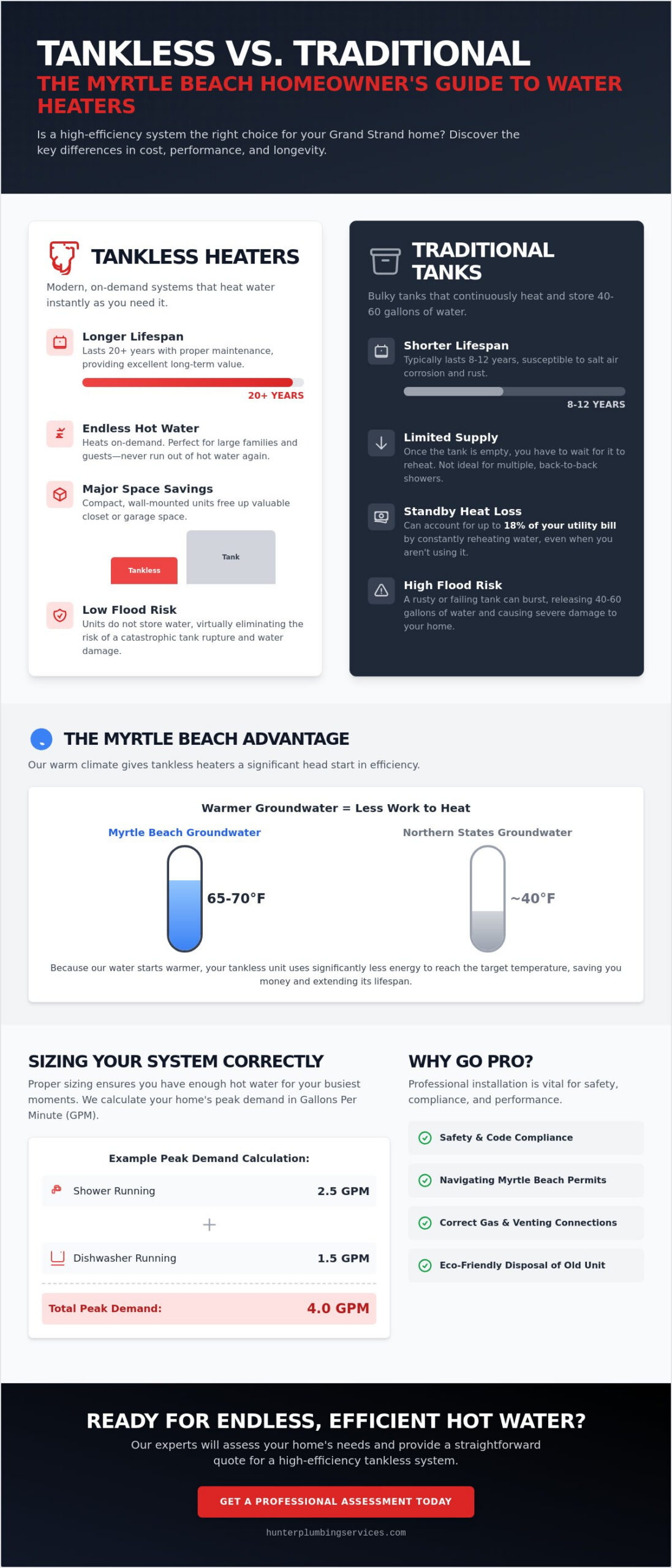
Standard water heaters usually last between 8 and 12 years before the salt air and mineral content take their toll. In contrast, a professional tankless water heater installation offers a lifespan of 20 years or more with proper annual maintenance. This longevity provides much better long-term value for local homeowners looking to avoid frequent replacements.
Safety is another critical factor for our neighbors. Traditional tanks hold 40 to 60 gallons of pressurized water at all times. If a tank fails or rusts through, it can cause catastrophic flood damage to your floors and drywall. Tankless units do not store water, which significantly reduces the risk of a major leak inside your home. Additionally, these systems eliminate standby heat loss. During humid South Carolina summers, traditional tanks constantly cycle on and off to keep water hot, even when no one is using it. Tankless units stay dormant until a faucet opens, keeping your energy use efficient and your utility costs predictable.
Key Advantages for Grand Strand Homeowners
One common complaint in our coastal region is the “sulfur smell” that develops in older tanks. This odor often comes from bacteria reacting with sediment and the sacrificial anode rod trapped at the bottom of a traditional water heater. Since tankless systems don’t store water, they don’t collect the same level of sediment, helping your water stay fresh and odor-free.
- Space Savings: Wall-mount flexibility allows you to move your water heater out of a cramped closet and onto a garage wall, freeing up space for beach gear or pantry storage.
- Endless Supply: You can run the dishwasher, the washing machine, and two showers at once without losing temperature.
- Efficiency: The Energy Factor (EF) is a specific metric that measures the percentage of fuel or electricity converted into hot water.
Whether you are managing a high-turnover rental or living in your forever home, the transition to on-demand heating offers peace of mind and consistent performance. To explore a deeper breakdown of what makes these systems superior for coastal living, see our full guide on the advantages of tankless water heaters for Myrtle Beach homeowners.
Choosing the Right Tankless System for Your South Carolina Home
Myrtle Beach homeowners enjoy a significant head start when it comes to energy efficiency. Our local groundwater temperature averages between 65 and 70 degrees Fahrenheit throughout the year. This is a massive advantage compared to northern states where water enters the home at a frigid 40 degrees. Because our water is already relatively warm, your tankless water heater installation doesn’t have to work nearly as hard to reach your desired temperature. This translates to lower monthly bills and a longer lifespan for your equipment.
Selecting the right unit involves more than just picking a brand. You need to account for your household’s peak demand. We look at how many fixtures you use at once. A standard shower uses about 2.5 gallons per minute, while a dishwasher adds another 1.5. If you have a large family, you need a unit that can handle that combined flow without a drop in pressure. Our team at Hunter Plumbing Services can help you evaluate your home’s specific flow requirements to ensure you never run out of hot water during the morning rush.
Sizing Your Unit for the Myrtle Beach Climate
We use a 70-degree rise as the standard benchmark for local plumbing projects. If your goal is 135-degree water for sanitizing dishes, and the ground water is 65 degrees, the unit must bridge that 70-degree gap instantly. For most 2,000-square-foot homes in Horry County, a unit rated for 7 to 9 gallons per minute provides the perfect balance. This capacity ensures you can run two showers and a kitchen sink simultaneously without anyone experiencing a “cold sandwich” effect in the water stream.
Gas vs. Electric: What Horry County Infrastructure Supports
Your home’s existing bones often dictate your fuel choice. Natural gas is highly efficient, but it usually requires a piping upgrade. Most older Myrtle Beach homes have 1/2-inch gas lines, yet high-output tankless systems need 3/4-inch or 1-inch lines to function safely. If you live in a newer development or a rural area near Conway, propane is an excellent alternative that offers the same high performance as natural gas. Working with a licensed plumber for gas line upgrades ensures these critical connections meet Horry County permit requirements and the 2021 International Fuel Gas Code.
Electric models are a common choice for smaller condos or additions, but they come with heavy power demands. A whole-home electric tankless unit can require up to 150 amps of dedicated service. This often means a full electrical panel upgrade is necessary before the tankless water heater installation can begin. We always provide a transparent assessment of these infrastructure needs so there are no surprises during the process.
Finally, consider a condensing unit for maximum efficiency. These models capture extra heat from exhaust gases, reaching efficiency ratings of 98%. In our humid coastal environment, the PVC venting used by condensing units is also more resistant to salt-air corrosion than the metal vents required by non-condensing models; this makes them a smarter long-term investment for beachfront properties.
The Professional Tankless Installation Process
A successful tankless water heater installation starts long before the first pipe is cut. Our team begins with a rigorous site assessment to ensure your home’s infrastructure can support high-efficiency technology. We evaluate your current gas pressure, water flow rates, and existing venting paths to prevent future performance issues. This stage is vital because a tankless unit requires significantly more fuel at once than a traditional tank. We check every detail to ensure your system operates at peak efficiency from day one.
Next, we handle the heavy lifting. We safely disconnect your old water heater, which often weighs over 150 pounds when filled with years of sediment. Hunter Plumbing Services manages the eco-friendly disposal of these units, keeping bulky waste out of local Myrtle Beach landfills. Once the space is clear, we mount the new unit. We secure it to structural studs or use specialized mounting backboards to ensure it stays level and vibration-free on your interior or exterior walls. This precision prevents stress on the internal components and connections.
Venting and Gas Line Modifications
Proper venting is the most critical safety step to prevent carbon monoxide buildup in your home. In our coastal environment, we use specialized materials like stainless steel or UV-resistant PVC to resist salt-air corrosion. You’ll choose between a direct vent system, which pulls air from outside, or a power vent system that uses indoor air. Most 2026 models require a gas line upgrade. While a standard tank uses about 40,000 BTUs, a tankless unit can demand up to 199,000 BTUs during peak use. We often install a larger gas meter or high-pressure regulator to meet this demand without starving your other appliances.
Water Line Integration and Pressure Valves
We integrate the unit into your plumbing using high-quality isolation valves. These allow you to flush the heat exchanger annually without shutting off water to the entire house. Our technicians also install a Pressure Relief Valve (PRV) exactly as specified by the South Carolina Residential Code to prevent over-pressurization. For added peace of mind, we can connect your new unit to existing leak detection systems. This ensures that if a rare leak occurs, your water supply shuts off instantly, protecting your coastal home from water damage. Our tankless water heater installation process is transparent and focused on long-term reliability.
Longevity and Maintenance in a Coastal Environment
Myrtle Beach homes face specific environmental hurdles that can shorten the lifespan of your plumbing. Salt air and hard water minerals work against your equipment every day. Proper care ensures your tankless water heater installation lasts its full 20 year life cycle. Without a proactive plan, the harsh coastal conditions can cut that timeframe in half.
Protecting Your Investment from Hard Water
Scale buildup is the primary cause of heat exchanger failure. In our region, calcium and magnesium levels often exceed 7 grains per gallon, which is considered hard by industry standards. These minerals crystallize when heated, creating a thick crust inside the narrow copper or steel pipes. This layer acts as an insulator, forcing the unit to run hotter and longer to reach your desired temperature. According to the Water Quality Association, this can reduce appliance efficiency by up to 48 percent over time. Pairing your system with a whole-house water softener or a dedicated scale inhibitor protects these sensitive internal parts. An annual descaling flush can extend unit life by 5-10 years.
Coastal Durability and Weatherproofing
If you choose an exterior mount, your unit faces constant exposure to salt-laden humidity. This moisture accelerates rust on standard components. We recommend units featuring high-grade stainless steel heat exchangers because they resist pitting and corrosion better than copper. For homes directly on the oceanfront, custom-fit weather enclosures provide an extra layer of defense against the elements. While Myrtle Beach stays mild most of the year, we do see temperatures drop below 32°F an average of 34 nights per year. Modern units include internal ceramic heaters to prevent freezing, but you must keep the power on at all times to ensure these safety features work.
Stay ahead of repairs by checking your unit’s display panel once a month. Most systems use standardized error codes to alert you to venting issues or ignition failures. If you notice a drop in water pressure or inconsistent temperatures, it’s time for a professional checkup. Follow this basic checklist to keep your system in top shape:
- Flush the system with four gallons of food-grade white vinegar annually to remove mineral deposits.
- Clean the air intake filter to prevent dust and coastal debris from choking the burner.
- Inspect the pressure relief valve for signs of salt-air corrosion or slow leaks.
- Verify that the venting remains clear of bird nests or storm debris.
Don’t wait for a cold shower to realize your system needs attention. Schedule your professional maintenance or tankless water heater installation with our local team today to keep your home running efficiently.
Why Professional Installation Trumps DIY
Choosing a DIY approach for your tankless water heater installation might seem like a way to save money, but it often leads to expensive mistakes. These units are complex machines. They require precise gas pressure, specialized venting, and specific electrical configurations. A small error in the gas connection can lead to leaks or fire hazards. Even worse, improper venting can cause carbon monoxide to back up into your living space, creating a silent and deadly threat to your family. Professionals use calibrated tools to ensure every connection is airtight and safe.
Manufacturer warranties also play a huge role in this decision. Most major brands explicitly state that their 12 to 15 year heat exchanger warranties are only valid if a licensed professional performs the work. If you install it yourself and a component fails, you could be responsible for the full cost of a new unit. Hiring an expert protects your investment for the long term. Understanding the full advantages of tankless water heaters can help you appreciate why professional installation is a critical part of maximizing your return on this upgrade.
- Gas Line Sizing: Tankless units require a higher BTU input than traditional tanks. We ensure your existing lines can handle the load.
- Condensate Management: High efficiency units produce acidic runoff. We install proper drainage to prevent floor damage.
- Electrical Safety: We manage the specific voltage requirements to prevent circuit overloads.
Permits and Local Building Codes
Horry County officials require a permit for any water heater replacement. This isn’t just red tape. It ensures your system meets the 2024 South Carolina Plumbing Code (SCPC) standards. When you go to sell your home, a missing permit can stall the closing process or force you to pay for a retroactive inspection. We handle the entire permitting process in Myrtle Beach and Conway, ensuring your home remains compliant and your resale value stays protected.
The Hunter Plumbing Advantage
We’ve served the Grand Strand since 2021. Our team understands how coastal salt air affects exterior venting and plumbing components. We provide fixed-rate quotes for your tankless water heater installation. You’ll never see a surprise fee just because you live near the beach. We stand by our work with 24/7 support, giving you a direct line to a neighbor you can trust. Our goal is to provide a stress free experience that keeps your hot water running for years to come.
Enjoy Endless Hot Water in Your Myrtle Beach Home
Upgrading to a high-efficiency system is the best way to secure your home’s comfort. By 2026, modern energy standards will make these units the preferred choice for South Carolina homeowners seeking to lower their utility bills. A professional tankless water heater installation guarantees that your system is calibrated for the specific demands of your household while resisting the wear caused by our coastal climate. You’ll skip the stress of complex venting requirements and gas line configurations by trusting a local expert to get the job done right the first time.
Hunter Plumbing Services stands ready to help. We’re licensed and insured Horry County plumbing experts who prioritize your peace of mind. Our team provides upfront, transparent pricing on all installations, ensuring there’s no guesswork involved in your home improvement project. We’re specialists in coastal-specific plumbing challenges, which means we understand how to protect your hardware from salt air and humidity. You can trust our family-owned team to treat your property like our own.
Schedule your professional tankless water heater consultation in Myrtle Beach today!
It’s a great day to start saving energy and enjoying unlimited hot water. We look forward to serving you and making your next plumbing project a total success.
Frequently Asked Questions
Is a tankless water heater worth it for a small Myrtle Beach condo?
Yes, a tankless unit is a smart investment for small Myrtle Beach condos because it frees up 9 to 12 square feet of floor space. Since many local units are under 1,100 square feet, this extra storage is highly valuable. You’ll also see energy savings of 24% to 34% in homes using 41 gallons or less of hot water daily, according to the U.S. Department of Energy.
How much does it cost to install a tankless water heater in Horry County?
National averages for a professional tankless water heater installation range from $1,200 to $3,500 for the unit and labor, based on data from HomeAdvisor. Local costs in Horry County depend on your existing gas lines and venting requirements. For a detailed breakdown of what Myrtle Beach homeowners can expect to pay, see our guide on water heater replacement cost Myrtle Beach residents should budget for. We provide an upfront, transparent quote after inspecting your home’s layout to ensure there are no surprises on your final bill.
Can I install a tankless water heater on an outside wall in South Carolina?
You can install a tankless unit on an exterior wall in South Carolina, provided it includes built-in freeze protection for our occasional sub-32 degree nights. Many manufacturers rate these units for temperatures down to -30 degrees Fahrenheit when they’re connected to power. This setup saves interior space and simplifies venting, making it a popular choice for coastal homes with limited utility room.
How long does a tankless water heater installation typically take?
A standard tankless water heater installation typically takes between 4 and 8 hours to complete. If we’re replacing an existing tankless unit, the process is faster. Converting from a traditional tank takes longer because our team must modify gas lines, water pipes, and venting systems to meet current South Carolina building codes and safety standards for your home.
What gas line size is required for a tankless water heater?
Most high-capacity tankless units require a 3/4-inch gas line to deliver the 150,000 to 199,000 BTUs necessary for peak performance. Some newer models are designed to work with existing 1/2-inch lines, but we always measure your home’s gas pressure first. Ensuring the correct pipe diameter prevents the unit from shutting down when your furnace or stove kicks on at the same time.
Do I need a water softener with my tankless water heater in Myrtle Beach?
We highly recommend a water softener because Myrtle Beach water often contains 7 to 10 grains of hardness per gallon. Hard water causes calcium buildup inside the heat exchanger, which can reduce efficiency by 15% in just two years. Using a softener protects your investment and ensures your manufacturer warranty remains valid, as many brands require water treatment in hard water areas.
Can a tankless water heater provide enough hot water for a hot tub?
A tankless unit can fill a hot tub, but you must choose a model with a high flow rate, typically 9 to 11 gallons per minute. Since a standard 400-gallon hot tub takes time to fill, the tankless system provides a continuous stream of hot water without running out. This is a major advantage over 50-gallon tanks that would go cold long before the tub is halfway full.
What is the life expectancy of a tankless water heater in a coastal area?
You can expect a tankless water heater to last 20 years with proper maintenance, which is double the lifespan of a traditional tank. In our coastal environment, salt air can be corrosive, so we recommend annual flushing and a quick cabinet inspection. This longevity makes it a reliable choice for Myrtle Beach homeowners who want to avoid frequent replacements and potential water damage from leaking tanks.