

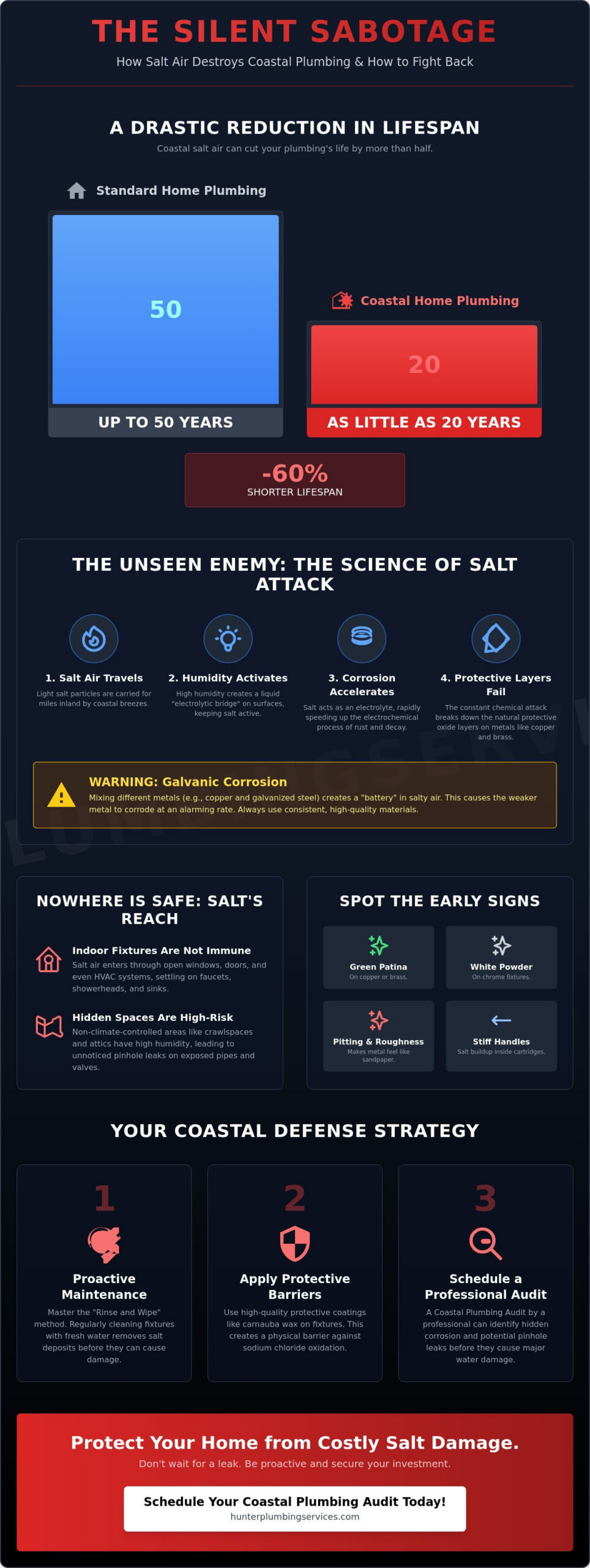
Did you know that the same ocean breeze you love could be cutting the lifespan of your home’s infrastructure in half? While standard plumbing is often built to last 50 years, coastal homes frequently see system failures in as little as 20 years because of the relentless effects of salt air on plumbing fixtures. It’s a constant chemical attack that turns high-end finishes into pitted, discolored eyesores much sooner than any homeowner expects.
We understand how frustrating it is to face unexpected repair costs when you should be enjoying the coastal lifestyle. You deserve a home that’s as durable as it is beautiful, and we’re here to help you achieve that. This guide will show you how to protect your property by choosing the right materials and following a proactive maintenance routine. We’ll explore the 2026 standards for corrosion resistance and provide practical steps to extend the life of your hardware. From understanding the science of salt damage to selecting the best materials for the South Carolina coast, you’ll get the local expertise needed to keep your plumbing in top shape. It’s time to stop the salt from winning and start protecting your investment with confidence.
Key Takeaways
- Understand why salt air corrosion travels miles inland to affect more than just oceanfront properties.
- Identify the early warning signs of the effects of salt air on plumbing fixtures, including green patina and structural pitting.
- Master the “Rinse and Wipe” maintenance method to keep your high-end finishes looking like new.
- Learn which protective barriers, such as carnauba wax, offer the best defense against sodium chloride oxidation.
- Discover the value of a professional coastal plumbing audit to catch hidden damage before it causes a major leak.
How Salt Air Accelerates Corrosion in Coastal Plumbing Systems
Living in Myrtle Beach offers incredible views, but the environment creates a unique set of challenges for your home. Understanding the effects of salt air on plumbing fixtures starts with a bit of chemistry. Salt air corrosion is an electrochemical process, specifically a form of oxidation, that sodium chloride triggers. While rust happens everywhere, the presence of salt acts as a massive accelerator for the decay of your home’s hardware.
Your home doesn’t have to be sitting directly on the sand to feel the sting of the ocean. Salt particles are incredibly light and can travel miles inland on the breeze. In Horry County, our high humidity levels act as a catalyst. The moisture in the air creates an “electrolytic bridge” on your fixtures, allowing the salt to stay in a liquid state where it can do the most damage to your metal surfaces.
The Chemical Reaction: Why Salt Hates Metal
Sodium chloride is a powerful electrolyte. It speeds up the flow of electrons between metal atoms, which is the root cause of corrosion. On materials like copper and brass, this process aggressively breaks down the protective oxide layers that usually prevent deep damage. Once that barrier is gone, the metal underneath is exposed to a 24/7 chemical attack. Pitting corrosion is the development of small, localized holes or craters that penetrate deep into metal surfaces. This type of damage is particularly dangerous because it can lead to structural failure long before you notice a major leak.
Mixing different types of metals in this environment is a recipe for disaster. This is known as the “Galvanic Series” effect. When two different metals, such as copper and galvanized steel, are connected in a salty, humid environment, they create a literal battery. The salt air completes the circuit, causing the “weaker” metal to corrode at an alarming rate. We always recommend using consistent, high-quality materials to prevent this rapid decay.
Indoor vs. Outdoor Vulnerability
A common misconception among local homeowners is that indoor fixtures are immune to coastal air. Unfortunately, your plumbing is never truly sealed off from the environment. Every time you open a window or door, salt-laden air enters your living space. Modern HVAC systems also pull in outdoor air, circulating fine salt particles throughout your home. These particles settle on your bathroom faucets, kitchen sinks, and showerheads, beginning the oxidation process immediately.
The effects of salt air on plumbing fixtures are often most severe in “hidden” areas. Crawlspaces and attics are rarely climate-controlled and often have higher humidity levels than the rest of the house. Salt air can settle on exposed pipes and valves in these spaces, leading to pinhole leaks that go unnoticed for months. Protecting your home requires looking beyond the shiny finishes in your bathroom and addressing the system as a whole.
Identifying Salt Air Damage: From Pitting to Pinhole Leaks
Spotting the early effects of salt air on plumbing fixtures can save you thousands in emergency repairs. Because the corrosion process is constant in our coastal climate, damage often hides in plain sight until a component fails completely. You should inspect your hardware at least once a month for specific visual and functional changes. Catching these signs early allows for simple maintenance rather than a full replacement.
Visual cues are your first line of defense. On copper pipes or decorative features, look for a greenish “patina” that suggests the metal is reacting to the salt. Chrome fixtures typically develop a white, powdery residue that doesn’t wipe away easily. If you see reddish rust on stainless steel or iron components, the protective layer has already failed. Beyond the color changes, feel the surface of your faucets and showerheads. Pitting corrosion appears as small craters or “pits” that make the metal feel rough or sandpapery to the touch.
Functional failures often follow these visual signs. You might notice that faucet handles become stiff or difficult to turn as salt crystals build up inside the cartridge. Aerators often clog with mineral deposits, leading to uneven water pressure. Most dangerously, salt air can cause pinhole leaks in supply lines. This happens when external salt exposure eats through the pipe wall from the outside in, creating tiny, high-pressure sprays that can rot your cabinetry before you ever see a puddle.
Warning Signs on Your Fixtures
Check the base of your faucets where they meet the countertop. This is a primary collection point for salt-laden moisture. If you notice “crusty” mineral buildup around your outdoor hose bibbs, the salt is already compromising the valve seat. While many homeowners think “rusty water” comes from the city supply, it is often a sign that the exterior of your pipes has decayed enough to allow oxygen and salt to contaminate the water sitting inside your lines. If you suspect your system is thinning, a professional leak detection service can find trouble before it floods your home.
Impact on Water Heaters and Appliances
The local environment is particularly harsh on water heaters. Salt air aggressively corrodes the outer jacket of the tank and can quickly degrade sensitive electrical connections. For homeowners with modern systems, this environment increases the frequency of necessary maintenance. You can learn more about protecting these units in our guide to tankless water heater installation in coastal areas. Additionally, don’t overlook your appliances. The metal crimps on washing machine hoses and the connections behind your dishwasher are highly vulnerable to salt-driven decay and should be inspected annually for signs of weakness.
Protecting Your Fixtures: Maintenance and Material Selection
The best way to combat the effects of salt air on plumbing fixtures is to stop the salt from making a permanent home on your hardware. While you can’t change the coastal environment, you can change how your fixtures interact with it. A proactive approach combines smart material choices with a consistent cleaning schedule. This ensures your home stays beautiful and functional despite the harsh South Carolina air.
One of the most effective habits is the “Rinse and Wipe” method. Every week, simply rinse your fixtures with fresh water and dry them with a soft microfiber cloth. This removes the salt crystals before they can bond with the metal surface. For an extra layer of defense, apply a thin coat of high-quality carnauba wax or a specialized plumbing silicone spray. These products create a hydrophobic barrier that forces salt-laden moisture to bead up and roll off rather than sitting on the finish and causing oxidation.
Choosing the Right Materials for Myrtle Beach
Selecting the right hardware during a plumbing fixture installation project is critical for long-term success. Brass and bronze are naturally more resistant than zinc or steel, but 316-grade stainless steel is the true gold standard for coastal homes. Unlike standard stainless, the 316 variant contains molybdenum. This specific element helps the metal resist the pitting corrosion caused by chlorides in the sea air.
We also suggest looking for Physical Vapor Deposition (PVD) finishes. Unlike traditional plating that sits on top of the metal, PVD is a process where the finish is bonded at the atomic level. This makes it incredibly hard and virtually immune to the peeling or tarnishing that salt air usually causes. Chrome plating often fails quickly in our climate, while PVD-treated brushed nickel or stainless finishes tend to last much longer.
Preventative Maintenance Checklist
Following a preventative maintenance checklist is the best way to mitigate the effects of salt air on plumbing fixtures over time. Consistent care prevents the chemical reaction from ever gaining a foothold on your property.
- Wax your faucets: Apply carnauba wax every three months to create a salt-proof seal.
- Flush outdoor spigots: Run your hose bibbs for 30 seconds once a week to clear salt buildup from the valve seat.
- Inspect connections: Check the metal fittings under your sinks for any signs of white powder or green patina.
Maintaining the purity of your water also helps. A whole house filtration system reduces internal stress on your pipes by removing minerals that could otherwise accelerate corrosion from the inside out. If you’re ready to upgrade your home with durable, coastal-ready hardware, contact us for professional plumbing fixture installation today.
Professional Solutions for Coastal Plumbing Longevity
While routine cleaning helps, the deep-seated effects of salt air on plumbing fixtures often require technical intervention that only local experience can provide. Hunter Plumbing Services LLC has spent years observing how Myrtle Beach’s specific wind and salt spray patterns degrade even protected systems. We don’t just fix a leak; we analyze why it happened and how to prevent the coastal environment from causing a repeat performance.
Our “Coastal Plumbing Audit” goes beyond a standard inspection by testing the structural integrity of your system’s most vulnerable points. We examine the main shut-off valves and the critical joints in your supply lines that are most susceptible to chloride-driven thinning. If we find that the salt has compromised your hardware, we recommend a transition to “Coastal-Grade” components. These are heavy-duty fittings designed to endure the constant humidity and salt exposure unique to our region, offering a level of durability that standard parts simply can’t match.
When to Call a Professional Plumber
It’s time to call in the experts when corrosion moves past the surface and begins to impact the function of your home. If you notice a persistent metallic taste in your water or see moisture around your wall penetrations, the integrity of your pipes may be at risk. For homes over 10 years old, Hunter Plumbing Services LLC recommends professional leak detection to identify hidden pinholes caused by the effects of salt air on plumbing fixtures. We also specialize in protecting sewer and gas lines, which are often the most neglected yet highly vulnerable parts of a coastal plumbing system.
Investing in Your Home’s Future
Upgrading to corrosion-resistant hardware isn’t just about aesthetics; it’s about protecting your property’s long-term value. Hunter Plumbing Services LLC operates on a foundation of honesty and community heritage, meaning we only suggest replacements when maintenance isn’t a safe or viable option. We treat every home as if it were our own, ensuring you receive the most durable solutions for our unique environment. Schedule your coastal plumbing inspection with Hunter Plumbing Services LLC today!
Protect Your Coastal Investment for the Long Haul
Living near the ocean shouldn’t mean accepting the rapid decay of your home’s infrastructure. By combining a consistent “Rinse and Wipe” routine with high-performance PVD finishes, you can effectively counteract the effects of salt air on plumbing fixtures. These proactive steps, along with choosing 316-grade stainless steel, ensure your hardware remains functional and beautiful for years to come.
As a local, family-owned and operated team in Myrtle Beach, Hunter Plumbing Services LLC has provided specialized coastal plumbing expertise since 2021. We believe in providing clear, honest guidance to help our neighbors navigate the unique challenges of the South Carolina coast. Whether you need a 24/7 emergency response for a pipe failure or a thorough inspection of your home’s hidden lines, you can depend on our calm expertise and no-nonsense approach.
Take control of your home’s longevity today. Protect your coastal home—Contact Hunter Plumbing Services LLC for a fixture inspection! We are committed to financial clarity and quality workmanship, giving you peace of mind so you can focus on enjoying the beach life.
Frequently Asked Questions
How far inland does salt air affect plumbing fixtures?
Salt air can travel 5 to 10 miles inland, and in some extreme cases, even further during high-wind events. Residents in Myrtle Beach and surrounding Horry County often experience the effects of salt air on plumbing fixtures even if they aren’t on the oceanfront. Wind patterns and high humidity carry these corrosive particles deep into residential neighborhoods, making preventative care essential for almost every local homeowner.
Can I use WD-40 to protect my faucets from salt air?
You shouldn’t use standard WD-40 as a long-term protectant for your faucets. While it can displace moisture temporarily, it attracts dust and can degrade certain rubber seals or plastic components inside the fixture. Instead, use a high-quality carnauba wax or a specialized plumbing silicone spray. These products create a durable, clear barrier that resists salt without damaging the internal parts of your hardware or creating a greasy residue.
What is the best faucet finish for a beach house in Myrtle Beach?
PVD-treated finishes and 316-grade stainless steel are the best choices for Myrtle Beach homes. Physical Vapor Deposition (PVD) creates a finish that is bonded at the molecular level, making it much harder to pit or peel than traditional chrome plating. Brushed nickel and matte black PVD finishes are popular options that provide both aesthetic appeal and superior resistance to the local salt spray and high humidity levels.
How often should I clean my plumbing fixtures if I live near the ocean?
You should clean your fixtures at least once a week with fresh water and a soft cloth. This “Rinse and Wipe” routine prevents salt crystals from sitting on the surface and initiating the oxidation process. If your home is directly on the oceanfront, you might need to do this twice a week. Regular maintenance is the most effective way to combat the effects of salt air on plumbing fixtures and extend their lifespan.
Does salt air affect the plumbing inside my walls?
Yes, salt air can penetrate wall cavities through vents, crawlspaces, and gaps in the home’s exterior. This exposure often leads to corrosion on copper supply lines and drain pipes that you can’t easily see. High humidity in coastal areas keeps the salt in a liquid state, allowing it to eat away at metal surfaces in dark, unventilated spaces. Professional inspections help identify these hidden risks before they turn into major leaks or structural failures.
Is a tankless water heater better for coastal environments?
Tankless water heaters are often a better choice for coastal environments because they don’t have a large external steel tank that can rust out. However, they still require regular maintenance to protect their internal heat exchangers from salt-driven decay. Modern tankless units are compact and can be installed in more protected areas, which helps shield them from direct exposure to the salty breeze. This setup generally offers better longevity than traditional tank-style heaters.