

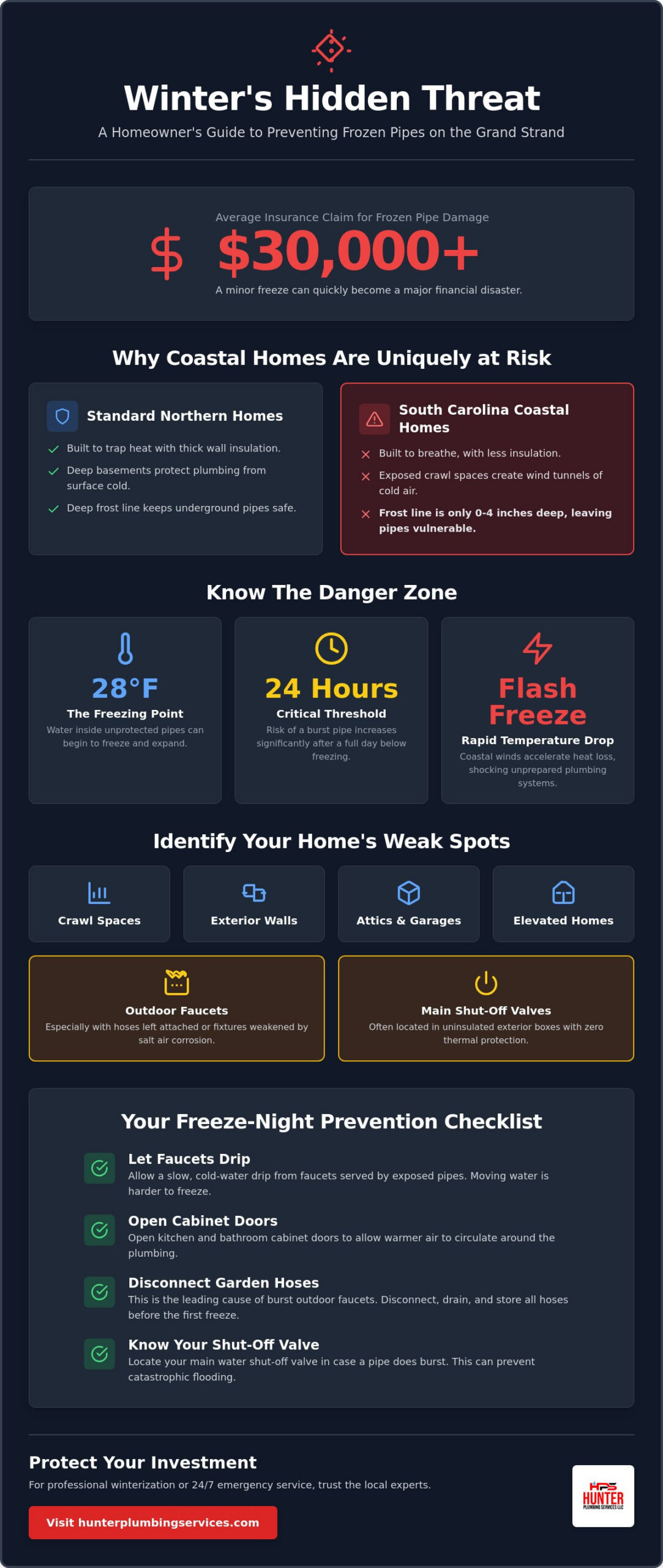
Did you know that the average insurance claim for damage caused by frozen pipes recently exceeded $30,000? It’s a staggering figure that highlights just how quickly a minor freeze can turn into a major financial headache. Living along the Grand Strand, we usually enjoy mild weather, but our homes often lack the heavy insulation found in colder climates. This makes frozen pipe prevention for SC winters a critical priority for every local homeowner.
We understand the anxiety that comes with a sudden South Carolina cold snap, especially if you’re managing a second home from a distance. You want to know your property is safe without feeling overwhelmed by technical details. This guide will show you how to protect your Myrtle Beach home using expert tips tailored for our coastal environment. We’ll provide a clear checklist for freezing nights and identify which pipes are most at risk in your crawl space or exterior walls. By the end, you’ll have the plan you need to stay dry and enjoy total peace of mind all season long.
Key Takeaways
- Learn why coastal homes are uniquely vulnerable to cold snaps due to shallow frost lines and unheated crawl spaces.
- Identify high-risk areas in marshfront properties, including exposed main lines and fixtures weakened by salt air.
- Master the correct way to use the drip method as a key part of frozen pipe prevention for SC winters.
- Discover how simple adjustments like opening cabinet doors can help circulate heat to pipes located within exterior walls.
- Know when to schedule professional leak detection or winterization to protect your investment during the coldest months.
Why South Carolina Winters Pose a Unique Risk to Your Plumbing
Many Grand Strand residents assume our mild climate protects them from plumbing disasters. However, South Carolina homes are built to breathe and stay cool, not to trap heat during a deep freeze. This architectural difference is the primary reason why frozen pipe prevention for SC winters is so vital. Unlike Northern homes with deep basements and thick wall insulation, our local properties often feature crawl spaces or slab foundations that leave pipes vulnerable to the elements.
In our region, the frost line is incredibly shallow. Data from Clemson University indicates the frost line in South Carolina typically only reaches zero to four inches deep. While this means your deeply buried main lines are usually safe, any pipe located above that four-inch mark is a sitting duck. If a pipe is exposed in a crawl space or tucked into an uninsulated exterior wall, it has almost no protection when the temperature plummet.
Southern Construction vs. Northern Insulation
In Myrtle Beach, many homes use crawl space construction to handle our high humidity and coastal water tables. While this is great for airflow in July, it creates a wind tunnel of freezing air around your plumbing in January. Pipes located in exterior walls are also a major concern. Builders here often prioritize cooling efficiency, meaning those walls might lack the heavy-duty insulation required to stop a freeze. We generally consider 28°F the “danger zone” for local plumbing. Once the mercury hits that point, the water inside your pipes can begin to crystallize and expand.
The “Flash Freeze” Factor in Horry County
Our weather is famously unpredictable. It isn’t uncommon to see a 60-degree afternoon followed by a 20-degree night. This rapid drop, known as a flash freeze, is dangerous because your home doesn’t have time to slowly adjust to the cold. Coastal winds along the Grand Strand also play a role, as high gusts accelerate heat loss from exposed pipes through a process similar to wind chill. A critical threshold to remember is 24 hours. If temperatures remain below freezing for a full day, the risk of a burst pipe increases significantly as ice pressure builds within the line.
Identifying Vulnerable Pipes in Coastal and Marshfront Properties
Every home in the Grand Strand faces some risk during a freeze, but coastal and marshfront properties deal with a unique set of challenges. If your home is elevated on pilings or sits near the Intracoastal Waterway, your plumbing is likely more exposed than a standard inland residence. The wind coming off the water acts like a bellows, stripping heat away from pipes much faster than in sheltered areas. Without a specific plan for frozen pipe prevention for SC winters, these exposed lines can become a major liability during the first cold snap of the season.
Don’t overlook the “hidden” cold spots in your home. Many Myrtle Beach houses have plumbing routed through unheated attics or garages. If your garage isn’t insulated, the pipes behind those walls are essentially outdoors. We also see many issues with “dead legs.” These are sections of pipe that were left behind during previous renovations and no longer lead to an active fixture. Because the water in these lines never moves, it freezes much faster than water in your main lines. Identifying these stagnant areas is a critical step in protecting your property.
Above-Ground and Exposed Pipes: The Primary Targets
The main water shut-off valve is often the most vulnerable point. In our area, these are frequently located in plastic exterior boxes near the street or attached to the side of the house. These boxes provide almost zero thermal protection. Another common culprit is the humble garden hose. Leaving a hose attached to an outdoor spigot traps water inside the faucet’s neck. When that trapped water freezes, it expands and cracks the internal valve. This is the leading cause of burst outdoor faucets in Horry County, and it’s entirely preventable by simply disconnecting your hoses before November.
Salt Air Corrosion and Outdoor Spigots
Living near the ocean means dealing with salt air, which is incredibly corrosive to metal. Over time, salt degrades the internal washers and seals of your outdoor hose bibbs. A valve that’s already weakened by corrosion is far more likely to fail when the pressure of expanding ice hits it. These hairline cracks might be invisible to the naked eye during the summer, but they become catastrophic leaks the moment the ice thaws. It’s a wise move to perform a quick inspection of all plumbing fixtures before the freezing weather arrives. If you notice any crusty buildup or signs of rust on your valves, you might want to consult a local expert to ensure they’re sturdy enough to handle the winter pressure.
Practical Steps for Frozen Pipe Prevention This Winter
Taking action before the first frost hits is the best way to avoid a plumbing emergency. While we can’t control the weather in Horry County, we can control how prepared our homes are for a sudden dip in temperature. Effective frozen pipe prevention for SC winters starts with a few simple, low-cost adjustments that protect your lines from the inside out.
Start by keeping your thermostat at a consistent temperature day and night. It’s tempting to lower the heat when you go to bed, but a steady internal temperature helps maintain the warmth of the air inside your wall cavities. You should also open cabinet doors under sinks in your kitchen and bathrooms. This small step allows the heated air from your living space to circulate around the pipes, providing just enough warmth to prevent ice from forming.
The Art of the Faucet Drip
Many people believe a dripping faucet prevents freezing by keeping water moving. While that helps, the real benefit is pressure relief. When water freezes, it expands. If the pipe is closed, that expansion creates immense pressure that eventually causes the metal or plastic to burst. By letting a faucet drip, you provide an escape route for that pressure. Focus on the faucet furthest from your main water shut-off valve. A slow, steady drip of 5 to 10 drops per minute is usually enough. If you have pipes running through an unheated crawl space, make sure to drip both the hot and cold lines.
Insulating Crawl Spaces and Unheated Areas
Walk around your home and look for gaps where cold air might “whistle” through your foundation. Even a small draft can freeze a nearby pipe in hours. You can temporarily block crawl space vents with foam board during a freeze, but remember to remove them once the weather warms to prevent moisture buildup. For the pipes themselves, use pre-slit foam pipe sleeves. They’re inexpensive and easy to install. Avoid using towels or newspaper to wrap pipes; these materials trap moisture and can actually lead to mold or even fire hazards if they’re near a heat source.
Protecting Second Homes and Vacation Rentals
If you’re a snowbird heading away for the season, never turn your heat completely off. Set your thermostat no lower than 55°F. This is the “safe zone” that keeps internal lines above the danger point. For many local owners, a tankless water heater installation makes winterization much easier since these units don’t hold a large volume of standing water that can freeze and crack a tank. If you’re worried about your property while you’re away, contact us for a professional winterization inspection to ensure your home is locked down and safe before the next freeze arrives.
When to Call a Pro: Hunter Plumbing’s Winterization & Emergency Services
While DIY steps provide a solid foundation, professional intervention offers a level of security that simple foam sleeves cannot match. Knowing when to transition from home remedies to professional frozen pipe prevention for SC winters ensures your property remains safe during our most unpredictable cold snaps. We provide specialized winterization services that address the unique environmental factors of the Grand Strand, focusing on areas that homeowners often miss.
Our team performs comprehensive inspections to identify salt-air corrosion on your outdoor fixtures before they become a liability. This proactive approach is the cornerstone of effective frozen pipe prevention for SC winters. We don’t just look for current leaks; we evaluate the integrity of your entire system to ensure it can withstand the pressure of a sudden freeze.
Professional Winterization for Peace of Mind
A professional plumbing tune-up includes more than just a quick visual check. We test your pressure relief valves and ensure your outdoor hose bibbs are fully sealed against the elements. If your home relies on gas-powered heating systems to keep your pipes warm, we also provide licensed plumber for gas line services to ensure your backup heat stays reliable when you need it most. This comprehensive care gives you the confidence that your home is ready for whatever the forecast holds.
24/7 Emergency Response for Burst Pipes
Catching a frozen pipe early can save you thousands in water damage repairs. If you turn on a faucet and only get a faint trickle, or if you see frost forming on the outside of an exposed pipe, you likely have an ice blockage. Your first step should always be to locate and close your emergency shut-off valve to prevent a flood if the pipe has already cracked. Once the water is off, give us a call to handle the thawing process safely.
Never use a blowtorch, kerosene heater, or any open flame to thaw a pipe. This creates a massive fire risk and can cause the pipe to burst from uneven heating. Instead, keep the faucet open to allow water to flow as the ice melts. If you’re facing a total blockage or a burst line, Hunter Plumbing handles rapid-response emergencies throughout Myrtle Beach. We’re here to restore your service and protect your home with the dependable, neighborly care you expect from a local expert.
Secure Your Grand Strand Home Before the Next Freeze
Protecting your property from winter weather doesn’t have to be a source of stress. By identifying vulnerable pipes in your crawl space and mastering the correct faucet drip method, you’ve already taken the most important steps toward frozen pipe prevention for SC winters. Remember that our coastal environment requires a specific approach. Salt air corrosion and shallow frost lines mean that standard Northern advice isn’t always enough for Myrtle Beach homes.
We’re here to be your local partner in home maintenance. Hunter Plumbing has been locally owned and operated since 2021, and we have deep expertise in the specific needs of coastal and marshfront plumbing. While we offer 24/7 emergency service throughout Horry County, our goal is to help you avoid those midnight calls entirely through proactive care. Don’t wait for the temperature to drop to find out if your insulation is sufficient. Schedule your winter plumbing inspection with Hunter Plumbing today! We’ll help you stay warm, dry, and prepared all season long.
Frequently Asked Questions
How cold does it have to be for pipes to freeze in South Carolina?
Pipes in our region generally begin to freeze when the outside temperature drops to 28 degrees Fahrenheit or lower for several consecutive hours. While water technically freezes at 32 degrees, your home’s structure provides a small thermal buffer. However, because many Grand Strand homes have plumbing in unheated crawl spaces, a sudden drop to 20 degrees can cause immediate issues. Consistent freezing temperatures are the primary concern for local homeowners.
Should I drip both the hot and cold water faucets?
You should drip both the hot and cold water lines if they both run through unheated areas of your home. Since these are separate pipes, dripping only one side of the faucet leaves the other line vulnerable to pressure buildup and potential bursting. Focus on the faucet furthest from your main water shut-off valve. This ensures water moves through the longest possible stretch of your plumbing system to relieve pressure effectively.
Is it better to keep the heat on at night during a freeze?
Yes, keeping your thermostat at a consistent setting day and night is essential for frozen pipe prevention for SC winters. Many people try to save money by dropping the heat at night, but this allows the air inside your wall cavities to cool down significantly. Maintaining a steady temperature of at least 68 degrees helps keep the internal plumbing warm enough to resist freezing during the coldest hours of the early morning.
What is the best way to thaw a frozen pipe safely?
The safest way to thaw a pipe is by using a hair dryer or a portable space heater aimed at the frozen section. Always keep the faucet open while thawing so that melting water can escape and relieve internal pressure. Never use an open flame or blowtorch. This creates a severe fire hazard and can cause the pipe to explode from uneven heating. If you can’t reach the frozen area, call a professional to avoid accidental damage.
Do I need to insulate my crawl space vents in the winter?
Closing or insulating your crawl space vents is a smart move when temperatures are expected to stay below freezing for more than 24 hours. You can use foam board or specialized vent covers to stop cold wind from whistling around your plumbing. Just remember to remove these covers once the weather warms up. Proper ventilation is still necessary during the rest of the year to prevent moisture buildup and wood rot in our humid coastal climate.
Will a tankless water heater freeze in an SC winter?
Tankless water heaters can freeze if they are installed on an exterior wall without proper insulation or if the power goes out during a cold snap. Most modern units have built-in freeze protection that uses small heaters to keep internal components safe, but this requires electricity to function. If you’re planning for frozen pipe prevention for SC winters, ensure your unit is sheltered from direct wind and verify its freeze-protection settings are active.