

Imagine spending your Saturday morning scrubbing white, chalky residue off your glass shower doors, only to see those stubborn spots return after a single rinse. For many of our neighbors along the Grand Strand, this isn’t just a cleaning annoyance; it’s a sign that mineral deposits are quietly attacking your home’s most expensive systems. Finding effective hard water solutions Myrtle Beach residents can count on is essential for maintaining everything from your skin’s health to the efficiency of your tankless water heater.
We understand how frustrating it is to deal with brittle hair, dry skin, and appliances that seem to wear out far too soon. You deserve a home where the water works for you, not against you. In this guide, we will show you how to identify the specific mineral challenges in our coastal water, explain the difference between water softeners and whole-house filtration, and provide a clear path to spot-free dishes and lower utility bills. Let’s protect your plumbing and restore your peace of mind through local expertise and honest advice.
Key Takeaways
- Learn why Myrtle Beach water is classified as “moderately hard” and how these specific mineral levels impact your plumbing fixtures over time.
- Discover why tankless water heaters require special protection from limescale to maintain their high-efficiency ratings and long lifespan.
- Compare the most effective hard water solutions Myrtle Beach offers, including the differences between ion exchange and whole-house filtration.
- Understand how professional installation accounts for coastal-specific challenges like salt air corrosion on your external plumbing components.
Understanding Water Hardness Levels in Myrtle Beach
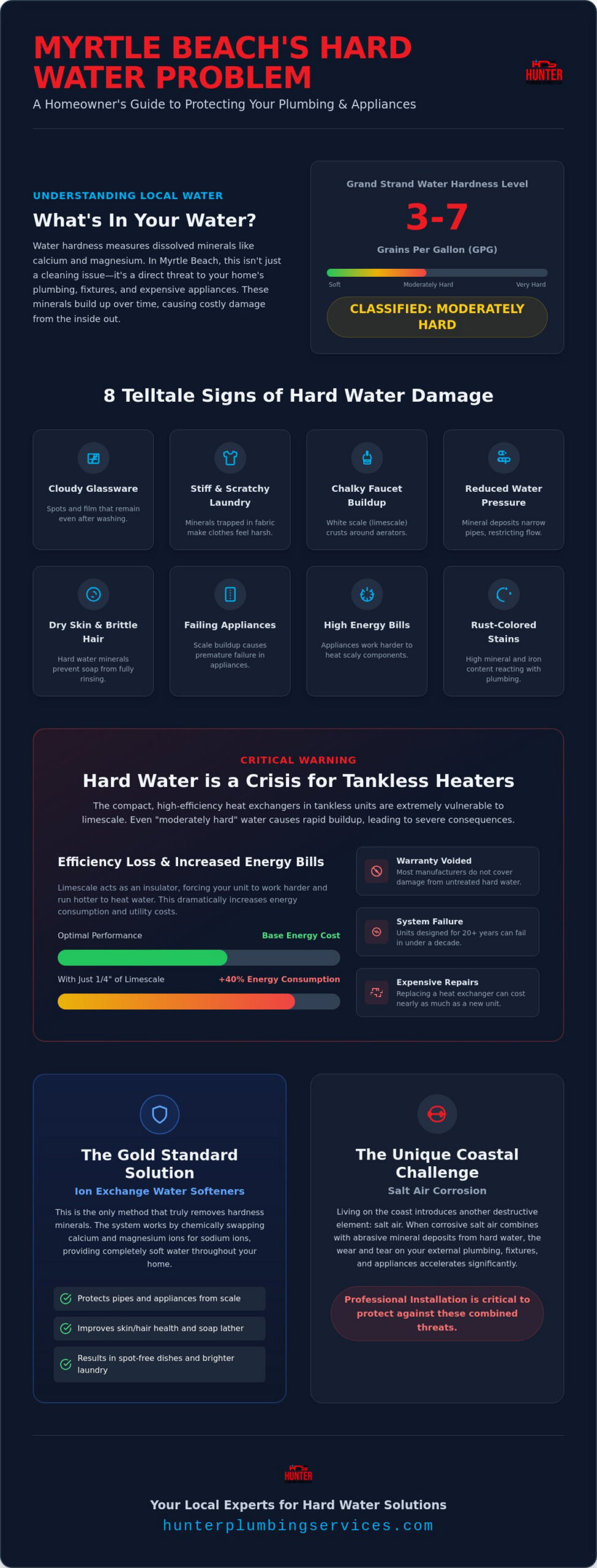
Water hardness is the measurement of dissolved calcium and magnesium in grains per gallon. While that sounds technical, it simply means your water carries tiny rock particles that stick to your pipes, fixtures, and skin. In our area, the Grand Strand Water and Sewer Authority (GSWSA) typically reports levels between 3 and 7 grains per gallon. This falls into the “moderately hard” category. Don’t let that middle-of-the-road label fool you. Even moderate hardness causes significant issues in coastal homes where the salt air already puts stress on your plumbing. When minerals and salt air combine, they accelerate the wear and tear on your faucets and appliances.
City Water vs. Private Wells in Horry County
Your water’s behavior depends heavily on its source. Most municipal customers receive a blend of surface water from Bull Creek and groundwater from the Black Creek aquifer. This mix changes seasonally. These changes can affect how your soap lathers or how much scale builds up on your glass shower doors. If you rely on a private well, you face a different set of challenges. Wells in Horry County often struggle with high iron content and hydrogen sulfide, which creates a distinct “rotten egg” smell. Because of our high water tables, especially on marshfront properties, sandy soil infiltration can also clog your plumbing fixtures faster than average.
Identifying Hard Water Damage in Your Home
Hard water leaves a trail of clues throughout your house. You might notice cloudy glassware that never seems to get clean or laundry that feels stiff and scratchy. Check your kitchen and bathroom faucets for white, chalky crust on the aerators. These are clear signs that you need hard water solutions Myrtle Beach experts can implement to protect your investment. Beyond the visual spots, hidden damage occurs inside your pipes. Mineral deposits narrow the path for water. This reduces your water pressure and forces your appliances to work much harder to do their jobs. If you see rust-colored stains in your toilets or tubs, it’s often a result of high mineral concentrations reacting with your home’s plumbing components.
Disadvantages of Tankless Water Heaters in Hard Water Areas
Tankless water heaters are prized for their efficiency and endless hot water, but they have a significant weakness: their compact heat exchangers. These units use narrow copper or stainless steel pipes to flash-heat water instantly. In our area, even “moderately hard” water carries enough calcium to create a rapid buildup of limescale inside these small passages. This scale acts as an insulator, literally wrapping your heating elements in a layer of rock. Because heat cannot transfer efficiently through the scale, your unit has to work harder and run hotter to reach your set temperature. This constant strain is why finding effective hard water solutions Myrtle Beach homeowners can rely on is a necessity for anyone with a tankless system.
Efficiency Loss and Increased Energy Bills
The impact on your wallet is immediate and measurable. Industry data shows that just 1/4 inch of scale buildup can increase your energy consumption by up to 40%. You might notice your gas or electric bills creeping up even though your usage hasn’t changed. In the coastal South Carolina climate, this mineral accumulation happens faster than you might expect. While traditional tank heaters can often survive some sediment at the bottom, tankless units require much more frequent maintenance. Without proper filtration or softening, a unit designed to last 20 years might fail in less than a decade.
The High Cost of Neglect
When the heat exchanger becomes too restricted, your system will likely trigger an error code and shut down completely to prevent a fire hazard. By the time you see these codes, the damage might already be permanent. Replacing a failed heat exchanger is often nearly as expensive as buying a brand-new unit. Most manufacturers explicitly state in their warranty terms that damage from untreated hard water is not covered. If you are planning a tankless water heater installation, it is critical to pair it with a treatment system to protect your investment. We recommend a professional descaling service at least once a year to keep your system running at peak performance. If you’re worried about your current unit, scheduling a diagnostic check is a simple way to avoid a total system failure.
Hard Water Solutions for Myrtle Beach Homeowners
Finding the right hard water solutions Myrtle Beach residents can rely on involves matching the right technology to your home’s specific needs. Ion exchange water softeners remain the gold standard for true mineral removal. These systems use a chemical process to swap calcium and magnesium ions for sodium ions. This completely eliminates the source of scale before it ever reaches your faucets. If you are more concerned about the taste of chlorine or sandy sediment from a private well, whole house filtration provides a comprehensive barrier for every fixture in your home. These filters improve the smell and clarity of your water without the need for salt.
Salt-free conditioners are another popular choice for those on low-sodium diets. They don’t remove minerals but change their structure so they don’t stick to your pipes. While they are low-maintenance, they might not provide the same “slippery” feel in the shower that true softeners offer. For the highest quality drinking water, many of our neighbors add a reverse osmosis system. This advanced filtration removes contaminants like Chromium-6 and disinfection byproducts that standard carbon filters might miss. We recommend testing your water first to see which of these hard water solutions Myrtle Beach homes actually require.
Choosing the Right System for Your Property
Sizing your system correctly is vital for long-term performance. We calculate the necessary capacity based on your household size and the local GSWSA hardness levels of 3 to 7 grains per gallon. If you own a vacation rental, you need a higher-capacity system. These properties experience heavy usage spikes during the summer months that can overwhelm a standard residential unit. A system that is too small will regenerate too often. This wastes water and salt while putting unnecessary wear on the control valve.
Maintenance Protocols for Maximum Longevity
Even the best equipment needs a little attention to stay reliable. You should check your salt levels monthly and clean the brine tank annually to prevent salt bridges from forming. For those with tankless units, an annual descaling is a non-negotiable part of your maintenance schedule. A sediment flush should be performed annually to prevent popping noises in water heaters. These simple steps ensure your investment lasts as long as possible. If you’re ready to improve your home’s water quality, book a water system consultation with our local team today.
Professional Installation and Coastal Protection
Installing hard water solutions Myrtle Beach homes can depend on requires more than just connecting pipes. Our coastal environment presents unique challenges that national chains often overlook. In Horry County, we have to account for salt air corrosion that can eat away at outdoor filtration housings and exposed metal fittings. A professional installation ensures that every component is shielded from the elements. We also make sure your system complies with the 2021 International Plumbing Code, which includes vital backflow prevention to keep your home’s drinking water safe and legal. Attempting a DIY installation can lead to permit issues or costly leaks that damage your property’s foundation.
Our team understands that your home is your most significant investment. We don’t just drop off a piece of equipment; we integrate it into your specific plumbing layout. This includes checking for existing pipe wear and ensuring that your new softener or filtration system doesn’t negatively impact your water pressure. By choosing a local partner, you gain access to 24/7 support from neighbors who know exactly how the local water blend affects your fixtures. Hunter Plumbing Services LLC provides total financial clarity, offering honest estimates and open communication so there are never any surprises on your final bill.
The Hunter Plumbing Advantage
Since 2021, we’ve built our reputation on being the dependable local experts who value long-term relationships over quick sales. We specialize in the specific coastal challenges found in Myrtle Beach, from high water tables to salt-heavy air. Hunter Plumbing Services LLC technicians are highly skilled in protecting your system from the ground up. If your hard water issues have already caused hidden damage, we can also assist with professional leak detection to ensure your pipes are sound before the new treatment system is activated. It’s this comprehensive, neighborly approach that keeps your property in safe, capable hands.
Ready to Solve Your Hard Water Issues?
Taking the first step toward better water is simple and stress-free. When you contact us for a professional water quality assessment, we start by testing your specific water source and inspecting your current plumbing health. During a typical service call, we’ll explain your options without confusing jargon and help you choose a system that fits your household’s actual usage. Our goal is to provide you with spot-free dishes, softer skin, and the peace of mind that comes from knowing your appliances are protected. Give us a call today to schedule your consultation and see why your neighbors trust Hunter Plumbing Services LLC with their coastal plumbing needs.
Secure Your Home’s Future with Better Water
Protecting your home from the unique mineral challenges of the Grand Strand requires a proactive approach. You now understand how even moderately hard water can quietly reduce the efficiency of your tankless heater and leave stubborn scale on your favorite fixtures. By choosing the right hard water solutions Myrtle Beach homeowners can finally stop the cycle of frequent repairs and high utility bills. Our team brings deep Horry County community roots and a specialized understanding of coastal salt air corrosion to every installation. We ensure your filtration or softening system is built to withstand our local environment from day one.
Don’t wait for an error code or a major leak to address your water quality. We are here to provide the financial clarity and technical authority you deserve. Whether you need a simple assessment or 24/7 emergency assistance, our neighbors are always our priority. Contact Hunter Plumbing Services LLC for a Water Quality Consultation today to start enjoying spot-free dishes and longer-lasting appliances. Your plumbing is in safe, capable hands.
Frequently Asked Questions
Is Myrtle Beach water considered hard or soft?
Myrtle Beach water is classified as moderately hard. The Grand Strand Water and Sewer Authority typically reports levels between 3 and 7 grains per gallon. While this is not the highest level in the country, it is more than enough to cause noticeable limescale buildup on your fixtures and inside your appliances over time.
Can I install a tankless water heater if I have hard water?
Yes, you can install a tankless unit, but you must protect it with a treatment system. Pairing your unit with the hard water solutions Myrtle Beach experts recommend prevents the heat exchanger from clogging with scale. This protection is vital because most manufacturers will not cover scale-related damage under their standard warranties.
How often should I descale my water heater in Myrtle Beach?
You should descale your water heater at least once every twelve months. For homes with high water usage or vacation rentals that see heavy seasonal traffic, we often recommend descaling every six months. Regular maintenance keeps the heating elements efficient and prevents the system from triggering emergency error codes or shutting down unexpectedly.
What is the difference between a water softener and a water filter?
A water softener specifically removes minerals like calcium and magnesium to prevent scale, while a water filter targets contaminants like chlorine, lead, and sediment. Softeners use an ion exchange process to protect your plumbing. Filters focus on improving the taste, smell, and safety of your water. Many coastal homeowners install both for total protection.
Will hard water affect my home’s plumbing fixtures and pipes?
Hard water causes significant damage by leaving chalky deposits on your faucets and showerheads. Inside your plumbing system, these minerals create a layer of rock that narrows your pipes. This buildup restricts flow and puts extra pressure on your joints and valves, which can eventually lead to pinhole leaks or premature pipe failure.
Can hard water cause low water pressure in my shower?
Yes, mineral deposits are a leading cause of low water pressure in local homes. Scale builds up inside showerhead nozzles and faucet aerators, blocking the path of the water. Implementing the permanent hard water solutions Myrtle Beach residents trust will stop this buildup at the source, ensuring you have consistent pressure throughout your entire property.