
Imagine watching the tide rise toward your marshfront property while your toilets suddenly stop flushing, even though you know there isn’t a clog in sight. For many Myrtle Beach neighbors, this isn’t just a bad dream; it’s the reality of living in a beautiful coastal area. These high water table plumbing problems often strike during heavy rain or high tides, leaving homeowners feeling helpless against the elements. You likely feel frustrated when standard DIY fixes fail to stop the recurring sewer backups or that sluggish drainage in your guest bath.
We understand that your home is your sanctuary, and the unique soil of Horry County requires a specialized approach that standard plumbing advice often ignores. This article will help you discover how high groundwater levels threaten your coastal plumbing and the specific marshfront solutions that protect your property from backups and pipe failure. You’ll learn the link between the water table and your pipes, identify permanent solutions for groundwater infiltration, and find out how a reliable local expert can secure your home’s infrastructure against the rising tide.
Key Takeaways
- Learn how Myrtle Beach’s shallow groundwater levels create unique pressure on your home’s pipes and drainage systems.
- Understand the physical risks of high water table plumbing problems, including pipe buoyancy and shifting soil that leads to sewer line failure.
- Discover why a backwater valve is your property’s best defense against groundwater-induced backups during heavy coastal rains.
- Identify why upgrading to modern PVC sewer lines provides the durability and flexibility needed to survive saturated marshfront conditions.
- Find out how a proactive coastal health check from a local expert can prevent property damage before the next storm hits.
Understanding High Water Tables and Their Impact on Coastal Plumbing
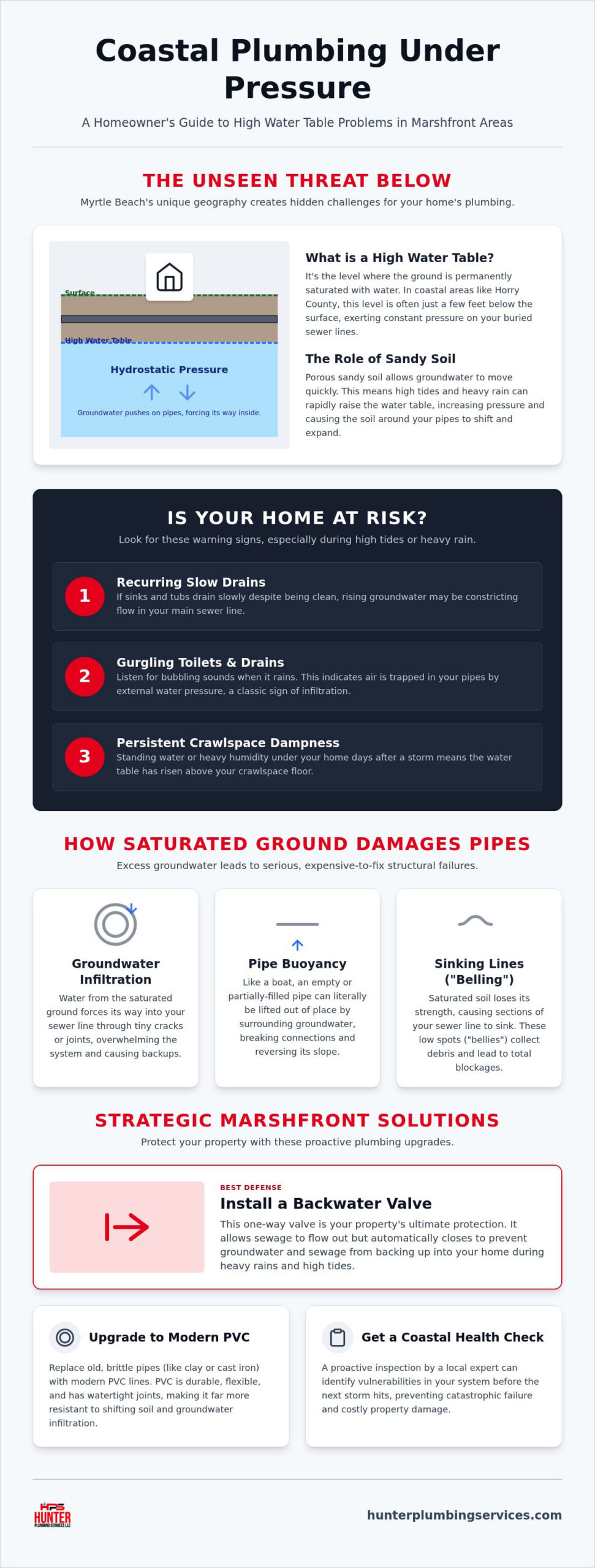
A high water table is the specific depth where the ground becomes permanently saturated with water. In the Myrtle Beach area, this level is often just a few feet below the surface. While surface flooding gets all the headlines, the water rising from beneath your home often triggers the most persistent high water table plumbing problems. This groundwater creates an invisible force known as hydrostatic pressure. It exerts constant, heavy weight against your buried sewer lines and foundation, searching for any weakness in your plumbing system.
Our local geography makes this a common challenge for neighbors living in marshfront areas or near the Intracoastal Waterway. Because these homes sit at lower elevations, the “saturated zone” is much closer to the pipes buried in your yard. Unlike a temporary puddle on your lawn, groundwater pressure is a relentless force. It doesn’t just sit there; it pushes. This pressure can force water into tiny joints or cracks that would otherwise remain watertight, leading to system-wide failures during peak saturation periods.
The Role of Sandy Soil in Groundwater Movement
The Grand Strand is famous for its sandy soil, which acts differently than the heavy clay found further inland. Sand is highly porous, meaning it allows water to move quickly. This is a double-edged sword for homeowners. While it drains surface water well, it also allows high tides to “push” the water table higher beneath your property even on sunny days. This constant movement creates a cycle of expansion and contraction in the soil around your pipes. Groundwater infiltration is the process of water entering pipes through microscopic cracks. When this happens, your sewer lines end up carrying groundwater and sewage simultaneously, which quickly leads to a backup.
Signs Your Myrtle Beach Home Is Affected by a High Water Table
You don’t have to be a geologist to know if your property is struggling with saturation. Your plumbing system will usually send out warning signals before a total failure occurs. We recommend keeping an eye out for these common indicators:
- Recurring slow drains: If your sinks and tubs drain slowly despite recent cleanings, rising groundwater might be restricted the flow in your main line.
- Gurgling toilets: Listen for “bubbling” sounds when it rains. This happens when air is trapped in your pipes by rising water levels outside the line.
- Persistent crawlspace dampness: If you see standing water or feel heavy humidity under your home days after a storm, the water table has likely risen above your crawlspace floor.
Recognizing these signs early can save you from an expensive emergency. If you notice your plumbing acting up during high tide or heavy rain, it’s time to look at professional solutions that address the soil conditions unique to Horry County.
Common Plumbing Failures Caused by Saturated Ground
When the ground around your home becomes fully saturated, it loses its ability to support the weight of buried infrastructure. Saturated soil is heavy. It shifts. This loss of load-bearing capacity often leads to “belling,” where sections of your sewer line sink and create low spots. These dips collect debris and eventually cause total blockages. High water table plumbing problems also introduce the surprising risk of pipe buoyancy. An empty or partially empty sewer line acts like a hollow boat. In extremely wet conditions, the surrounding groundwater can actually lift these pipes out of place, snapping joints and reversing the necessary slope for drainage.
The external pressure of groundwater also accelerates the need for professional leak detection. While most people think of leaks as water escaping a pipe, high groundwater levels force water into the pipe. This external force searches for any hairline crack or loose fitting. If your sewer line is compromised, you also face the risk of cross-contamination. Groundwater carrying fertilizers or marsh bacteria can enter your plumbing system, creating a health hazard and further damaging your pipes.
Groundwater Infiltration and Sewer Backups
Groundwater infiltration occurs when the water table rises above your sewer line and forces its way through joints or cracks. This extra volume quickly overwhelms your home’s internal drainage capacity. Your pipes are designed to carry a specific amount of waste; they aren’t built to handle hundreds of gallons of groundwater. Recognizing the signs of a broken sewer line is critical during these wet periods. If you notice persistent wet spots in your yard or sudden sewage smells, the ground saturation has likely already exploited a weakness in your system. If you’re worried about hidden damage, our team can perform a thorough leak detection to ensure your lines remain watertight.
Structural Stress on Slab and Crawlspace Plumbing
Unlike homes with basements, most Myrtle Beach properties sit on slabs or crawlspaces. Hydrostatic pressure can force moisture directly through a concrete slab, leading to damp floors and damaged plumbing under the foundation. For crawlspace homes, the impact is often more visible. Constant moisture weakens pipe supports and hangers, causing lines to sag. The marshfront environment adds another layer of trouble. Salt-rich groundwater is highly corrosive. It eats away at metal fixtures and older cast-iron pipes much faster than freshwater. This combination of physical pressure and chemical corrosion makes coastal plumbing maintenance a necessity rather than an option.
Strategic Marshfront Property Plumbing Solutions
Solving high water table plumbing problems requires more than just a standard snake or plunger. In the Myrtle Beach area, protecting your home means installing hardware that can withstand the relentless pressure of the tides. We focus on creating a sealed system that keeps groundwater out while allowing waste to flow freely. This proactive approach saves you from the stress of a midnight backup and protects the long-term value of your coastal property. By addressing the specific soil conditions of Horry County, we can turn a vulnerable system into a dependable one.
The Power of Backwater Valves
A backwater valve is your home’s first line of defense against the marsh. Think of it as a one-way street for your plumbing. It allows waste to exit your home but features a flap that automatically seals shut if water tries to flow back in from the city sewer or saturated ground. These are essential for homes with floor drains or low-lying fixtures near the marsh. Because these valves live in a harsh environment, they require an annual checkup to ensure no sand or debris is blocking the flap. Keeping this valve clear ensures it will perform exactly when the next heavy storm hits.
Sewer Line Replacement and Reinforcement
If your home still uses old clay or cast-iron pipes, the joints are likely already leaking. Clay pipes are notorious for “settling” in sandy soil, which creates gaps that groundwater exploits. We recommend a modern sewer line replacement using heavy-duty PVC. These pipes use watertight gaskets or solvent-welded joints that remain sealed even when the ground shifts. Beyond the pipes themselves, we look at the grading around your home. Proper slope directs surface water away from your foundation, which can slightly lower the localized water table pressure around your buried lines.
Advanced Leak Detection for Buried Lines
Standard DIY leak detection methods don’t work when your pipes are submerged in wet sand. You can’t just look for a wet spot on the lawn when the entire yard is already damp. Our team uses specialized acoustic sensors and high-definition camera technology to find “silent” groundwater leaks. We can see exactly where the water table is forcing its way into your system without digging up your entire yard. Early leak detection can prevent a total sewer collapse in marshfront properties by identifying weak spots before the soil washes away. If you’ve noticed your drains acting sluggish during high tide, it’s time to schedule a professional camera service to see what’s happening underground.
Every exterior penetration, from your main sewer exit to your gas lines, needs a watertight seal. We use specialized coastal-grade sealants that don’t degrade when exposed to salt air and high moisture levels. This attention to detail is what keeps a coastal home dry and functional for decades.
Protecting Your Investment: Professional Maintenance in Myrtle Beach
Coastal plumbing is a specialized field that requires deep local knowledge. Standard procedures often fail when faced with the unique geology of the Grand Strand. You need more than a technician; you need a neighbor who understands how the Atlantic tides interact with your sewer lines and foundation. Dealing with high water table plumbing problems is a part of life here, but it doesn’t have to be a source of constant anxiety. By taking a proactive approach, you can secure your home against the specific environmental pressures of Horry County.
The approach at Hunter Plumbing Services LLC is rooted in reliability and heritage. We don’t believe in quick fixes that wash away with the next storm. Instead, we focus on long-term solutions that respect the integrity of your property. Our team treats every home with the care it deserves, providing the calm confidence you need during stressful situations. We prioritize financial clarity and honest communication, ensuring you understand exactly what is happening beneath your yard before any work begins.
Why Local Expertise Matters for Horry County Homeowners
Hunter Plumbing Services LLC brings years of experience to every marshfront property. We know the specific soil types in Myrtle Beach neighborhoods, from the sandy ridges to the low-lying wetlands. This local knowledge allows us to anticipate failures before they happen. Because high water table plumbing problems don’t follow a 9-to-5 schedule, we offer 24/7 emergency assistance for sewer backups. Our business is built on a handshake and a commitment to our community. We are a family-owned local partner dedicated to keeping our neighbors’ homes safe and dry.
Your High-Water Table Checklist
Prevention is your best tool against the rising tide. We recommend a proactive “Coastal Health Check” to maintain your system’s integrity. Use this checklist to keep your home secure before the next heavy rain season arrives:
- Schedule a camera inspection: Have your lines checked every two years to identify tiny cracks where groundwater might enter.
- Monitor crawlspaces: Look for “efflorescence,” which appears as white, powdery mineral deposits on pipes or foundation walls. This is a clear sign of moisture intrusion.
- Seal your cleanouts: Ensure all outdoor cleanouts are capped with watertight lids to prevent surface water from flooding your sewer system.
- Listen for warnings: Pay attention to gurgling toilets or slow drains during high tide cycles.
Protect your marshfront property with Hunter Plumbing Services LLC today to ensure your home remains a sanctuary, no matter how high the water rises.
Secure Your Coastal Home Against the Rising Tide
Living on the coast shouldn’t mean worrying every time the tide comes in or the clouds gather over the marsh. You’ve seen how hydrostatic pressure and saturated soil lead to persistent high water table plumbing problems, from shifting sewer lines to sudden backups. By upgrading to durable PVC and installing a reliable backwater valve, you’re not just fixing a pipe; you’re building a resilient defense for your property. These strategic steps turn a vulnerable system into a dependable one that can withstand the unique environmental pressures of Horry County.
At Hunter Plumbing Services LLC, we bring specialized marshfront property expertise to every job we handle. As a family-owned and operated business since 2021, we value the trust our neighbors place in us. Whether you need a proactive health check or our 24/7 emergency service for a sudden backup, we are ready to help. Get a Professional Coastal Plumbing Inspection from Hunter Plumbing Services LLC to ensure your home stays protected. You deserve the peace of mind that comes with a plumbing system designed specifically for our beautiful Myrtle Beach environment. Let’s make sure your home is ready for whatever the next season brings.
Frequently Asked Questions
What is a high water table and how does it affect my plumbing?
A high water table is the depth at which the soil is permanently filled with water. In Myrtle Beach, this level often sits just a few feet below your yard. This saturation creates constant pressure against your buried lines, which can lead to high water table plumbing problems like pipe shifting or groundwater forcing its way into joints.
Can a high water table cause my sewer to back up even if there is no clog?
Yes, saturated ground can cause backups without a physical clog being present. When the water table rises above your sewer line, groundwater can leak into the pipes through tiny cracks or loose joints. This extra volume of water fills the line completely, leaving no room for your home’s waste to flow out, which results in a backup into your lowest drains.
Do I need a backwater valve if I live near a marsh in Myrtle Beach?
We strongly recommend a backwater valve for any home located near a marsh or in a low-lying coastal zone. This device acts as a one-way gate, allowing waste to leave your home while preventing rising groundwater or city sewer surges from flowing backward into your house. It is a critical safeguard for protecting your crawlspace and interior from water damage.
How can I tell if groundwater is leaking into my sewer pipes?
You can often identify groundwater leaks by observing how your drains behave during high tide or heavy rain. If your sinks and toilets only act sluggish when the ground is wet, you likely have infiltration. The most reliable way to confirm this is through a professional camera service, which allows us to see water entering the pipe in real-time without digging up your yard.
Will a high water table damage my home’s foundation and plumbing?
Persistent ground saturation can lead to structural issues for both your foundation and your plumbing. Saturated sandy soil loses its strength, which causes heavy sewer lines to sink or “bell” and lose their proper drainage slope. Additionally, the salt-rich groundwater found in our coastal areas accelerates the corrosion of metal pipes and supports under your home.
What should I do if my toilets gurgle every time it rains?
Gurgling toilets during rain are a clear warning sign that your plumbing system is struggling with air displacement or water volume. This usually happens when rising groundwater is entering your sewer line and pushing air back toward your fixtures. You should contact a local expert to inspect your main line and check for infiltration before a total backup occurs.