
Did you know your gas utility provider’s responsibility usually stops at the meter, leaving the most vulnerable parts of your home’s system entirely up to you? It’s natural to feel anxious about hidden leaks or the way our humid salt air might be quietly corroding your outdoor pipes. Scheduling a professional gas line safety inspection is the best way to address these concerns before they turn into dangerous situations. You want to keep your family safe, but the technical details of gas codes can feel like a lot to manage. We understand that your home is your biggest investment, and you need a local partner you can trust.
We’re here to help you gain total peace of mind. This guide explains exactly what happens during the inspection process and how to protect your Myrtle Beach property from coastal-specific hazards. We will walk you through the essential checklist, clarify the latest 2021 International Fuel Gas Code requirements, and show you how to identify early signs of wear. You’ll also learn about recent legislative trends, like Bill H. 5063, that emphasize the need for regular safety checks in our community. Let’s make sure your home stays safe, efficient, and compliant.
Key Takeaways
- Understand the “meter-to-appliance” rule to know exactly which gas lines you are responsible for maintaining as a homeowner.
- Learn what to expect during a professional gas line safety inspection, including visual assessments and critical pressure tests.
- Recognize how the local coastal environment, specifically salt air and high water tables, can damage your outdoor gas piping over time.
- Discover how proactive inspections can prevent major leaks and ensure your system meets the latest South Carolina safety standards.
Understanding Gas Line Safety Inspections: Who Is Responsible?
A gas line safety inspection is a comprehensive health check for your home’s fuel system. It involves a detailed examination of every pipe, valve, and connection that carries gas to your furnace, water heater, and stove. Many homeowners mistakenly believe their utility company monitors the entire system. In reality, utility providers focus almost exclusively on their own infrastructure. A professional inspection fills this gap, identifying small leaks or structural weaknesses that utility surveys simply don’t look for. This process is vital for safety, but it’s also a legal necessity during many home sales in the Grand Strand area.
In South Carolina, specific regulations like the 2021 International Fuel Gas Code govern how these systems must be maintained. If you’re selling a home, a documented inspection provides proof that the property is up to code and safe for the next family. Beyond the legalities, it’s about peace of mind. Catching a tiny leak early is much cheaper than dealing with an emergency repair later.
Utility Company vs. Homeowner Responsibilities
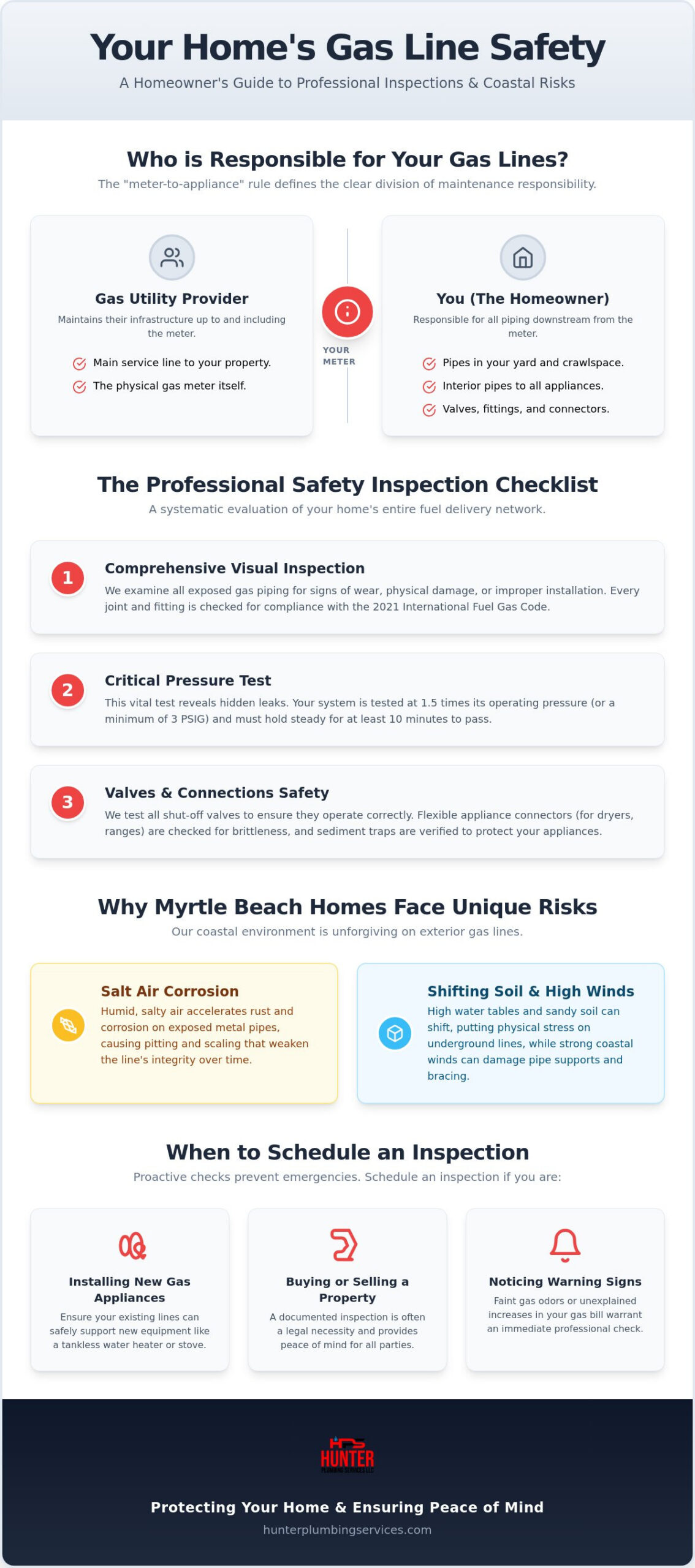
The division of responsibility is clear but often misunderstood. Dominion Energy typically maintains the service line and the physical gas meter on the side of your house. Everything downstream of that meter belongs to you. This means the pipes running through your yard, into your crawlspace, and behind your walls are your legal responsibility to maintain. The customer-owned portion of the gas system begins at the outlet of the gas meter and extends to every connected appliance in your home.
When to Schedule a Professional Inspection
If you live in an older coastal home, you should consider an inspection every year or two. The salt air in Myrtle Beach is notoriously hard on metal, and older steel pipes are prone to external corrosion. New constructions might only need a check every few years, but certain life events should trigger an immediate call to a professional. You should schedule a gas line safety inspection if you are:
- Purchasing a new home or selling your current property.
- Installing new gas-powered appliances like a tankless water heater.
- Noticing faint odors or unexplained increases in your gas bill.
When you need these services, always verify the credentials of your licensed plumber for gas line work. Proper licensing ensures the technician understands the specific local codes and coastal risks unique to our community. Taking this step protects your family and ensures your home remains a safe, dependable sanctuary.
The Hunter Plumbing Gas Line Safety Checklist: What We Inspect
A professional gas line safety inspection goes far beyond simply checking for the smell of rotten eggs. At Hunter Plumbing, our process is a systematic evaluation of your home’s entire fuel delivery network. We start with a comprehensive visual inspection of all exposed gas piping to identify signs of wear, physical damage, or improper installation. Our technicians look at every joint and fitting to ensure they comply with current South Carolina building codes, specifically the 2021 International Fuel Gas Code.
One of the most critical steps in our checklist is a gas pressure test. We verify that your system holds steady without any drops. According to IFGC standards, this involves testing at 1.5 times the maximum operating pressure, or at least 3 psig, for a minimum of 10 minutes. This test reveals hidden leaks that a simple visual check might miss. We also examine the integrity of every shut-off valve and emergency bypass. You need to know that if an emergency happens, your valves will turn easily and seal completely. If you have concerns about your system’s performance, you can reach out to our local team for a thorough assessment.
Exterior Pipe Integrity and Corrosion Checks
Our coastal environment is unforgiving on metal. We inspect the gas riser and the entry point where the line enters your home. Our team looks for pitting or scaling on pipes exposed to the salt air. These are early warning signs of structural failure. We also ensure your outdoor lines have proper support and bracing. High winds and shifting soil in marshfront properties can put stress on these connections, so secure mounting is essential for long-term safety.
Internal Connection and Appliance Safety
Inside your home, we test the flexible connectors for your dryer, kitchen range, and fireplace. These connectors can become brittle or damaged over time. We also verify the presence of sediment traps on your gas lines, which prevent debris from entering and damaging your appliance valves. For homeowners considering a tankless water heater installation, we verify that the gas supply sizing is adequate. These high-efficiency units require more fuel than standard tanks. An undersized line can lead to poor performance or appliance failure. Finally, we check that all gas-powered heaters and furnaces have proper venting to prevent carbon monoxide buildup in your living spaces.
Coastal Risks: Why Myrtle Beach Homes Need Specialized Gas Inspections
Salt air is a silent enemy for metal infrastructure. In Myrtle Beach, our proximity to the ocean means your gas lines are constantly bathed in a fine mist of chloride and moisture. This creates a highly corrosive environment that inland plumbing standards aren’t always equipped to handle. While general guidelines might suggest longer gaps between checks, our coastal climate demands a more proactive approach. If your home is near the water, a gas line safety inspection should be an annual priority to catch early signs of metal fatigue.
Outdoor kitchens and BBQ lines are particularly vulnerable in the Grand Strand. These pipes sit outside year-round, often tucked behind stone or cabinetry where humid air gets trapped and sits against the metal. Without specialized protective coatings, these lines can develop pinhole leaks much faster than indoor piping. Marshfront properties face an additional challenge with high water tables. When the soil stays saturated, buried gas lines are at a higher risk of external corrosion and shifting due to unstable ground. We’ve seen how quickly these factors can compromise a system that looks perfectly fine on the surface.
Salt Air Corrosion and Pipe Degradation
The chemical reaction between salt spray and iron piping is aggressive. Salt acts as an electrolyte that speeds up the oxidation process, turning solid steel into brittle rust. This is why we pay close attention to the quality of the paint or factory coatings on your lines. In extreme coastal conditions, salt air can reduce the lifespan of your gas piping by half compared to a home located further inland. We check for “flaking” or “bubbling” on the pipe surface, which indicates that the corrosion has moved beneath the protective layer.
Signs of a Gas Leak in Coastal Properties
Detecting a leak can be trickier here than in other regions. While utility companies add a “rotten egg” smell to natural gas, the heavy scent of salt air or marsh gases can sometimes mask this odor. You need to look for secondary clues. Dead or yellowing vegetation directly over a buried gas line is a primary indicator that gas is escaping and displacing oxygen in the root zone. You might also notice a localized “hissing” sound near outdoor connections that is often mistaken for wind.
If you suspect an issue, modern leak detection technology can find the exact source of a leak without unnecessary digging. Don’t let a small rust spot turn into a major safety concern. If you’ve noticed any corrosion on your outdoor pipes, schedule your coastal safety inspection today to keep your home and family protected.
Securing Your Home: Professional Gas Services in the Grand Strand
Choosing a professional partner for your gas system is about more than just checking boxes. It is about protecting your family with a team that understands the specific needs of Myrtle Beach homes. While South Carolina law allows homeowners to handle some plumbing tasks on their primary residence, gas work is a different story. In Horry County, DIY gas line modifications are not only dangerous but often illegal without the proper permits and professional oversight. The risks of an improper connection are simply too high to manage alone.
Hunter Plumbing provides dependable support when you need it most. We offer 24/7 peace of mind for gas emergencies, ensuring that help is always just a phone call away. After every gas line safety inspection, we provide a detailed written report. This document acts as a verbal handshake between us and your family, proving the integrity of your system. It is also a valuable asset for your insurance provider and a crucial trust signal for potential buyers if you ever decide to sell your property. Our goal is to ensure your home remains a safe, compliant, and worry-free environment.
The Benefits of Periodic Maintenance
Consistent maintenance ensures your system operates at peak efficiency. When gas pressure remains steady, your appliances don’t have to work as hard. This significantly extends the lifespan of expensive equipment like your furnace and water heater. More importantly, regular checks drastically reduce the risk of house fires or silent carbon monoxide poisoning. Keeping your system in top shape maintains your home’s market value and ensures you stay compliant with the latest local safety codes, avoiding the stress of surprise repairs during a property sale.
How Hunter Plumbing Ensures Your Safety
Our team relies on a mix of traditional work ethics and modern technology to keep your property safe. We use advanced electronic gas sniffers to detect trace amounts of fuel that the human nose might miss. Coupled with high-precision pressure gauges, these tools allow us to verify the absolute integrity of every joint and fitting in your home. We pride ourselves on being a helpful local partner who values long-term relationships over quick fixes. You can count on us for financial clarity and honest assessments every time we step through your door. Contact us today for a comprehensive safety walkthrough of your property to ensure every connection is secure and every appliance is running safely.
Protect Your Myrtle Beach Home Today
Maintaining your home’s gas system doesn’t have to be a source of stress. By understanding where your responsibility starts and recognizing the unique challenges of our coastal environment, you’ve already taken the first step toward a safer property. Salt air works quickly to degrade metal. Hidden leaks can often go unnoticed without specialized equipment. A professional gas line safety inspection provides the clarity you need to protect your investment and your loved ones.
Hunter Plumbing has been a locally owned and operated partner in the Grand Strand since 2021. We specialize in coastal corrosion prevention and offer 24/7 emergency service to ensure you’re never left in a dangerous situation. Our team is dedicated to providing the honest, thorough assessments you deserve. We value our neighbors and take pride in keeping our community safe. You can depend on us for long-lasting solutions and traditional work ethics.
Schedule your gas line safety inspection with Hunter Plumbing today! We’re ready to help you secure your home and give you the peace of mind that comes with a job well done. Your safety is our priority, and we look forward to serving you.
Frequently Asked Questions
How much does a gas line safety inspection cost in Myrtle Beach?
Industry rates for a diagnostic safety check in our area vary based on the size of your home and whether a pressure test is required. You will generally find that local prices reflect the technician’s expertise and the use of specialized electronic leak detection tools. We always recommend asking for a clear, written estimate before any work begins to ensure you have total financial clarity regarding the service.
Is a gas line inspection required for a home sale in South Carolina?
While not strictly mandated for every residential transaction, most buyers and lenders in the Grand Strand will require a documented inspection before closing. Proving that your system meets the 2021 International Fuel Gas Code prevents legal delays and gives the new owners peace of mind. Keeping a record of your most recent gas line safety inspection is a smart way to maintain your property’s value and marketability.
What should I do if I smell gas but my detector isn’t going off?
You must evacuate the premises immediately and call 911 or your gas utility provider from a safe location outside. Don’t wait for a digital reading or try to find the source of the odor yourself. Avoid touching light switches, using your phone indoors, or starting your car, as any small spark could be dangerous. It’s always better to treat a faint odor as a serious emergency until a professional confirms the area is safe.
Can a plumber inspect gas lines, or do I need the gas company?
A licensed plumber is the professional you need for any piping located past the gas meter. The utility company typically only maintains the service lines and the meter itself, leaving the rest of the system as the homeowner’s responsibility. For a thorough gas line safety inspection of your interior pipes, appliance connectors, and outdoor kitchen lines, a qualified plumber with gas piping expertise is the correct choice.
How long does a professional gas line safety inspection take?
A standard residential inspection usually takes between one and two hours to complete. This timeframe allows our team to perform a detailed visual assessment of all exposed pipes and conduct a pressure test to check for hidden leaks. If your property has multiple gas appliances or extensive outdoor features like pool heaters and fire pits, the process may take a little longer to ensure every connection is fully vetted.
Do I need an inspection if I’m only installing a new gas range?
Yes, scheduling a safety check during any new appliance installation is a critical preventative measure. This step verifies that your existing gas lines are sized correctly for the new equipment and that the new connections are completely leak-free. It’s an affordable way to ensure your home remains compliant with local codes while protecting your family from the risks of an improper DIY hookup.