
Last Tuesday, a family in the Forestbrook community realized their dream of an outdoor kitchen was stalled by more than just blueprints. They were staring at a complex set of requirements for a new gas line installation and worrying if the humid, salt-heavy air in Myrtle Beach would corrode their pipes within a few years. It’s a valid concern because local conditions require specific materials to ensure your home stays safe and efficient.
You likely agree that nothing is more important than the safety of your family. However, the maze of Horry County permits and South Carolina fuel gas codes can feel overwhelming. You want the high performance of gas appliances without the constant fear of leaks or code violations. We believe every neighbor deserves a connection that’s both reliable and built to last in our coastal environment.
This guide explains exactly how to achieve a safe, code-compliant gas line installation for your Myrtle Beach property. We’ll cover the essential steps for securing permits, choosing corrosion-resistant materials, and ensuring your system adds real value to your home. By the end, you’ll have a clear roadmap to a leak-free connection and total peace of mind.
Key Takeaways
- Learn how adding new fuel lines can transform your home with modern amenities like outdoor kitchens and gas-powered pool heaters.
- Discover the essential safety standards and local Horry County permits required for a professional gas line installation on your Myrtle Beach property.
- Understand the impact of salt air corrosion on your piping and which durable materials are best suited for our coastal environment.
- Get a clear overview of the professional installation process, including how we calculate BTU loads to ensure your appliances run efficiently.
- See how our family-owned team provides peace of mind through upfront pricing and 24/7 emergency support for your home’s safety.
Planning Your Gas Line Installation in Myrtle Beach
Professional gas line installation involves the precise routing of fuel lines from a main source to your home’s specific appliances. It’s a task that requires absolute technical accuracy to ensure your family’s safety and your home’s efficiency. Many families in the Grand Strand are currently upgrading their properties to include outdoor kitchens, pool heaters, and professional-grade gas ranges. According to a 2023 industry report, 54% of homeowners are now prioritizing outdoor living spaces that require reliable fuel connections. Our local geography in Myrtle Beach presents specific challenges for these projects. The high water table and sandy soil conditions mean we must carefully plan every burial depth and material choice to prevent shifting or corrosion over time.
Choosing the Right Fuel Source: Natural Gas vs. Propane
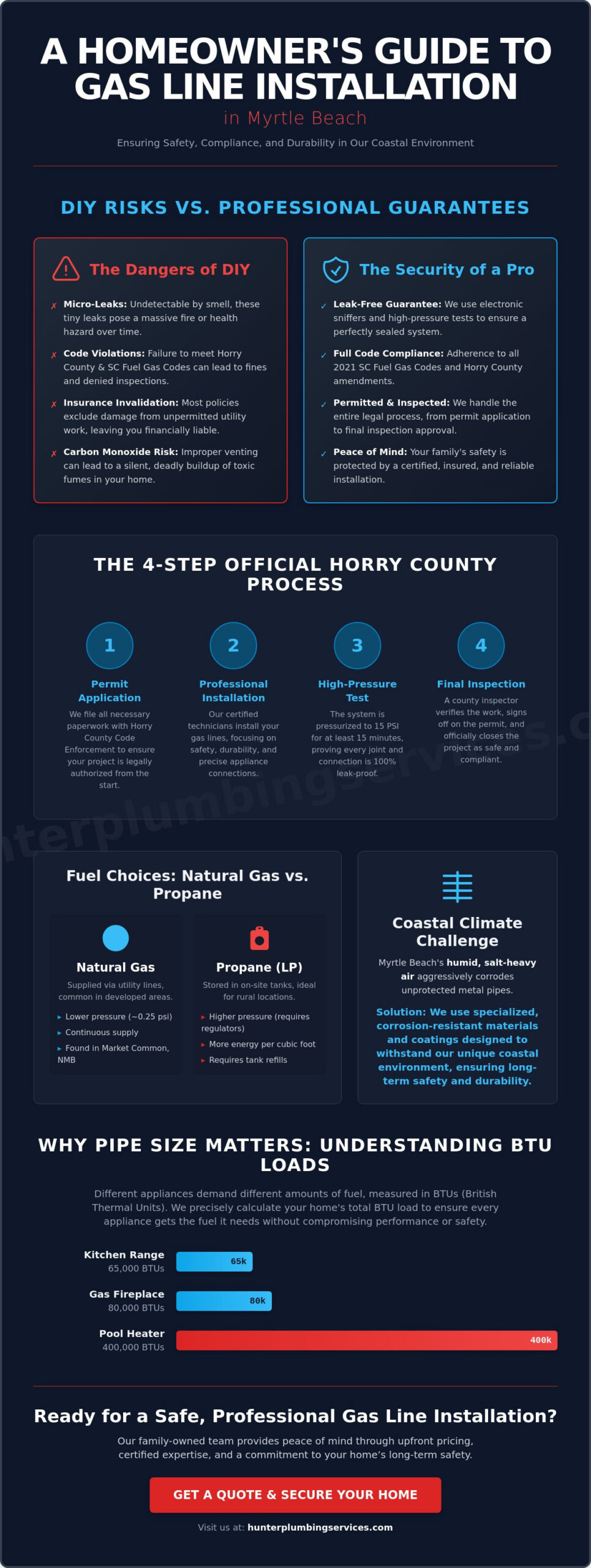
Your location in Horry County often dictates your fuel choice. Natural gas is widely available in developed areas like Market Common or North Myrtle Beach, but more rural spots often rely on onsite propane tanks. These two fuels aren’t interchangeable without the correct equipment adjustments. Propane contains more energy per cubic foot, which directly impacts your BTU (British Thermal Unit) requirements and pipe sizing. For instance, a typical kitchen range requires about 65,000 BTUs, while a large pool heater might need 400,000 BTUs. These demands determine the diameter of the Pipes for gas used in your system. Pressure regulation also differs; natural gas usually enters a home at 0.25 psi, while propane systems require different regulators to manage higher tank pressures safely.
Indoor vs. Outdoor Gas Line Needs
Running a line to an outdoor fire pit or grill requires different materials and safety protocols than an indoor range. Outdoor lines must be buried at a specific depth, usually between 12 and 18 inches, to prevent accidental damage from lawn equipment or landscaping projects. Inside your home, we focus on protecting lines in crawlspaces or attics from mechanical damage. The complexity of your gas line installation depends heavily on where your appliances are located. If you’re moving a stove across a kitchen or adding a fireplace to a second story, the routing becomes more intricate. We always ensure that every connection is tight and every run is secure. This neighborly, professional approach ensures your home remains a safe place for your family. We focus on delivering long-lasting solutions that you can trust for years to come.
Safety Standards & Myrtle Beach Building Codes
Safety is the absolute priority for any gas line installation in our coastal community. In Myrtle Beach, all work must comply with the 2021 South Carolina Fuel Gas Code and specific Horry County amendments designed for our unique environment. These laws exist to prevent catastrophic failures, but they also align with federal pipeline safety regulations that govern how gas is safely distributed to residential properties. Beyond the pipes themselves, code requires specific safety components like sediment traps and dedicated shut-off valves. Sediment traps are vital because they catch moisture and debris before they can clog your appliance’s internal burners, preventing expensive repairs or flame failures.
The Danger of DIY Gas Line Work
Attempting to run gas lines yourself is a massive risk that often leads to “micro-leaks.” These tiny escapes are often too small to smell but are easily detected by the professional electronic sniffers we use. If a leak goes unnoticed, it can lead to a buildup of carbon monoxide or create a fire hazard. Furthermore, most homeowners insurance policies in South Carolina explicitly exclude coverage for damages caused by unpermitted utility work. If an uncertified installation leads to property damage, you could be left footing the entire bill. Your family’s safety isn’t worth the shortcut; a professional gas line installation ensures every joint is sealed and every vent is pulling toxic fumes out of your living space. The same risks apply when homeowners attempt their own gas stove repair without understanding the coastal corrosion factors that can compromise metal connections in Horry County.
Permitting and Inspections in Horry County
The legal process for gas work in Myrtle Beach is structured to protect you. It starts with a permit application through Horry County Code Enforcement. Once the work is finished, a city inspector must visit the site to perform a high-pressure test. During this test, the system is pressurized to at least 15 PSI for a minimum of 15 minutes to ensure there’s zero drop in pressure. At Hunter Plumbing Services, we handle the entire bureaucratic process for you. We pull the permits, coordinate with the inspectors, and ensure the paperwork is filed correctly so your home remains compliant with local laws. If you’re planning a kitchen remodel or adding a generator, it’s a good idea to ask a licensed plumber to review your current meter capacity before you start.
- Upfront Pricing: We provide clear quotes before any work begins.
- Permit Management: Our team handles all Horry County filing and inspections.
- Expert Testing: We use calibrated pressure gauges and electronic leak detectors.
- Local Knowledge: We understand the specific corrosion challenges of the Grand Strand.
Coastal Considerations: Salt Air and Gas Line Durability
Living near the Atlantic Ocean brings beautiful views but harsh conditions for your home’s infrastructure. Salt air acts as a catalyst for oxidation. This process can turn standard metal piping into brittle, rusted hazards within just 5 to 7 years. When we handle a gas line installation, we prioritize materials that withstand this corrosive environment. We also focus on protecting exterior gas meters. These units often sit exposed to salt spray and high humidity. Applying specialized corrosion-resistant primers or protective enclosures helps prevent the rust that leads to dangerous leaks. For homes within 3 miles of the coast, we recommend a more rigorous inspection schedule to catch surface pitting before it compromises the pipe wall.
Material Selection for the Grand Strand
Choosing the right pipe determines if your system lasts 10 years or 30 years. Corrugated Stainless Steel Tubing (CSST) is a popular choice for Myrtle Beach homes. It offers excellent flexibility and resists salt air better than traditional black iron. However, CSST requires precise grounding to stay safe during our frequent coastal thunderstorms. For underground runs near the ocean, we use epoxy-coated steel or high-density polyethylene (HDPE). These materials follow the safety standards set by the International Fuel Gas Code (IFGC) to ensure the system remains airtight. Bare black iron should never be used for exterior or underground applications in our zip code. It’s the primary cause of premature system failure in our region.
Addressing High Water Tables and Marshfront Properties
Properties along the Intracoastal Waterway or in marshfront communities face unique challenges. High water tables mean the soil stays saturated for long periods. This creates buoyancy issues for buried lines. During a gas line installation in sandy Myrtle Beach soil, we use specific trenching techniques to prevent sagging. We bed the pipes in a minimum of 6 inches of clean sand or fine gravel. This stabilizes the line and protects it from shifting ground conditions. We also install tracer wires with all non-metallic underground piping. This allows for easy locating in the future without digging up your yard. Regular maintenance is vital for these properties. We recommend a professional inspection every 12 months to check for soil erosion or hardware degradation near the water’s edge.
- Maintenance Tip: Rinse exterior exposed pipes with fresh water after major storms to remove salt deposits.
- Safety Check: Look for “bubbling” paint on your gas meter, which is an early sign of hidden corrosion.
- Stability: Ensure all exterior lines are secured with stainless steel brackets to prevent vibration damage.
The Installation Process: What Homeowners Should Expect
A successful gas line installation begins long before we turn a wrench. Our team starts with a comprehensive site assessment to map out the most efficient path for your new lines. We evaluate your current meter capacity and calculate the total demand of your household appliances. Whether we’re trenching through your yard for an outdoor kitchen or routing flexible CSST piping through interior crawlspaces, we prioritize structural integrity and local Myrtle Beach building codes. Properly sized lines can improve appliance efficiency by up to 15% compared to restricted, undersized systems.
Calculating Load and Pipe Sizing
Load calculation is the process of determining the total British Thermal Units (BTUs) required by all gas appliances to ensure the piping system provides adequate fuel volume. If pipes are too small, your furnace or water heater won’t receive enough fuel to operate at peak performance. This often results in “lazy” yellow flames or frequent appliance flame-outs. We use a digital manometer to verify that gas pressure remains consistent at 0.5 PSI or the specific manufacturer requirement for your equipment. Precision at this stage prevents long-term damage to your expensive home systems.
- BTU Assessment: We sum the peak demand of every unit, from the 30,000 BTU dryer to the 199,000 BTU tankless water heater.
- Material Selection: We choose between black iron, copper, or corrugated stainless steel tubing based on the specific environment and 2024 safety standards.
- Regulator Check: We ensure your gas regulator can handle the increased flow without dropping pressure during high-demand periods.
Testing for Total Peace of Mind
Safety is our primary focus during every gas line installation. Once the connections are secure, we perform a multi-stage verification. While the traditional “bubble test” with soapy water is a reliable backup for visible joints, we utilize advanced electronic leak detectors to find microscopic gas escapes that the human eye might miss. This technology is a core part of our professional leak detection protocol.
Myrtle Beach inspectors typically require a pressure test where the system is pressurized to 15 PSI and held for at least 15 minutes. We often exceed these local requirements by holding the pressure for longer intervals to guarantee there are zero leaks in the system. We don’t consider the job finished until we’ve verified the seal on every joint and valve. If you’re ready to upgrade your home’s energy efficiency with a new system, contact our expert gas plumbers today for a transparent estimate.
Professional Gas Line Services by Hunter Plumbing
Hunter Plumbing Services understands that gas work isn’t just a home improvement; it’s a safety priority for your family. We provide 24/7 emergency support for gas-related plumbing issues because leaks and malfunctions don’t follow a 9-to-5 schedule. Our family-owned business treats every Myrtle Beach home like our own, ensuring that every gas line installation meets strict South Carolina building codes and safety standards. You’ll never deal with hidden fees or surprise costs here. We provide upfront, transparent pricing before any work begins, so you can manage your home budget with confidence.
Our team specializes in high-efficiency tankless water heater installation, which can significantly reduce energy waste. These systems provide endless hot water while occupying a fraction of the space required by traditional tanks. We bring technical authority to every job, whether we’re installing a new line for a backyard kitchen or retrofitting an older property for natural gas. Being a local partner means we’re invested in the long-term safety of our community, not just finishing a quick job.
Comprehensive Gas Solutions for the Grand Strand
Our services cover the full spectrum of gas needs across the Grand Strand. We handle everything from complex new construction rough-ins for custom builders to simple stove and dryer hookups for homeowners. Living on the coast presents unique challenges, such as salt air corrosion that can degrade exterior gas components over time. We use materials and sealing techniques specifically designed to withstand the humid, coastal environment. Our customer-first approach ensures we leave your home clean and your systems running at peak performance.
Get Started with Your Gas Project Today
Ready to upgrade your home’s performance? Scheduling a professional consultation and site survey is the first step toward a safer home. When you call our office, please have the following information ready to help us serve you faster:
- Your specific appliance model and BTU requirements.
- The current location of your gas meter or propane tank.
- Your preferred timeline for the gas line installation project.
Our technicians will evaluate your current infrastructure and provide a detailed plan for your new service. Don’t settle for anything less than expert service when it comes to your home’s gas system. Contact Hunter Plumbing Services for your gas line installation today to secure your appointment with our dependable local team.
Secure Your Myrtle Beach Home’s Energy Future
Choosing the right team for your gas line installation ensures your home remains safe and efficient for 20 years or more. In coastal Myrtle Beach, salt air can accelerate metal corrosion by up to 10 times the rate of inland environments, making professional material selection and protective coatings essential. Our team follows every detail of the South Carolina Building Code to guarantee your project meets the safety standards required by state law. We handle the technical requirements so you can enjoy the benefits of a modern gas system without the stress.
Hunter Plumbing Services is a local family-owned and operated business dedicated to the Grand Strand community. We are fully licensed and insured for gas work under South Carolina Title 40 regulations, providing you with verified expertise and peace of mind. If you ever face an urgent issue, we offer 24/7 emergency service to keep your family protected. You don’t have to navigate complex permits or technical safety hurdles alone when you have a neighborly expert ready to help.
Schedule Your Myrtle Beach Gas Line Consultation Today
We look forward to helping you upgrade your home with confidence and care.
Frequently Asked Questions
Is gas line installation a DIY project?
No, gas line installation is never a DIY project due to the extreme risk of fire or explosion. The National Fire Protection Association (NFPA) reports that gas leaks contribute to 4,200 home fires every year in the United States. You need a licensed professional to ensure every connection is airtight and meets South Carolina safety codes. Our team handles the pressure testing so you can sleep soundly knowing your family is safe.
How much does it cost to run a gas line for a kitchen range in Myrtle Beach?
While we provide custom quotes, 2024 data from HomeAdvisor shows the national average for gas line installation ranges from $20 to $30 per linear foot. Total costs depend on the pipe material and the distance from your main meter to the kitchen. A simple 10 foot run is much more affordable than a complex installation requiring wall removals. We offer transparent pricing to help you plan your kitchen upgrade without surprises.
How long does a typical gas line installation take?
A standard residential gas line installation typically takes 4 to 8 hours to complete. If we’re running a simple line for a new dryer or range, we often finish in a single morning. More complex projects, such as installing lines for a whole-home generator or an outdoor kitchen, may require 2 full workdays. We always provide a clear timeline before we start so you can manage your schedule effectively.
Can a plumber install gas lines, or do I need a different specialist?
Yes, a licensed plumber is the correct professional to install your gas lines. In South Carolina, the Municipal Association of SC (MASC) provides the necessary certifications for master plumbers to handle fuel gas piping. Our technicians have the specialized training to manage high-pressure systems and intricate pipe threading. You don’t need a separate gas contractor when you work with our experienced, neighborly plumbing team. Before hiring anyone, review our complete guide on finding a licensed plumber for gas line work in Myrtle Beach to understand what credentials and coastal experience to look for.
What are the signs of a gas leak in my home?
The most common sign of a gas leak is a distinct sulfur or rotten egg smell added by utility companies. You might also hear a persistent hissing sound near your appliances or notice a 15% drop in heating efficiency. If you see bubbles in standing water outside or patches of dead grass over your buried lines, call us immediately. These are clear indicators of a compromised underground pipe that requires urgent repair.
Do I need a permit for a gas line in Horry County?
Yes, Horry County requires a mechanical permit for any new gas line or significant modification to existing pipes. This ensures that the work complies with the 2021 International Fuel Gas Code (IFGC) and passes a mandatory safety inspection. We handle the permit application process for you to ensure your home remains compliant with local building regulations. Skipping this step can lead to fines or issues with your home insurance coverage.
Can I run a gas line through my attic or crawlspace?
You can run gas lines through attics and crawlspaces if the installation follows strict safety guidelines for support and ventilation. We often use Corrugated Stainless Steel Tubing (CSST) in 75% of these scenarios because it’s flexible and requires fewer joints. This reduces the risk of leaks in hard to reach areas of your home. Our team ensures all lines are properly bonded and grounded to prevent damage from electrical surges or lightning.
How does salt air affect my outdoor gas fireplace lines?
Salt air accelerates corrosion on standard metal pipes 10 times faster than in non-coastal environments. In Myrtle Beach, this means outdoor gas fireplace lines can rust and leak within 3 to 5 years if they aren’t protected. We use specialized galvanized steel or epoxy-coated piping to withstand the humid, salty climate. Regular annual inspections help us catch surface rust before it turns into a dangerous safety hazard for your backyard living space. If you notice warning signs like unusual odors or reduced flame performance on your kitchen appliances, learn more about gas stove repair in Myrtle Beach and the coastal-specific safety considerations that apply to your home.