

Last month, a homeowner near the Myrtle Beach coast discovered a damp spot on their ceiling, leading to the discovery of a tiny pinhole leak in a copper pipe that was less than ten years old. This raises a common concern for many locals: can salt air corrode copper pipes and cause premature failure in your home? If you’ve noticed strange green or blue buildup on your plumbing fixtures, you aren’t alone. It’s frustrating to deal with leaks when you’ve done everything right, especially when you’re worried about sudden water damage in your marshfront or beachfront property.
If a repipe is necessary, we often recommend PEX (cross-linked polyethylene). Unlike traditional metals, PEX is a high-grade plastic that is completely immune to the chemical attack of salt air and high humidity. It’s the superior choice for marshfront and beachfront properties for several reasons, and you can find out more about Water repipe to see how this material prevents long-term damage:
We want to help you understand exactly how our coastal environment impacts your plumbing system. You’ll learn the science behind salt-induced pitting corrosion and find out how to shield your pipes from the elements. We will also explain the professional steps you can take to identify damage before it leads to a flood. Since the 2021 South Carolina Plumbing Code went into effect on January 1, 2023, there is a renewed focus on using the right materials for our unique climate. This guide ensures your home stays safe and dry by providing the local expertise you need.
Key Takeaways
- Understand how chloride ions and coastal moisture accelerate the natural oxidation process of your home’s plumbing.
- Learn the specific chemical reaction behind how can salt air corrode copper pipes and what the transition to green verdigris means for your system.
- Identify visual and audible indicators of corrosion in hidden areas common to Myrtle Beach homes before they lead to major leaks.
- Explore proactive strategies like sealing your home’s envelope to block out salt air and protect your piping investment.
- Compare modern, corrosion-resistant PEX piping against traditional copper repairs to find the best long-term solution for your coastal property.
Does Salt Air Corrode Copper Pipes? The Coastal Chemistry Explained
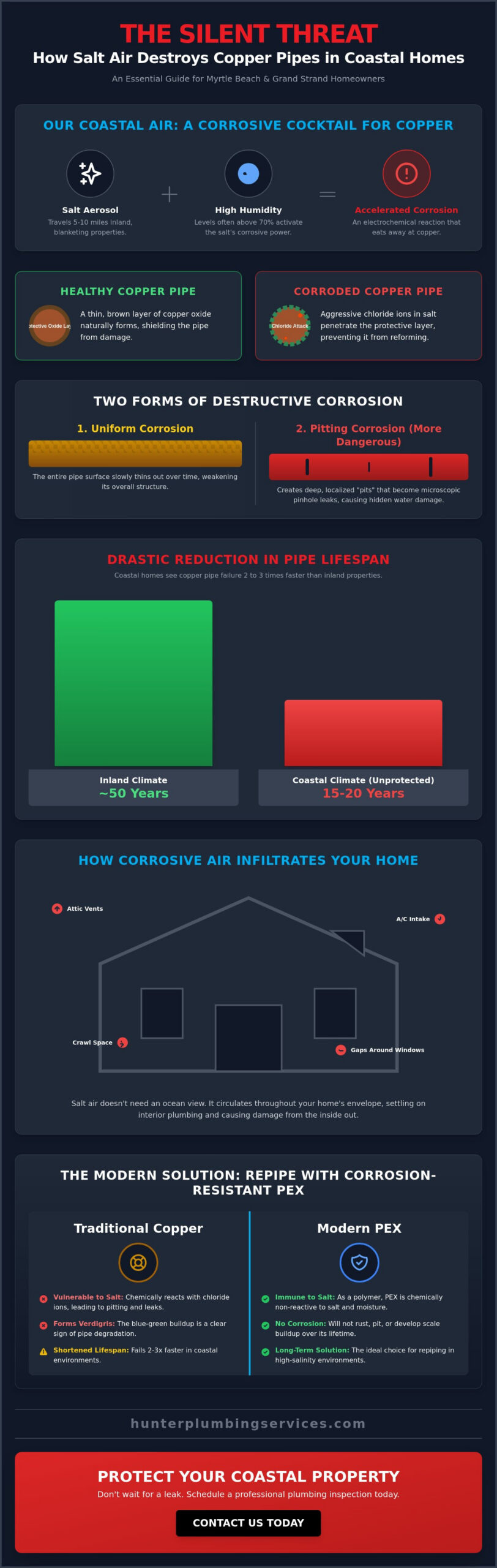
Living in Myrtle Beach means enjoying the ocean breeze, but your plumbing might not feel the same way. Many neighbors ask us, can salt air corrode copper pipes even if they’re tucked away inside the walls? The short answer is yes. This happens because of a specific electrochemical reaction between copper, moisture, and salt. Salt air is actually a “salt aerosol,” which is a collection of tiny liquid droplets or solid particles that stay suspended in the air. In Horry County, these aerosols can travel 5 to 10 miles inland, meaning you don’t have to live right on the sand to be at risk of plumbing damage.
The process is simple but destructive. When salt particles land on your copper pipes, they act as an electrolyte. This speeds up the natural oxidation process that would normally take decades. Because Myrtle Beach frequently experiences humidity levels above 70%, there’s always enough moisture in the air to activate this salt. Together, they create a corrosive environment that slowly eats through the metal. Understanding The Coastal Chemistry Explained helps you see why your home needs extra protection compared to inland properties.
The Role of Chloride Ions in Metal Breakdown
Copper naturally develops a thin, brown layer of copper oxide. This layer usually protects the pipe from further damage. However, the chloride ions found in salt are incredibly aggressive. They penetrate this protective skin and prevent it from reforming. This leads to two distinct types of damage:
- Uniform Corrosion: The entire surface of the pipe thins out slowly over time, weakening the overall structure.
- Pitting Corrosion: This is much more dangerous. It focuses on small, localized spots, creating deep “pits” that eventually become pinhole leaks.
Because of this constant chloride attack, homes in our area often see copper pipe failure 2 to 3 times faster than homes located in drier, inland climates. A pipe that might last 50 years in the mountains might only last 15 or 20 years here in the Grand Strand if it’s left unprotected.
How Salt Air Reaches Your Interior Plumbing
It’s a common myth that only outdoor fixtures or beachfront homes are in danger. Salt air is persistent. It finds its way into your home through attic vents, crawl space louvers, and gaps around your windows. Once inside, it settles on everything, including your plumbing lines. Your air conditioning system can also pull salt-laden air into your ductwork and living spaces, circulating those corrosive particles throughout the house. If your home’s “envelope” isn’t sealed tightly, your interior pipes are essentially breathing the same salty air as the dunes at Cherry Grove. This is why can salt air corrode copper pipes is such a critical question for every homeowner in the region, not just those with an ocean view.
Why Copper Pipes Struggle in High-Salinity Environments
Copper is a popular choice for plumbing because it’s flexible and handles high pressure well. But its chemical makeup makes it a prime target for salt air. While other metals like galvanized steel might rust over time, copper reacts uniquely to chloride. If you’ve wondered can salt air corrode copper pipes, the answer lies in how chloride ions disrupt the metal’s surface. Unlike PEX, which is a modern plastic material immune to salt, copper is a reactive metal. It tries to protect itself, but in the Grand Strand’s high-salinity air, that defense fails. This creates a cycle of degradation that eventually leads to system failure.
A healthy copper pipe has a dull, brownish color. This is a thin layer of oxidation that shields the metal from the water inside. In a coastal environment, salt particles land on this layer and transform it. Instead of a protective shield, you get a crumbly, blue-green crust known as verdigris. This isn’t just an ugly stain. It’s a sign that the pipe is physically losing its mass. This process is far more aggressive than the slow rust seen on old steel lines in drier climates.
The Formation of Verdigris and Copper Pitting
The blue-green buildup you see on your pipes is usually copper chloride or copper carbonate. This crust forms when salt air strips away the pipe’s integrity. As the salt eats into the metal, it creates tiny pits. These aren’t large cracks. They are microscopic holes that eventually pierce all the way through the pipe wall. These pinhole leaks are a nightmare for homeowners. Because they are so small, they often spray a fine mist of water that goes unnoticed for weeks. If you suspect a hidden issue, our team can provide professional leak detection to find these tiny sprayers before they ruin your drywall or flooring.
Lifespan Expectations for Coastal Copper Systems
Inland homes often see copper pipes last for 50 years or more. In Myrtle Beach, the reality is much shorter. If your home is marshfront or within a few miles of the surf line, your plumbing might only last 15 to 25 years. The constant exposure to salt aerosol accelerates the breakdown significantly. Ignoring a small green spot on a pipe today can lead to a catastrophic failure tomorrow. Replacing a single section is much more affordable than dealing with the structural damage caused by a long-term, hidden leak. Being proactive about your plumbing’s health is the only way to avoid the high costs of emergency repiping.
Signs of Salt Air Corrosion in Myrtle Beach Properties
Identifying the early symptoms of plumbing failure can save you thousands in restoration costs. While we have already discussed the chemistry behind why this happens, you need to know what the damage looks like in a real-world setting. If you are wondering, can salt air corrode copper pipes in your specific neighborhood, the first place to look is your outdoor fixtures. Coastal showerheads, hose bibbs, and exposed valves usually show signs of distress long before your interior lines fail. These components take the direct hit from salt spray, serving as a “canary in the coal mine” for the rest of your home’s plumbing.
Visible Indicators on Exposed Piping
Checking your pipes shouldn’t be a guessing game. When you inspect the plumbing under your sinks or in your utility closet, look for these specific red flags:
- Verdigris Buildup: This is the most common sign. Look for a bright teal or blue-green crust, especially around joints and fittings where the pipe is most vulnerable.
- White Powdery Deposits: Sometimes corrosion leaves behind a salt-like, white powder. This indicates that the metal is actively pitting and losing its structural integrity.
- Dampness or Wall Stains: Pinhole leaks often create a fine mist. If you see “ghost” stains on your drywall or feel a cold, damp spot on a wall near a bathroom, you likely have a salt-induced leak.
Don’t mistake this for normal aging. Standard copper pipes should stay a dull, penny-brown color. If yours look like they belong on the bottom of the Atlantic, it’s time to request professional leak detection to assess the depth of the damage.
Hidden Issues in Marshfront Crawl Spaces
In Myrtle Beach, your home’s architecture plays a massive role in how salt air interacts with your pipes. Raised beach houses and homes along the marshes of the Grand Strand face a unique threat known as the “chimney effect.” As warm air rises through your home, it pulls cooler, salt-laden air from your crawl space up into your wall cavities. This means your interior pipes are constantly bathed in a corrosive aerosol, even if you keep your windows shut.
Marshfront properties often face higher salinity levels than beachfront homes because the humid, stagnant air in the marsh traps salt particles more effectively than the breezy oceanfront. Check the connections on your water heater if it sits in an unconditioned utility closet. If you see those telltale green spots on the copper flex lines or the shut-off valves, the salt air is already winning the battle. Catching these signs early allows for a planned repair rather than a midnight emergency call when a pipe finally gives way.
Proven Strategies to Prevent Salt Air Pipe Damage
You don’t have to wait for a pinhole leak to start protecting your home. While we know that can salt air corrode copper pipes in our coastal climate, there are several proactive steps you can take to shield your plumbing. The goal is to create a barrier between the corrosive salt aerosol and the metal surface of your pipes. By sealing your home’s envelope and maintaining your fixtures, you can significantly extend the life of your plumbing system, even if you live right on the marsh.
One effective way to minimize risk is to reduce the amount of exposed metal in vulnerable areas. A professional tankless water heater installation helps by replacing large, bulky tanks and extensive copper manifold systems with a compact unit. This setup typically requires less exposed copper in unconditioned spaces like garages or utility closets, giving salt air fewer places to land and begin the pitting process.
Sealing and Insulating for Coastal Protection
Your first line of defense is keeping the salt air outside where it belongs. Focus on these three areas to protect your interior lines:
- Use Closed-Cell Insulation: Standard foam tubes help with temperature, but closed-cell insulation acts as a vapor barrier. It prevents salt-laden moisture from ever touching the copper surface.
- Seal Entry Points: Use silicone caulk or expandable foam to seal gaps where pipes enter through exterior walls or crawl spaces. This stops the “chimney effect” from pulling salt air into your wall cavities.
- Control Indoor Humidity: Keep your home’s humidity levels below 50%. High humidity provides the moisture needed for salt to act as an electrolyte, so a well-maintained dehumidifier can actually protect your pipes.
Regular Maintenance and Flushing Protocols
For pipes and fixtures that are already exposed, simple maintenance goes a long way. Periodically wiping down exposed copper lines in your garage or outdoor shower with a damp, fresh-water cloth removes salt crystals before they can cause deep pitting. You should also flush outdoor faucets and showerheads with fresh water after high-wind events or coastal storms. These small habits prevent the “verdigris” buildup we discussed earlier.
Finally, schedule a professional plumbing check-up once a year. A trained eye can spot the white, powdery deposits of early corrosion in a dark crawl space long before you notice a drop in water pressure. If you are worried about the current state of your plumbing, contact us for a transparent inspection to ensure your home remains leak-free and protected.
Repiping vs. Repair: Solutions for Coastal Plumbing Failure
Deciding how to handle a plumbing failure is stressful, especially when you realize how aggressively can salt air corrode copper pipes in the Myrtle Beach area. Once the structural integrity of your system is compromised, you face a tough choice. Do you keep patching leaks as they appear, or is it time for a full system upgrade? At Hunter Plumbing Services, we provide honest, transparent advice so you can make the best decision for your home and your budget. We’ve seen firsthand how coastal conditions turn a simple repair into a recurring nightmare if the underlying corrosion isn’t addressed.
When a Patch Isn’t Enough
We typically follow the “Rule of Three” when assessing coastal plumbing. If your home has suffered three or more pinhole leaks within a single 12-month period, your pipes are likely failing from the inside out. Patching a single spot might stop the immediate drip, but it doesn’t fix the widespread pitting caused by years of salt air exposure. In some cases, soldering a new piece of copper into an old, corroded system can even accelerate damage in the surrounding metal due to dielectric issues. During a professional leak detection service, we evaluate the overall mass and color of your lines to determine if the pipes can still safely hold standard water pressure.
The Benefits of PEX in Salt Air Environments
If a repipe is necessary, we often recommend PEX (cross-linked polyethylene). Unlike traditional metals, PEX is a high-grade plastic that is completely immune to the chemical attack of salt air and high humidity. It’s the superior choice for marshfront and beachfront properties for several reasons:
- Corrosion Proof: Salt cannot cause pitting or verdigris on PEX, meaning your new pipes will easily outlast copper in our environment.
- Flexibility: PEX is flexible, which allows our technicians to run lines through walls with fewer cuts and joints, significantly reducing the risk of future leaks.
- Cost-Effectiveness: Because it’s easier to install in existing coastal homes, PEX often costs less in labor than a traditional copper repipe.
Our team has spent years helping neighbors navigate the specific plumbing challenges of the Grand Strand. While we specialize in long-term solutions like repiping, we also know that total system health matters. Staying on top of routine maintenance, such as professional drain cleaning and annual pressure checks, prevents unnecessary strain on your pipes. Whether you need a reliable repair or a full system replacement, we are here to provide the dependable, neighborly service you deserve to keep your home safe from water damage.
Secure Your Myrtle Beach Plumbing Against the Elements
Understanding that salt air travels miles inland to eat away at copper is the first step toward long-term protection. By identifying the signs of verdigris early and choosing corrosion-proof materials like PEX, you can avoid the “Rule of Three” and stop recurring leaks. While the question of can salt air corrode copper pipes is a reality for every Grand Strand homeowner, it doesn’t have to lead to a plumbing disaster.
Hunter Plumbing Services has specialized in these unique coastal challenges since 2021. Whether you own a marshfront home in Murrells Inlet or a beachfront property in Cherry Grove, our team offers the expertise you need. We provide 24/7 emergency service and professional leak detection to catch pitting before it causes structural damage. Protect your coastal home from salt air damage—schedule a leak detection with Hunter Plumbing Services today! You’ve worked hard for your home; we’re here to help you keep it safe and dry for years to come.
Frequently Asked Questions
How far inland can salt air affect my copper pipes in Myrtle Beach?
Salt aerosols typically travel 5 to 10 miles inland across Horry County. While beachfront homes take the most direct hit, properties near the Intracoastal Waterway or tidal marshes face nearly identical salinity levels. If your home is located within 10 miles of the Atlantic coast, your plumbing system is at a higher risk for accelerated metal fatigue and pitting.
Is the green buildup on my copper pipes dangerous to my health?
The green verdigris on the exterior of your pipes isn’t a direct health threat unless it enters your water supply. However, it’s a warning sign that the metal is thinning. If the corrosion creates a breach, copper can leach into your drinking water. This often causes a metallic taste or digestive issues, signaling that the pipe’s integrity is compromised.
Can I clean the salt corrosion off my copper pipes myself?
You can wipe away fresh salt deposits with a damp, fresh-water cloth to prevent future damage. But you shouldn’t try to scrub off existing blue-green crust. That buildup is actually oxidized metal from the pipe itself. Removing it can thin the pipe wall even further, which might accidentally trigger a high-pressure pinhole leak right while you’re cleaning it.
Do indoor copper pipes corrode as fast as outdoor ones in coastal areas?
Outdoor pipes usually fail first because they have no protection from wind and salt spray. Indoor pipes in unconditioned areas like crawl spaces or attics are the next to go. If your home’s humidity stays above 50%, the question of can salt air corrode copper pipes inside your walls becomes a serious concern. Moisture activates the salt particles regardless of location.
What is the best pipe material for a beachfront home?
PEX (cross-linked polyethylene) is the most reliable material for coastal properties. It’s a high-grade plastic that’s 100% immune to chloride attack and salt-induced pitting. Since the 2021 South Carolina Plumbing Code took effect on January 1, 2023, many local builders have switched to PEX to ensure homes can withstand the aggressive Grand Strand environment without frequent pipe failures.
Will a whole-house water filter stop salt air corrosion?
No, a whole-house water filter won’t stop this specific problem. Filtration systems treat the water moving *inside* your pipes to remove minerals or chlorine. Salt air corrosion is an atmospheric threat that attacks the *outside* of the metal. To fight external corrosion, you need to focus on sealing your home’s envelope or using vapor-barrier insulation rather than treating the water supply.
How much does it cost to fix a pinhole leak caused by salt air?
Repair costs depend on how easy it is to reach the leaking pipe and the extent of the damage. While we provide upfront pricing after an inspection, a small repair is always cheaper than a major flood. Industry data shows that the average water damage claim exceeds $11,000. Catching a leak early through professional detection is your best strategy for saving money.
Does insurance cover plumbing damage caused by salt air corrosion?
Most homeowners insurance policies don’t cover damage from gradual deterioration or salt air corrosion. These are typically classified as maintenance issues rather than sudden, accidental events. Since this type of corrosion happens over 15 to 25 years, insurers expect homeowners to manage it proactively. This makes regular plumbing inspections vital for avoiding massive, out-of-pocket repair bills after a pipe bursts.