

What if the small, silent metal tank sitting above your water heater is the only thing preventing a $5,000 flood in your Myrtle Beach home? You probably don’t think about your plumbing until you hear a strange knocking sound or see water pooling on the garage floor. It’s natural to feel uneasy when your water pressure fluctuates or you worry about expansion tanks repair costs. You want to keep your family safe and avoid the high expenses often associated with emergency plumbing work in the Grand Strand area.
Whether you are considering a tankless upgrade or need maintenance on a traditional unit, you can explore Water Heater Installation and Repair options from O’Harra’s Plumbing Service, LLC to ensure your system is optimized for long-term performance.
We understand that peace of mind comes from having a reliable home. This 2026 guide simplifies troubleshooting and maintenance so you can handle issues before they turn into disasters. According to industry data from 2024, proactive maintenance can extend the life of your plumbing system by up to 25 percent. We’ll show you exactly how to test your tank, identify early warning signs, and decide if a repair or a full replacement is your best financial move. Let’s ensure your home stays dry and your plumbing remains dependable.
Key Takeaways
- Identify the warning signs of a failing system, such as a leaking relief valve, to prevent unexpected pressure spikes in your Myrtle Beach home.
- Master the “Tap Test” and other simple diagnostic techniques to quickly determine if your tank is water-logged or functioning correctly.
- Learn the step-by-step safety procedures for testing and recharging your tank using basic tools to maintain consistent water pressure.
- Discover how local coastal conditions like salt air and mineral buildup impact your plumbing and when to schedule professional expansion tanks repair to keep your warranty intact.
- Understand why modern closed-loop systems in newer developments require specific maintenance to avoid long-term damage to your water heater.
Understanding Your Water Heater Expansion Tank in Myrtle Beach
Your home’s plumbing system is a complex network that relies on balance to function safely. When your water heater cycles on, the water inside heats up and expands. This physical change increases the volume of the water by approximately 2% to 3%. In an open system, this extra volume would simply push back into the city water main. However, most modern homes in the Grand Strand operate on a closed loop. A thermal expansion tank acts as a safety reservoir for this excess water. If you are curious about the technical specifications, you can learn more about What is an Expansion Tank? to see how these devices function across different industries.
In Myrtle Beach, the distinction between potable and hydronic tanks is vital. Potable tanks are designed specifically for your drinking water system. They feature specialized internal liners that prevent the water from touching the steel shell, which avoids corrosion and contamination. Hydronic tanks are used for closed-loop heating systems and are not safe for your home’s tap water. Recognizing which one you have is the first step in effective expansion tanks repair and long-term maintenance.
Why Myrtle Beach Homes Require Expansion Tanks
Local building codes in Horry County have evolved significantly over the last decade. Most newer developments now require backflow preventers at the water meter. These devices protect our community’s water supply but create a “closed loop” inside your home. Without an expansion tank, that extra water volume has nowhere to go. This leads to rapid pressure spikes that can reach over 100 psi, damaging your faucets, toilets, and the water heater itself.
High municipal water pressure is common throughout the Grand Strand, often exceeding 80 psi. This constant high pressure puts extra strain on your plumbing components. If you are considering a tankless water heater installation, you might wonder if you still need an expansion tank. While tankless units heat water on demand, many local installations still benefit from these tanks to stabilize pressure fluctuations and protect your investment. Regular expansion tanks repair checks ensure that these pressure spikes don’t lead to a flooded garage or utility closet.
Anatomy of a Potable Expansion Tank
A standard potable expansion tank is a small steel vessel divided into two sections by a heavy-duty butyl rubber diaphragm. This diaphragm is the heart of the system. One side of the tank holds your home’s water, while the other side contains pressurized air. As water expands, it pushes against the diaphragm, compressing the air and keeping your system’s pressure stable.
- The Water Chamber: This section connects directly to your cold water supply line.
- The Air Chamber: This pre-charged section provides the “cushion” that absorbs pressure.
- The Schrader Valve: Located at the top or bottom of the tank, this is the same type of valve found on a car tire. It is the primary tool for diagnostic expansion tanks repair, allowing us to check the air pressure and determine if the internal diaphragm has failed.
If you notice water leaking from the Schrader valve when you depress the pin, the diaphragm is likely torn. In these cases, the tank is “waterlogged” and can no longer protect your home from thermal expansion.
5 Signs Your Expansion Tank Needs Repair or Replacement
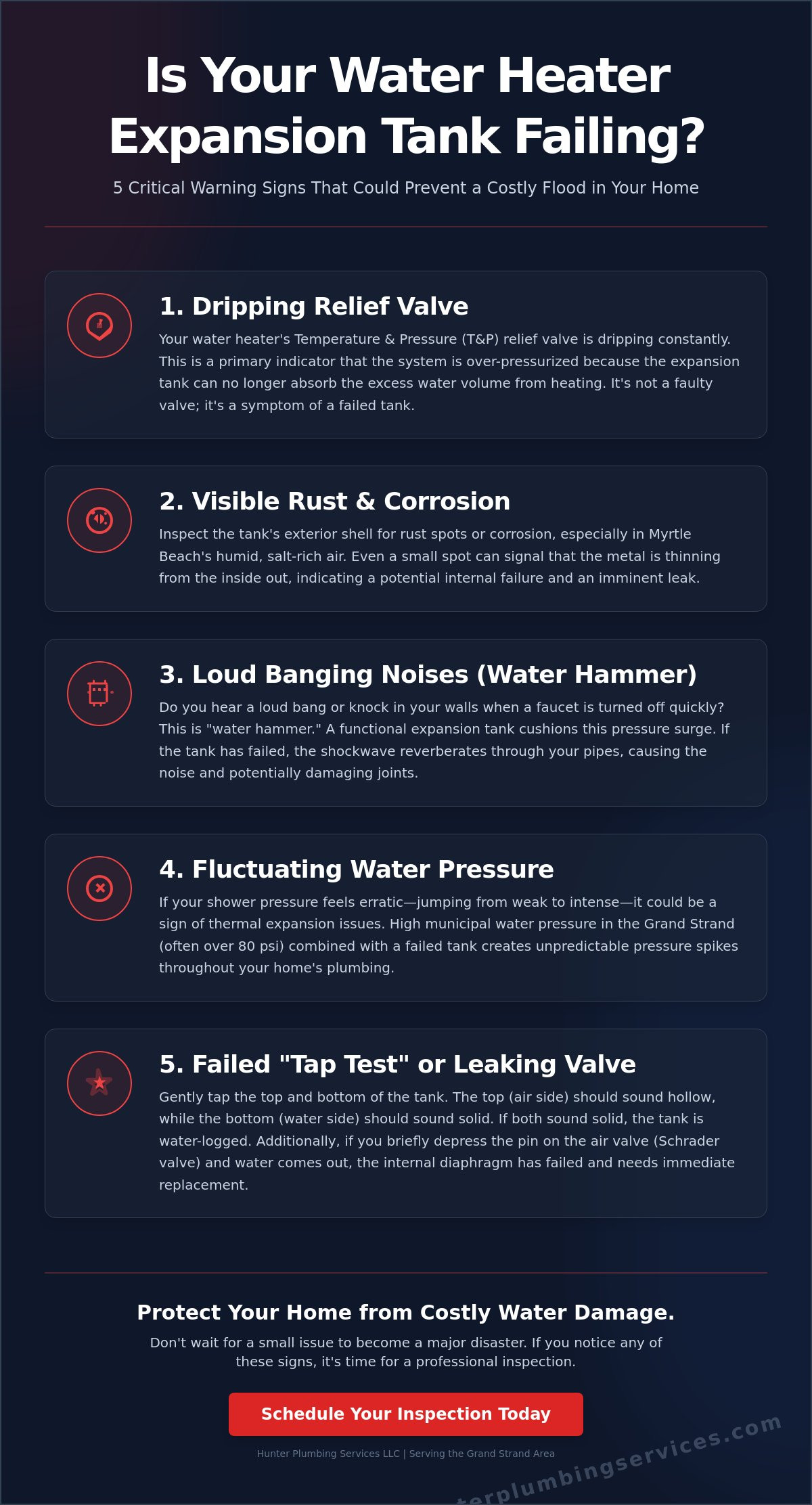
A failing expansion tank often goes unnoticed until it causes a significant plumbing headache. These small tanks manage the thermal expansion of water as it heats up, preventing your home’s plumbing system from over-pressurizing. If your tank isn’t working, that extra pressure has nowhere to go. You might notice your water heater’s temperature and pressure relief (T&P) valve dripping constantly. This isn’t always a valve problem; it’s often a clear signal that your system needs expansion tanks repair to handle the volume increase safely.
In Myrtle Beach, our humid, salt-rich air accelerates external wear on metal components. Look for visible corrosion or rust spots on the tank’s exterior shell. Even a small 2-millimeter spot of rust can indicate the metal is thinning from the inside out. You should also listen for water hammer, which sounds like a loud bang or knock in your walls right after you turn off a faucet. This happens because the failed tank can no longer cushion the pressure surge. If your shower pressure feels erratic, jumping from weak to intense in a matter of seconds, your tank’s internal diaphragm has likely failed. The same coastal humidity and hard water that damages your expansion tank can also affect other kitchen appliances, making timely garbage disposal replacement another important maintenance consideration for Myrtle Beach homeowners.
The Tap Test: A Simple DIY Diagnostic
You can check your tank’s health in less than 60 seconds with a simple tap test. Use a metal tool or your knuckles to tap the top and bottom halves of the tank. A healthy tank is half-full of pressurized air, so one side should sound hollow while the other sounds like a dull thud. If the entire tank produces a heavy thud, it’s completely water-logged. If you suspect a failure, you can briefly depress the small air valve on top. If water squirts out instead of air, the internal bladder is ruptured. Stop immediately and call a professional, as the tank is now under full system pressure and could fail at any moment.
When a Leak Becomes a Plumbing Emergency
Active drips at the threaded connection where the tank meets your pipes are a major red flag. These leaks often start small but can lead to a total tank failure, potentially flooding your utility room or garage. Because these tanks are often installed according to specific building code requirements to ensure safety, a DIY fix can lead to more trouble if the pressure isn’t balanced correctly. Early leak detection saves Myrtle Beach homeowners thousands in structural repairs and mold remediation. If you notice moisture around the base, it’s time for a professional expansion tanks repair assessment. Our team at Hunter Plumbing Services can quickly determine if a simple recharge or a full replacement is the safest path forward for your home.
How to Test and Recharge Your Expansion Tank (Step-by-Step)
Maintaining your plumbing system requires the right tools and a bit of patience. You will need the following items before starting:
- A standard tire pressure gauge
- A manual bicycle pump or a small air compressor
- A hose bib pressure gauge
Before you begin, safety is the most important step. Shut off the power to your water heater at the breaker and close the main water supply valve. Open a faucet on the lowest level of your home to bleed the pressure from the plumbing lines. Testing the tank while the system is under pressure will lead to an inaccurate reading. This maintenance routine is a vital part of expansion tanks repair and helps avoid premature tank failure.
Step 1: Measuring Your Home Water Pressure
You must know your home’s static water pressure to set the tank correctly. Attach a hose bib pressure gauge to an outdoor spigot or your water heater’s drain valve. In Myrtle Beach, residential water pressure typically falls between 45 and 65 PSI. If your gauge reads over 80 PSI, your system is at risk of damage. The International Plumbing Code mandates expansion tanks in closed systems to absorb the pressure spikes that occur during heating cycles. Your tank pressure must match this static water pressure exactly to function as intended.
Step 2: Adjusting the Tank PSI
Locate the Schrader valve on the top or side of the tank and remove the plastic protective cap. Use your tire gauge to check the current air levels. If the reading is lower than your home’s static pressure, use your pump to add air in small, 5-PSI increments. Adding too much air too quickly can damage the internal rubber diaphragm. Pre-charge pressure is the air pressure set before water enters the tank. If water squirts out of the valve during this process, the internal bladder has failed, and you will likely need a full replacement rather than a simple expansion tanks repair.
Step 3: Re-pressurizing the System
Once the pressures match, it’s time to bring the system back online. Slowly open the main water valve to prevent a sudden pressure shock to your pipes. Turn the power back on to the water heater and wait for it to reach its set temperature. Check the air valve and threaded fittings for any signs of air or water leaks. Keep a close eye on the temperature and pressure (T&P) relief valve for at least 20 minutes. If the valve remains dry, your system is balanced and safe. Our team at Hunter Plumbing Services recommends checking these levels every 12 months to ensure your home stays protected.
Why Myrtle Beach Coastal Conditions Lead to Expansion Tank Failure
Living in the Grand Strand means dealing with unique environmental factors that most inland plumbers never see. The Atlantic coast is beautiful, but the air is brutal on your home’s mechanical systems. Most standard expansion tanks feature thin steel shells. These shells are highly susceptible to the salt spray and high humidity common in Myrtle Beach. These conditions make expansion tanks repair a frequent requirement for homeowners from Little River down to Pawleys Island.
Rust often starts on the exterior of the tank and eats its way through the metal. This process is faster in unconditioned spaces like garages or outdoor utility closets. When the steel weakens, the internal pressure can cause a sudden, catastrophic rupture. Protecting your home requires understanding these local threats and taking proactive steps to mitigate them.
Salt Air Corrosion: The Silent Tank Killer
Tanks in Myrtle Beach beachfront properties fail 30% faster than those located just five miles inland. The salt air acts as a catalyst for oxidation, turning your tank into a rusted liability within just a few years. You should check your tank monthly for signs of “pitting.” These are small, localized spots of rust that look like tiny craters on the surface. If you see pitting, the metal is already compromised. We recommend applying a corrosion-resistant enamel to new tanks or moving them to climate-controlled areas whenever possible to fight off the coastal dampness.
Sediment and Scale Issues
Grand Strand water sources are often high in mineral content. Calcium and magnesium deposits thrive in the warm environment of your plumbing system. These minerals eventually settle in the expansion tank’s entry port. This port is very small, often only a half-inch wide. When it clogs, the tank can no longer absorb the thermal expansion from your water heater. A clogged tank is just as dangerous as a ruptured one. It creates high-pressure spikes that can blow a T&P valve or crack your water heater’s inner lining. Annual plumbing inspections are the only way to verify that this port remains clear and functional.
Installing whole house filtration is the most effective way to extend the life of your plumbing. These systems strip away the minerals that lead to scale buildup and protect the internal diaphragm of your tank. It’s a smart investment that prevents the need for early replacement. If you suspect your system is struggling with local water quality, contact us for professional expansion tanks repair and a full system evaluation.
Is your tank showing signs of rust or salt damage? Don’t wait for a flood. Schedule your expansion tank inspection with Hunter Plumbing Services today.
Professional Expansion Tank Services in Horry County
DIY projects offer a sense of accomplishment, but expansion tanks repair is a task where the risks often outweigh the rewards. If you see water dripping from the temperature and pressure relief valve or hear a dull thud when tapping the top of the tank, it’s time to put down the wrench. Call Hunter Plumbing Services to prevent a minor leak from becoming a flooded mechanical room. A poorly handled repair can lead to catastrophic pressure spikes that damage your entire plumbing system. Our team uses calibrated gauges to verify the exact air charge needed for your home’s specific PSI.
Most major water heater manufacturers specify that improper installation or repair by an unlicensed individual can void your equipment warranty. We protect your investment by providing certified expertise and transparent, upfront pricing before any work begins. You’ll never deal with hidden fees or surprise costs when our technicians are on-site. Whether you’re planning a home renovation or just starting the rough in plumbing for a new build, integrating a high-quality expansion tank is a non-negotiable step for long-term safety.
Expert Replacement vs. Temporary Repair
While some external fittings can be tightened, we usually recommend a full replacement if the internal rubber diaphragm is over 5 years old. These diaphragms lose elasticity over time. Once they lose their ability to flex, the tank becomes “waterlogged” and loses its function. For our coastal neighbors, we offer upgrades to stainless steel or reinforced tanks. These materials are specifically designed to resist the salt-rich air that can corrode standard steel units in Myrtle Beach homes. Our team ensures every installation meets the updated 2026 South Carolina plumbing codes, which now require specific bracing for tanks in high-velocity hurricane zones.
The Hunter Plumbing Reliability Guarantee
We take a neighborly approach to every service call across Myrtle Beach and Conway. Our technicians treat your home with the same care they would their own, ensuring a clean workspace and a job done right the first time. We understand that plumbing issues don’t follow a 9-to-5 schedule. That’s why we provide 24/7 emergency support for burst tanks or major leaks that threaten your property. We focus on building long-term relationships through honest advice and dependable workmanship. We are your local partners in home maintenance and safety.
Protect Your Myrtle Beach Home from Coastal Corrosion
Living along the Grand Strand means dealing with high humidity and salt air that can degrade metal components faster than inland areas. Since 2021, Hunter Plumbing Services has helped Horry County residents navigate these specific coastal challenges. Regular testing of your tank’s air pressure and checking for signs of a ruptured diaphragm are the best ways to avoid a plumbing emergency. If you notice a dripping relief valve or a tank that feels heavy with water, it’s time to act. Professional expansion tanks repair ensures your water heater stays protected from thermal expansion, extending the life of your entire system.
We pride ourselves on providing upfront, honest pricing so you always know what to expect before the work begins. Our family-owned team is ready to provide the dependable service your home deserves. Let’s keep your plumbing running smoothly so you can focus on enjoying the beach.
Contact Hunter Plumbing Services for reliable expansion tank repair in Myrtle Beach!
Frequently Asked Questions
Is a leaking expansion tank a plumbing emergency?
Yes, a leaking tank is a serious issue that requires immediate attention to prevent water damage. A leak indicates a structural failure or a ruptured internal bladder. If left alone, it can lead to 100 gallons of water flooding your utility room in a single hour. Turn off your water heater’s intake valve and call our team right away to keep your home safe.
How much does a plumber charge to replace an expansion tank in Myrtle Beach?
Costs vary based on the specific model and installation complexity, but we always provide transparent, upfront pricing before any work begins. HomeAdvisor reports that national averages for small plumbing repairs often range from 150 to 400 dollars. In Myrtle Beach, factors like accessibility and local permit requirements influence the final total. We give you a firm quote so there aren’t surprises on your bill.
Can I just remove the expansion tank and cap the line?
No, you shouldn’t remove the tank without replacing it because it protects your plumbing from thermal expansion. Most Myrtle Beach building codes, including the 2021 International Residential Code, require these tanks on closed-loop systems. Removing it causes pressure spikes that can blow out your water heater’s T&P valve or damage your pipes. It’s a vital safety feature that keeps your home’s water pressure stable.
How many years does a water heater expansion tank typically last in coastal SC?
In the coastal Myrtle Beach environment, most expansion tanks last between 5 and 7 years. High humidity and salt air can accelerate external corrosion on the steel shell. While manufacturers often suggest a 10 year lifespan, we find that local units often need expansion tanks repair or replacement sooner due to heavy use. Regular annual inspections help catch failures before they cause a flood in your home.
Why is water coming out of the air valve when I press the pin?
Water exiting the Schrader valve means the internal rubber bladder has ruptured. This valve is only supposed to release air. When the bladder fails, the tank fills completely with water and loses its ability to cushion pressure. You’ll need a full replacement at this point. It’s a clear signal that the unit is no longer functional and your water heater is at risk of failing.
Does a tankless water heater need an expansion tank?
Most tankless units don’t require an expansion tank unless they’re installed on a system with a check valve or pressure reducing valve. Since tankless heaters don’t store a large volume of hot water, they generate less thermal expansion. However, if your home has a closed system created by a backflow preventer, a small expansion tank is often necessary. Check your manufacturer’s manual or ask our experts to verify your setup.
What happens if my expansion tank pressure is too high?
Excessive pressure in the tank prevents it from accepting expanding water, which stresses your entire plumbing system. If the air charge exceeds your home’s static water pressure, usually 50 to 60 PSI, the tank stays empty and useless. This leads to premature wear on faucets and appliances. We use a standard tire gauge to calibrate your tank to match your home’s specific pressure requirements during a professional service call.
How do I know if my expansion tank is waterlogged?
You can tell a tank is waterlogged by performing a simple tap test on the exterior shell. Tap the top and bottom of the tank with a metal object. The top should sound hollow because it contains air, while the bottom should sound dull because it’s full of water. If the whole tank sounds heavy or thuds when tapped, the air pocket is gone. This means you need expansion tanks repair to restore safety. Just as you would address a failing expansion tank promptly, scheduling a timely garbage disposal replacement in Myrtle Beach before a minor leak warps your cabinet floor is equally important for protecting your home’s plumbing investment.